
Why the future of water starts by seeing it as Country
 by Cecilia Harris
As Australia grapples with climate change, population growth and the increasing complexity of managing its water resources, a growing conversation is emerging across the sector about resilience, stewardship and long-term thinking.
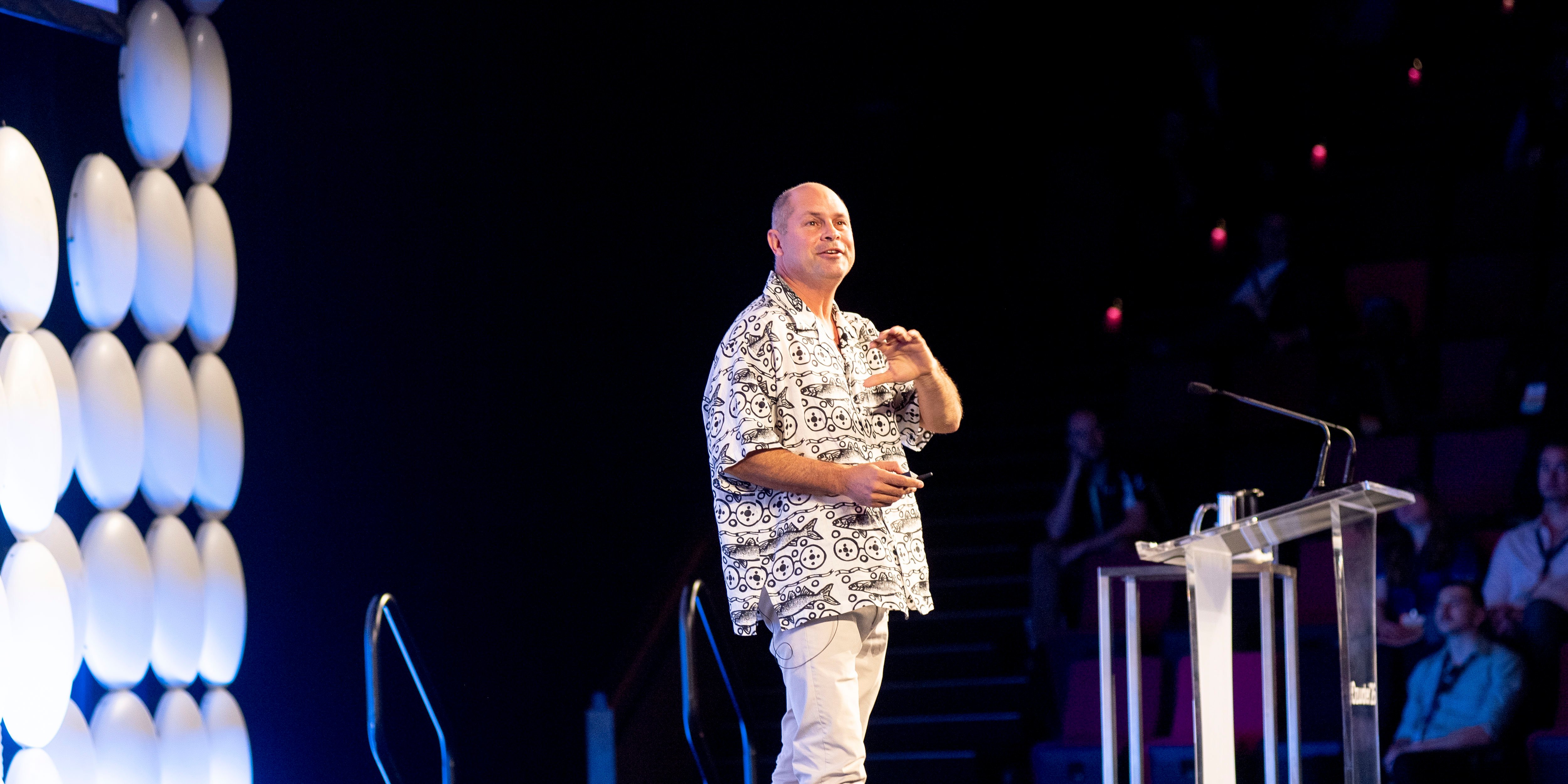
Speaking during National Reconciliation Week at Ozwater’26, Quandamooka man and Chief Executive Officer of the Quandamooka Yoolooburrabee Aboriginal Corporation (QYAC), Cameron Costello, challenged delegates to take that conversation one step further. Rather than viewing water as a resource to be managed, he argued the sector has an opportunity to rethink its relationship with water altogether.
For Aboriginal and Torres Strait Islander peoples, he said, water is inseparable from Country, culture and identity – a perspective that has shaped knowledge systems for tens of thousands of years and offers important lessons for the future of water management.
"The global importance of water for First Nations people is that it holds profound spiritual, cultural, environmental and economic significance for First Nations peoples across the globe," Costello said.
"Water is seen as a living entity.
"Quandamooka – Moreton Bay – is a living entity for us. Across the globe, there is growing recognition among First Nations peoples that water, in its different forms, whether rivers or lakes, are entities that we have obligations and responsibilities to care for and deal with in a cultural way."
For Costello, who has spent decades working across environmental management, native title and First Nations advocacy, this understanding of water fundamentally changes how decisions are made.
Take a look at Cameron Costello's Ozwater'26 keynote presentation on Indigo.
Water is not separate from Country
Throughout his keynote, Costello returned to a simple but profound idea: water cannot be separated from the Country it shapes, or the people whose identities are bound to it.
"For Aboriginal and Torres Strait Islander peoples, water is connected to Country, law, kinship systems, dreaming tracks, cultural obligations, food systems, ceremony and language," he said.
"In the Quandamooka context, that relationship is deeply rooted in our identity. As saltwater people, water is not separate from Country – it is Country. The bays, wetlands, lakes and creeks across our region continue to shape us individually and collectively as a community."
Costello described how this connection is reflected throughout Quandamooka Country, from freshwater lakes and wetlands to Moreton Bay and its tidal estuaries.
"When you travel along the island and see where freshwater meets saltwater, it's like an explosion of life," he said.
"It's something that always blows me away – the magic that occurs where freshwater and saltwater meet."
That relationship, he said, continues to inform the observations of Quandamooka Elders, rangers and community members, whose knowledge is grounded in generations of lived experience.
"People are always talking about food, flora and fauna, and how everything is linked," he said. "It's amazing when you're talking to aunties, uncles, cousins and rangers about what's happening. They're always talking about the changes occurring and what they're seeing."
Custodians, not owners
Costello argued that Traditional Knowledge should not be viewed as historical knowledge, but as a living system of environmental stewardship that continues to evolve. He pointed to common Indigenous water principles shared across cultures around the world.
"Water is sacred. It connects all life. Humans are custodians, not owners. Decisions should consider future generations. Governance should be place-based and relational. Culture and ecology are inseparable," he said.
Those principles, he said, are reinforced by generations of traditional ecological knowledge that connects water to seasonal cycles, biodiversity, food systems and climate adaptation.
"There's also intergenerational responsibility. That's a global theme as well – how we pass on that knowledge in a culturally appropriate way to our young people so they can carry it forward," he said.
"A consistent theme across the globe is traditional ecological knowledge. It's linked to seasonal cycles, groundwater and springs, flood patterns, fisheries and aquatic species, and drought adaptation."
For Costello, that knowledge is increasingly relevant as the water sector navigates unprecedented environmental change.
From recognition to shared responsibility
While Indigenous perspectives on water are gaining greater recognition, Costello said meaningful change also requires Aboriginal and Torres Strait Islander peoples to participate in the decisions that shape water's future.
"When we're planning, that's something that needs to be considered," he said.
"Participation in water governance, protection of sacred waterways, free, prior and informed consent, and co-management arrangements are all important. We're starting to see growth in those areas."
Costello said the joint management of Ngaribujangjara – Naree Budjong Djara National Park on Minjerribah is an example of Aboriginal and non-Aboriginal organisations working together.
"That's something we need to look at for water management as well," he said.
Native title, Costello said, has also created opportunities for Quandamooka people to take on greater leadership in caring for Country.
"Native title has empowered us to access leadership, management and joint management opportunities. A lot of our programs focus on restoring lakes, creeks and the systems that impact them," he said.
A legacy beyond 2032
Looking ahead to the Brisbane 2032 Olympic and Paralympic Games, Costello challenged the water sector to think beyond the delivery of infrastructure and consider the legacy it wants to leave.
"As we head towards 2032, what I'm hoping is that the power of this conference can help shape some kind of statement about the legacy we want from 2032," he said.
"I think about questions like: what can we achieve by 2032? What should be the water legacy of the Games?"
For Costello, that legacy could include stronger recognition of First Nations rights, co-designed projects, healthier waterways and globally significant research.
"Water legacy projects should be on the table. We should be saying: this is what we want. We want river symposia. We want to clean up the river. We want to undertake these kinds of initiatives. Even big ideas like Oceanic First Nations water research hubs right here," he said.
"By 2032, Meanjin Brisbane should be a global leader in water, water research and innovation. If we don't do that, I think we've failed."
Closing his keynote, Costello returned to the words of Oodgeroo Noonuccal, whose poem A Song of Hope framed his message for delegates.
"To our father's fathers, the pain, the sorrow. To our children's children, a glad tomorrow. Here we are in National Reconciliation Week, on Sorry Day. Let's recognise and reflect on the past," he said.
"Let's take action and create great change for future generations."
For a sector increasingly focused on resilience and long-term stewardship, Costello's message was ultimately an invitation to broaden the way water is understood – not simply as an asset to be managed, but as living Country that connects people, place and future generations.
Interested in viewing other Ozwater'26 presentations and papers? Content from the event is now available on Indigo.