Building capability together for a resilient Pacific water sector
 by Zac Rudge
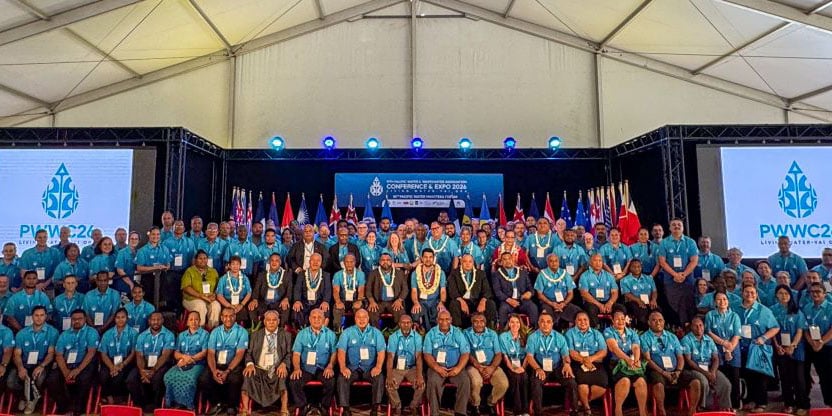
In late August and early September, I was lucky enough to spend a week in Tahiti, where humpback whales play in the deep, warm ocean and I could safely drink the water straight from the tap.
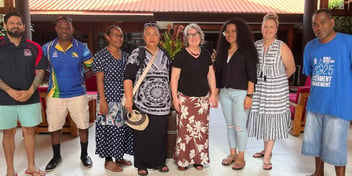
I was there to join colleagues from across the Pacific water sector at the 17th Pacific Water and Wastewater Association Conference. After several years working with PWWA to build capability among their membership, one of the main things on my mind was how we sustain meaningful investment in capability across the region.
It is a question that has become increasingly important through AWA’s work with Pacific utilities. Infrastructure investment matters enormously, but infrastructure alone does not build a resilient water utility. Behind every asset are the people who operate it, maintain it, plan for its future and deliver these services to their communities.
Pacific utilities are doing this while navigating huge challenges, from climate change and ageing infrastructure to workforce constraints and the need to deliver sustainable and inclusive services.
Together with PWWA, I hoped to use the conference to hear directly from the people dealing with those challenges every day.
Learning from utility experience
Our workshop, Growing Capability Together, brought Pacific utilities, development partners and water professionals into the same conversation. Rather than asking people to evaluate individual programs, we asked them to draw on their own experience: What has genuinely helped? What has led to lasting change? What gets in the way? And if we could design the next generation of capability programs differently, what would we do?
One of the strongest messages was a simple one; that effective capability building needs to be practical and connected to real utility priorities.
People valued peer-to-peer learning, particularly opportunities to learn from others facing similar operating environments and constraints. Trust and continuity mattered. So did follow-up. A great workshop or study tour can create momentum, but without the opportunity to apply that learning back in the utility, involve colleagues and continue the relationship, its impact can quickly fade.
There was also a strong case for moving beyond short, isolated interventions towards longer-term relationships. Capability development works best when it is not something being “delivered” to a utility, but something built with them.
Building on Pacific expertise
These investments take time. Their impact may not be neatly visible within the life of a funded program. Lasting capability requires continuity and, critically, the leadership of local utilities and their people.
That means starting with what utilities need, recognising the capability that already exists across the Pacific, and creating more opportunities for Pacific-to-Pacific exchange and two-way learning.
The Pacific water sector does not lack knowledge. There is considerable experience within utilities across the region. The challenge is how to better identify, connect, develop and retain that capability, drawing on external expertise where it adds value.
This conversation also builds on what we heard at Ozwater’26, where representatives from across Asia and the Pacific came together through the International Program and developed the Asia-Pacific Water Resilience Joint Statement.
That conversation reinforced that water resilience cannot be achieved through infrastructure or individual projects alone. It requires sustained regional cooperation, stronger institutions and investment in the people and partnerships that will carry the work forward.
The discussion in Tahiti helped take that principle a step further by asking, ‘what might that investment actually look like?’
Rather than relying primarily on one-off training, future programs could create structured pathways for utilities to access and develop the capability they need. That could include Communities of Practice that keep practitioners connected between conferences, utility-to-utility exchanges and embedded placements, mentoring and project-based technical support.
A Pacific Capability Exchange could help match expertise that already exists across utilities and PWWA Allied members with utilities seeking support. Stronger operator and workforce development pathways could help build and retain critical skills, while better benchmarking could help us understand where the needs are and, importantly, whether our collective investment is improving utility performance.
Investing for lasting impact
Importantly, these approaches need investment behind them. Capability development is too often funded as a short-term activity alongside much larger infrastructure investments, despite being fundamental to whether those investments deliver lasting value. We cannot separate investment in infrastructure from investment in the people, systems and institutions responsible for sustaining it.
There is an opportunity for development partners and donors to invest more in capability over multiple years, including alongside infrastructure and other sector investments, while creating space for utilities, industry and partners to contribute expertise and in-kind support.
Better coordination of that investment is key. Rather than multiple partners funding disconnected activities, a stronger regional approach could enable PWWA to identify common priorities, connect utilities with the right expertise and direct investment towards areas where it can have the greatest impact.
No single donor, development partner, government or program can take responsibility for strengthening capability across an entire sector. Different organisations bring different funding, expertise, relationships and influence, and each has a role to play. But if we want change at a sector level, we need to understand how those contributions fit together, where the gaps remain and where effort is being duplicated.
That requires coordination not only between individual programs, but at the highest levels. Pacific utilities and PWWA need to be at the center of those conversations, with governments, donors, development partners, industry and regional organisations working together towards shared priorities and understanding the contribution each can make to achieving them.
From shared priorities to sustained programs
For AWA and our members who support this work, our value is not in arriving with all the answers. It is in helping connect the expertise of the Australian water sector with priorities identified by Pacific utilities, supporting long-term partnerships and creating opportunities for practitioners to learn from each other.
The workshop in Tahiti was designed to identify capability gaps, but more importantly to develop a clearer picture of where to focus, how capability should be built, and what needs to be in place for it to work. For me at least, it met that goal.
It added to a growing understanding and agreement between the stakeholders that can inform future capability development, partnerships and investment across the Pacific water sector. Now comes the challenge of how to turn that understanding into concrete, sustained programs.
How do we move from individual activities to a longer-term capability model? A model that is led by Pacific priorities, connects expertise across the region, creates practical opportunities for people to learn by doing, and gives development partners something coherent and investment-ready to support.
Zac Rudge is AWA Project Lead – International Development and Trade.
Learn more about AWA’s International Programs here.