A Pacific approach to water and climate resilience
 by Milika Sobey, Technical Adviser Coastal Ecosystems, GIZ, Suva
The Pacific Ocean may separate our island nations geographically, but we are deeply connected by our geography, our culture and our economies.
Pacific Island countries are sometimes described as small island states, but I prefer to think of us as large ocean states. Across the region, the ratio of sea to land is around 55:1. Our ocean is a defining part of who we are, but our relative remoteness, limited natural resources and fragile water resources also make our communities particularly vulnerable to the impacts of climate change.
That vulnerability is already very real. In the 2020 World Risk Index, four Pacific Island countries were among the ten countries assessed as most vulnerable and exposed to extreme natural events. Vanuatu was ranked number one, Tonga number two, Solomon Islands number five and Papua New Guinea number eight.
Water security is one of our greatest challenges. Many Pacific communities rely on small and fragile groundwater lenses, springs, streams or rainwater collected from roofs. These limited resources are already under pressure from over-extraction, pollution, land use activities and inappropriate sanitation facilities.
Climate change adds another layer, bringing sea level rise, storm surges, coastal erosion, saltwater intrusion into coastal aquifers, drought and increasing water scarcity. The consequences extend well beyond the water sector, affecting communities, livelihoods and economic growth.
Yet the Pacific story is not simply one of vulnerability. Across our islands, communities are adapting.
One important approach is to look after the entire hydrological cycle through Integrated Water Resource Management, also known across the Pacific as Ridge to Reef or Mountain to Ocean management. It recognises something our communities have long understood: what happens in the mountains, forests and catchments ultimately affects our rivers, groundwater, coasts and ocean.
We are seeing this translated into practical action. Forested areas are being restored and conserved across the larger Pacific islands. Native trees are being planted along riverbanks, helping to stabilise soils while also providing fruit that communities can sell as an additional source of income.
Nature-based seawalls and riverbank protection are being established using mangroves and vetiver grass. These are practical examples of adaptation that work with natural systems while providing benefits for local communities.
There is another important feature of the Pacific context that shapes how we approach water management and climate adaptation: land ownership and traditional governance.
Unlike many other regions, Indigenous people make up the majority of the population in Pacific Island countries. Between 45 and 98 per cent of land is customary land owned by Indigenous landowners, who also have usage rights over adjacent water bodies, whether marine or freshwater.
Traditional governance systems are recognised by the State. This means traditional landowners are not peripheral stakeholders in decisions about water, land and climate adaptation. They must have a seat at the table.
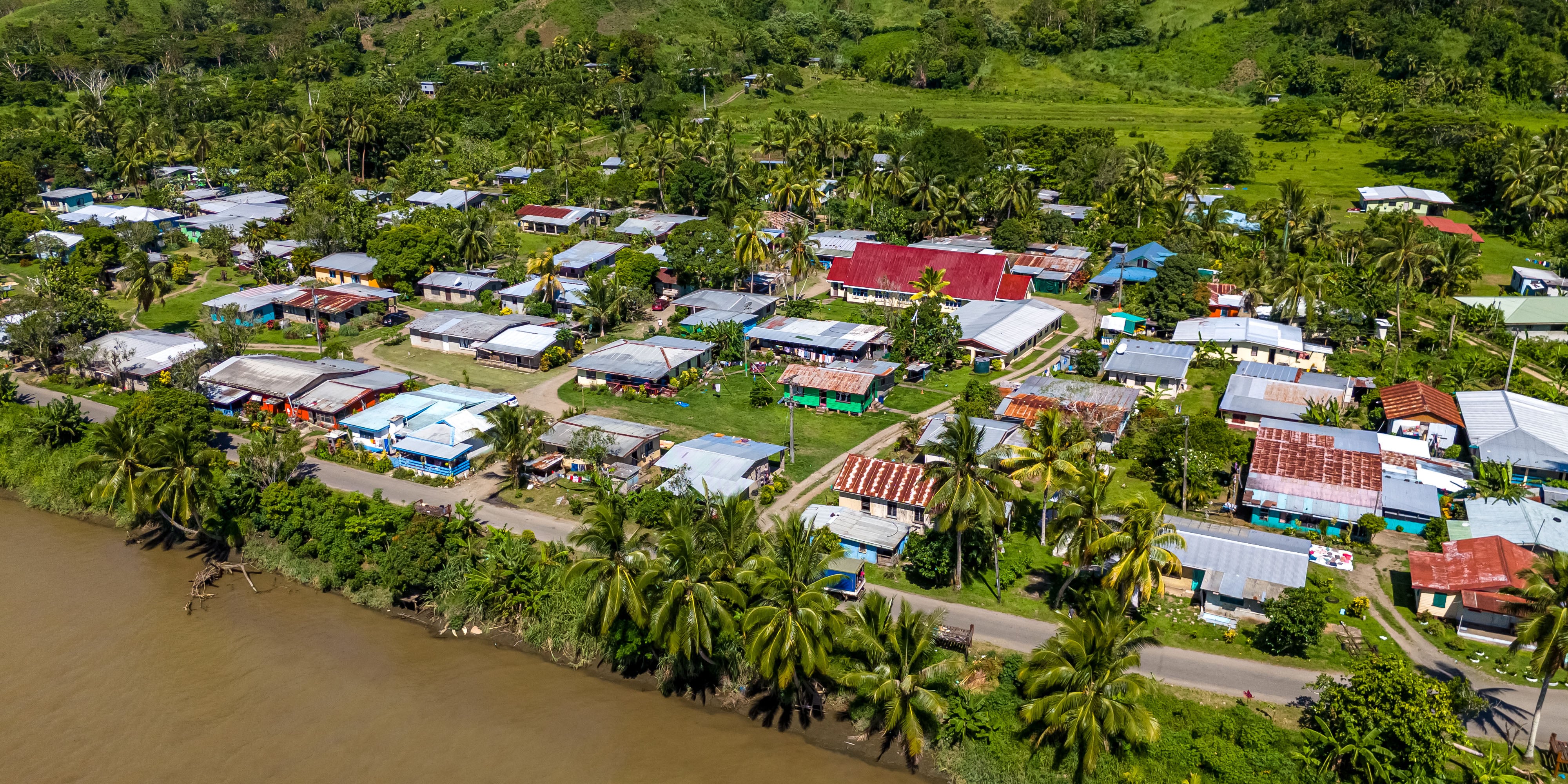
The scale of the challenge means adaptation will not always be straightforward. In Fiji, the relocation of vulnerable communities is already underway.
For those of us working in water, I think the Pacific offers an important perspective. Climate resilience here cannot be separated into neat categories of water, land, coast, community and culture. They are interconnected.
Our response must be equally connected, bringing together catchment and water management, nature-based solutions, traditional governance and local knowledge. From mountain to ocean, and from ridge to reef, protecting our water resources ultimately means protecting the systems and communities that depend on them.
This article has been adapted from a speech delivered by Milika Sobey at Ozwater’26 as part of the International Stream. Milika Sobey is Technical Adviser Coastal Ecosystems at GIZ, Suva.
Interested in learning more about AWA’s international work? Learn more here.