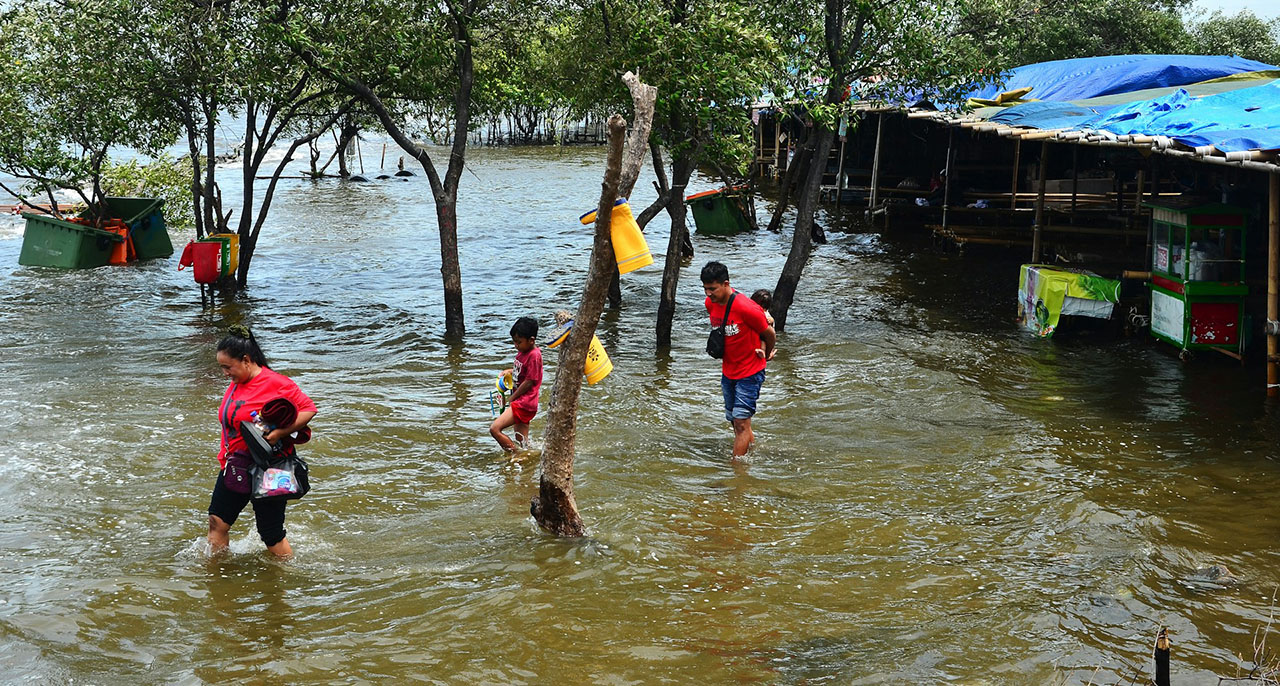
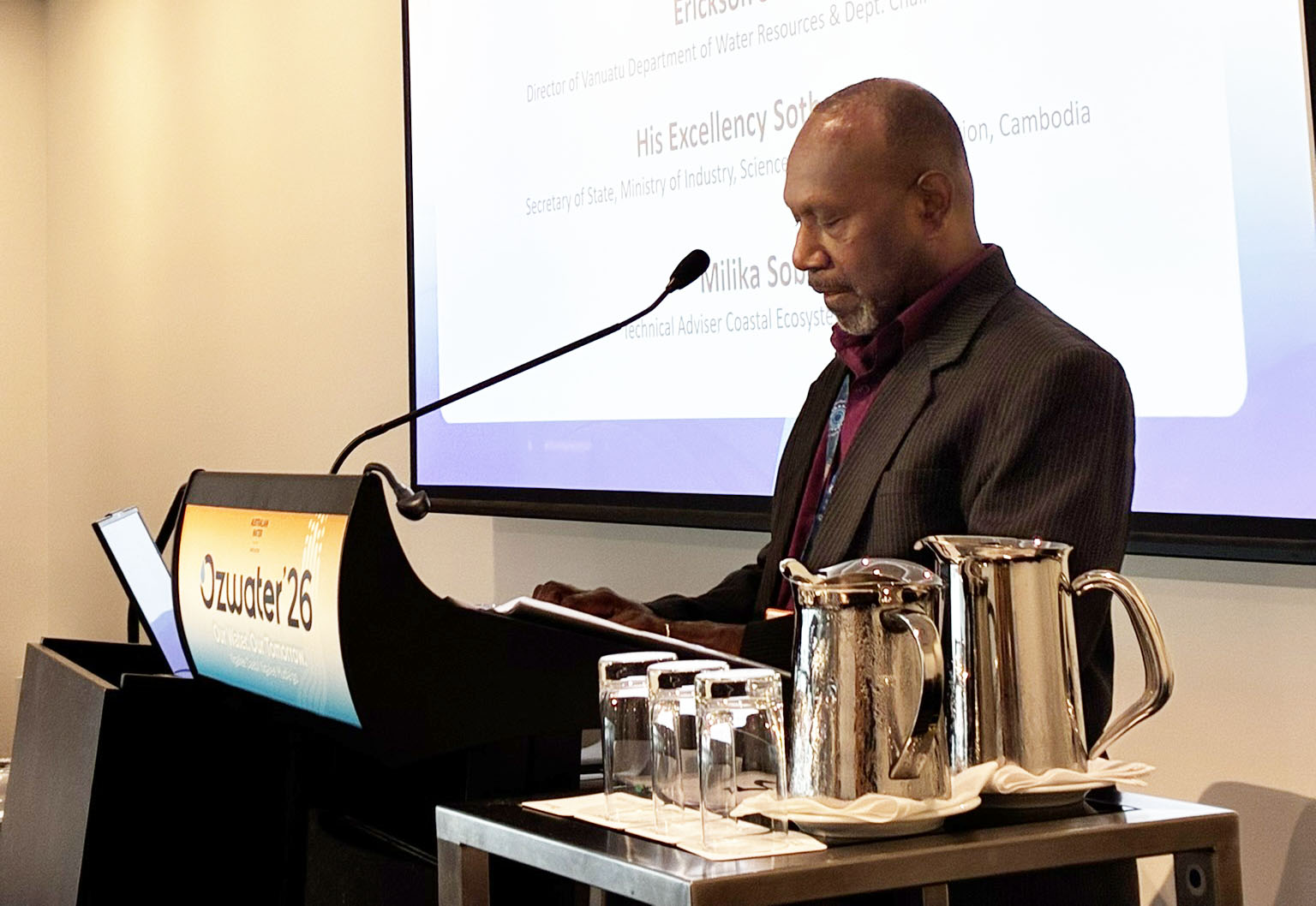
Climate change is no longer a future threat. Communities across the Asia-Pacific are already living with prolonged droughts, cyclones, more frequent and intense flooding, sea level rise, saltwater intrusion, and declining source water quality. These challenges are compounded by aging infrastructure, workforce shortages, and capacity gaps which leave utilities, governments, and communities with less time to prepare, respond, and recover.
Water resilience is a shared responsibility that extends beyond the water sector. As a foundation for healthy communities, thriving economies and resilient ecosystems, it requires integrated planning and collaboration across governments and industries, underpinned by long-term investment, inclusive leadership, strong governance, and sustained partnerships that place communities at the centre of decision making.
The Challenge Before Us
Across the Asia-Pacific Region, the water sector is driven by passionate people and institutions working to provide communities with safe, reliable, and sustainable water services. Utilities, governments, and communities are already strengthening rainwater harvesting and groundwater monitoring, building early warning systems, advancing adaptation planning, supporting regional collaboration, and embedding climate resilience into planning and operations.
However, the sector’s ability to respond to escalating climate and disaster risks is being constrained by fragmented governance, limited access to climate finance, workforce shortages, loss of technical and professional expertise to international job markets, weak institutional capacity, inadequate training pathways, and under-investment in long-term resilience. Flooding, declining water quality and growing pressure on fragile systems are placing increasing strain on utilities and communities already operating with limited resources.
For many countries in the Asia-Pacific Region, particularly small island states, disasters can reverse years of development progress within hours, while slow-onset climate impacts continue to undermine long-term water security. Across larger and more geographically dispersed nations, utilities and governments face additional challenges associated with serving populations across vast territories, multiple jurisdictions and complex governance arrangements.
The impacts extend beyond infrastructure to public health, livelihoods, economic stability, and community wellbeing. Resilience is not a one-time investment or short-term response. It is a continuous process of preparation, adaptation, recovery, and rebuilding that requires sustained investment in both people and systems.
The Barriers We Must Overcome
Across the Asia-Pacific, the sector’s ability to prepare for and respond to climate and disaster risks is limited by significant systemic barriers, including insufficient and poorly structured finance, fragmented governance, weak regulation, and limited institutional capacity.
Utilities and governments are often required to manage aging infrastructure, growing demand and climate impacts without the long-term funding, workforce capability, data, financial sustainability, or policy settings needed to invest in resilience before disasters occur. The sector’s ability to act at the scale and pace required is challenged by geographic remoteness, customary land arrangements, and complex approval pathways. These are further compounded by weak coordination across governments, utilities, communities, and partners.
While climate finance opportunities are increasing, funding mechanisms are often complex, difficult to access and beyond the technical or administrative capacity of many utilities and local institutions. As a result, the communities, and utilities most exposed to climate and disaster risks often struggle to prepare effectively, develop investment-ready projects and secure investment at the pace required.
What We Know Works
Practical strategies are already delivering positive outcomes across the region. Regional collaboration and peer learning, workforce capability development through mentoring, coaching and on-the-job training, leadership development, utility partnerships, integrated water resource management, community-based water governance, disaster preparedness planning, early warning systems, national adaptation planning, cross-ministerial collaboration, and strategic workforce planning are all strengthening water resilience across the Asia-Pacific.
These approaches move resilience from reactive response to proactive preparedness. They work best when communities are meaningfully engaged to translate local knowledge into practical action, and when partnerships across governments, utilities, communities, donors, academia, NGOs, and regional partners are optimally funded to be practical and sustained over time.
Local and community knowledge must be embedded in resilience planning, implementation, and review. Community-led solutions, inclusive decision making, and genuine two-way communication can ensure preparedness and resilience measures reflect local conditions. Combined with integrated water cycle management and water safety planning, these approaches provide a strong foundation for a resilient and sustainable water sector.
Our Call to Governments and Development Partners
Governments, regulators, donors, financiers, utilities, and sector partners must work together to identify shared priorities, strengthen coordination across sectors, and create the governance, regulatory and investment conditions needed to build long-term climate and disaster resilience.
Long-term investment in water resilience must be prioritised.
Governments and development partners must move beyond short-term infrastructure delivery and invest in resilience planning, sustainable operations and maintenance, workforce capability, climate resilient infrastructure, data systems, risk assessment and community-led adaptation. This includes supporting the long-term financial sustainability of utilities, recognising that resilient services depend on institutions that can maintain, operate and reinvest in critical water infrastructure over time. Resilience investment must include people, governance, institutions, and nature-based infrastructure, not only built physical assets.
Policy and regulatory settings must enable integrated water management.
Governments and regulators should ensure policy and regulatory settings enable, rather than inhibit, integrated water cycle management. Regulation should support planning and investment across the full water cycle, from source water protection and demand management through to treatment, distribution, water reuse, stormwater and wastewater management, ecosystem protection and long-term resource sustainability.
Governance, coordination and regional collaboration must be strengthened.
Stronger coordination across governments, utilities, regulators, communities and development partners is essential for effective resilience outcomes. Clear national strategies, cross-ministerial collaboration, peer learning networks and stronger partnerships with regional water associations and cross-sector organisations are critical to accelerating action and sharing practical knowledge across borders.
Climate finance mechanisms must become more accessible and effective.
Climate finance systems must be more accessible, practical and responsive to the realities of small and developing countries. This includes simplified funding pathways, support to develop investment-ready projects, longer-term funding commitments and financing models that optimise preparedness, prevention and ongoing resilience outcomes.
Regional workforce and leadership development must be accelerated.
Coordinated regional investment must be made in workforce capability and leadership development, including mentoring, practical training, knowledge exchange partnerships, technical exchanges, leadership programs, vocational pathways and centres of excellence. Stronger pathways are needed to attract, retain and support the next generation of water professionals across the Pacific and Southeast Asia.
Inclusive and community-centred leadership must be advanced.
Resilience requires leadership that is collaborative, inclusive and grounded in community realities. By focusing on community engagement, we can deliver inclusive leadership programs and mentoring, workplace reform, and transparent pathways to improve the participation of women, youth and under-represented groups in leadership.
Local knowledge and community ownership must be embedded in resilience planning.
Indigenous and local knowledge must be embedded in climate adaptation and disaster preparedness. Community-led approaches, local governance arrangements and meaningful co-design are essential to ensuring resilience strategies are practical, trusted and sustainable over the long term.
Our Commitments
As water sector members, we commit to:
- Champion water resilience as a priority across climate, disaster, liveability, and development.
Water security and resilience underpin public health, livelihoods, economic stability, environmental sustainability, and resilient communities. We will advocate for investment and governance frameworks to recognise the importance of water across these sectors.
- Embed resilience into the way we plan, invest, and operate
Integrate climate and disaster risk into water and land-use planning, asset management, service delivery, investment decisions, emergency preparedness, and long-term water resource management to strengthen resilience before disasters occur.
- Invest in people, leadership and inclusive participation
Strengthen workforce, leadership and institutional capability through practical training, mentoring, knowledge sharing, and leadership development, while creating greater opportunities for women, youth, and under-represented groups across all levels of the sector.
- Strengthen partnerships, collaboration and regional learning
Deepen collaboration across utilities, governments, communities, industry, researchers and development partners through peer learning, technical exchanges, regional networks, and knowledge-sharing partnership programs.
- Put communities, local knowledge, and shared ownership at the centre of resilience
Support meaningful community engagement, local governance, co-design, and the integration of indigenous and local knowledge into resilience planning, implementation, and decision-making.
Closing Statement
Across the Pacific and Southeast Asia, communities, utilities, and sector leaders are already adapting, innovating, and working together to strengthen water resilience. But the scale and urgency of the challenge now demand greater ambition, stronger partnerships, and sustained investment in the people, systems, and institutions that underpin water security.
Water resilience is not only an infrastructure issue. It underpins public health, economic stability, disaster preparedness, livelihoods, and community wellbeing. The resilience of the Asia-Pacific region will depend not only on technology and finance, but on solidarity, trust, inclusive leadership, community ownership, and long-term collaboration.
The cost of inaction is rising. The time for incremental action has passed. The knowledge exists. The partnerships exist. The commitment exists. What is needed now is investment and action at the scale the challenge demands.