


Week in water: updates from across the community
 by Water Source
This week’s water community activity highlights progress on drinking water security in Queensland and Western Australia, alongside investment in water main renewals and initiatives to build the skills of the sector’s future workforce.
The latest developments also include a leadership appointment at CSIRO, a new recruit for Water Corporation’s leak detection team and international research into how chemical mixtures in water affect nerve cell activity.
NATIONAL
SUEZ appoints Emmanuel Charbit as Australia and New Zealand CEO
SUEZ has appointed Emmanuel Charbit as Chief Executive Officer for Australia and New Zealand, effective 16 November 2026. He succeeds Kevin Werksman.
Charbit began his career with SUEZ in Australia in 2007 and held senior engineering and construction roles across the group internationally. He returned to Australia in 2024 as Vice President of Engineering & Construction.
Charbit said: “Having started my career with SUEZ in Australia almost two decades ago, I am proud to take on the leadership of a business and a market with which I have such strong professional and personal ties".
“I look forward to working with our people, clients and partners to continue to strengthen SUEZ's contribution to Australia's and New Zealand's water and environmental future," he said.
Werksman will continue as AWA President until the conclusion of Ozwater’27, then remain on the AWA Board for a further year as Immediate Past President.
CSIRO appoints environment, energy and resources executive director
CSIRO has appointed Dr Rob Hough as Executive Director, Environment, Energy and Resources following an international search. He will lead research supporting Australia’s transition to net zero, adaptation to climate change, environmental protection and restoration, and efforts to gain more value from energy and mineral resources.
Hough has spent almost 25 years at CSIRO. He is currently Acting Executive Director, Technology, National Facilities and Collections, and previously served as Director of Mineral Resources.
CSIRO Chief Executive Dr Doug Hilton said: “Rob has led research spanning earth sciences, minerals, advanced sensing technologies and scientific infrastructure.”
"Since joining CSIRO almost 25 years ago, I’ve had the privilege of leading innovative teams working alongside some of the best minds in Australia to solve problems at a national scale.”
STATE AND TERRITORY
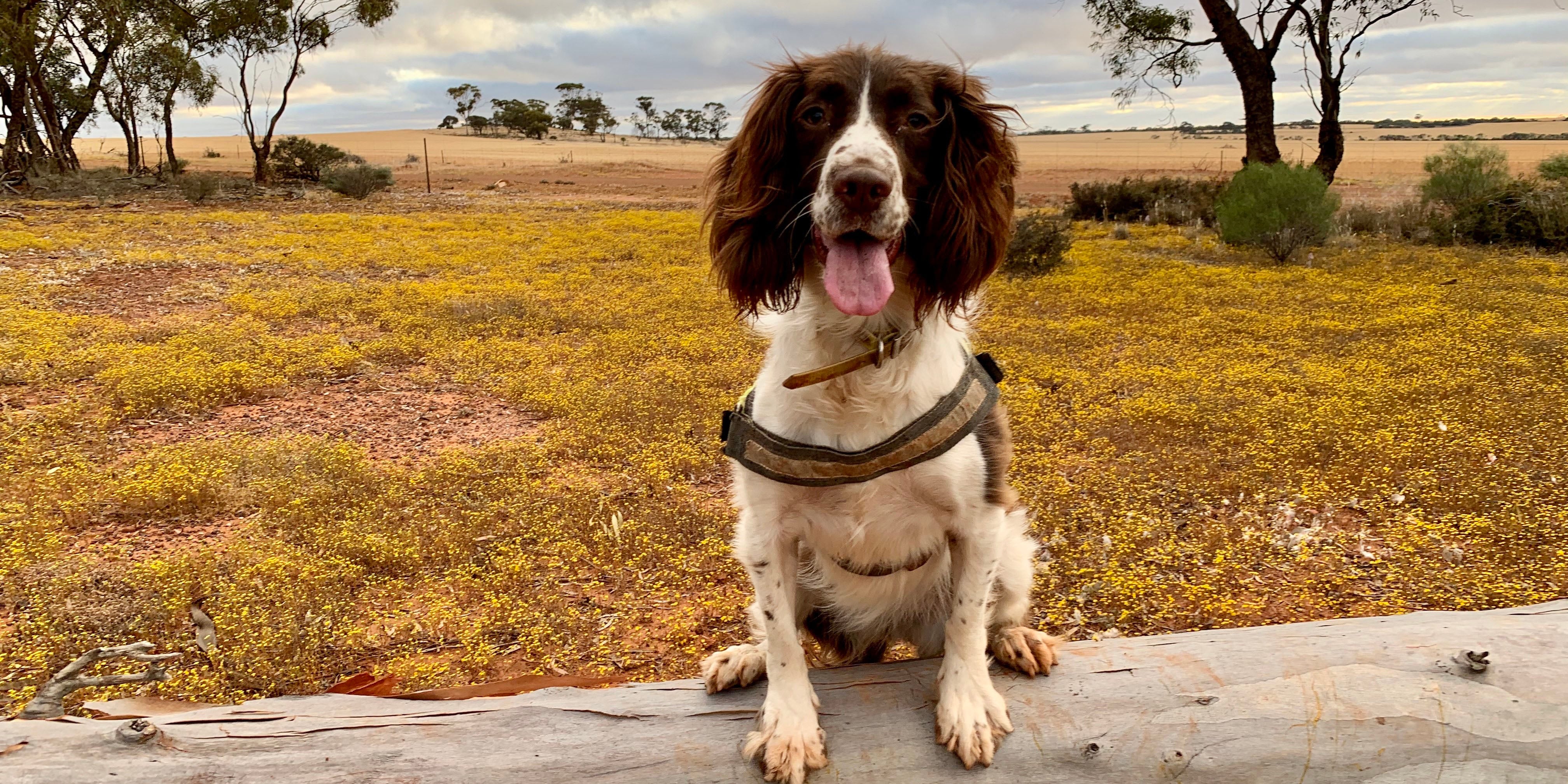
Leak detection dog Kep retires after finding more than 240 leaks
Australia’s first water leak detection dog has retired after helping Water Corporation save about 2.5 billion litres of drinking water. Kep, an English springer spaniel who joined the utility in 2018, detected more than 240 hidden leaks, mostly in Western Australia’s Goldfields and agricultural regions.
Piper, a 16-month-old cocker spaniel, has begun field training and will eventually be able to inspect up to five kilometres of pipeline a day.
WA Water Minister Daniel Pastorelli said: “Kep has shown us that innovation doesn't always look like a satellite, a drone or artificial intelligence.”
Unitywater scholarships support future water sector talent
Three University of the Sunshine Coast students who received Unitywater scholarships have been recognised at the university’s annual Celebration of Philanthropy.
Environmental science student Sofia Levis-Esposito received the Fiona Waterhouse Women in STEM Scholarship, while Bachelor of Science student Chase Acheson received the Bright Future for First Nations Students Scholarship.
Unitywater Executive Manager People, Safety and Governance Kenan Hibberd said: “These scholarships are one way we’re investing in the next generation of engineers, scientists and STEM professionals, while creating pathways for students to explore rewarding careers in the water industry.”
Gippsland Water builds frontline skills at Traralgon
Gippsland Water is using a dedicated training facility at its Traralgon depot to build frontline skills and improve safety. Established in 2025, the Field Services Centre of Excellence replicates parts of the water network so crews can practise repairing pipes under pressure, excavating safely and locating underground services.
The facility supports practical training for the Certificate III in Water Industry Operations.
Gippsland Water Managing Director Sarah Cumming said: “It’s also used by other Victorian water corporations to train their new recruits and is part of our broader sector collaboration and leadership focus.”
SA Water renews Warnertown water main
SA Water is replacing almost 3,000 metres of water main in Warnertown to improve service reliability and reduce the risk of leaks and breaks.
The works will install about 2,960 metres of PVC pipe beneath Hatters Road between the Wilkins and Augusta highways. The upgrade forms part of SA Water’s four-year, $287 million water main management program, with construction expected to finish in April 2027.
Access to Hatters Road will be restricted to local residents during works, and customers will be notified of any temporary supply interruptions.
SA Water General Manager of Sustainable Infrastructure Peter Seltsikas said: “The pipe being installed is made from PVC, which is renowned for being more flexible and resistant to movement than other pipe materials, such as cast-iron or fibre cement.”
Onslow desalination plant adds new drinking water source
Regional Western Australia’s first community seawater desalination plant has been completed in Onslow, where drinking water demand is forecast to double by 2045.
The plant can supply up to 1.5 million litres a day, covering up to half the town’s drinking water needs and reducing reliance on the Cane River Borefield. It forms part of a $137 million investment in Onslow’s water security, with the Chevron-operated Wheatstone Project contributing $69 million to the plant.
The WA Government worked with Buurabalayji Thalanyji Aboriginal Corporation and Traditional Owners throughout the project.
Pilbara MLA Kevin Michel said: “The completion of regional WA's first community seawater desalination plant will support local jobs, businesses, housing and industry for decades to come.”
Mount Morgan pipeline secures drinking water supply
The $88.2 million Mount Morgan Water Supply Pipeline is now operating, connecting the Queensland town to Rockhampton’s treated drinking water network. The 28-kilometre pipeline also increases supply capacity for growth areas including Gracemere.
The project follows the 2021 drought, when Mount Morgan’s No. 7 Dam fell below 10% capacity. Water was carted from Rockhampton until early 2024.
The Australian Government contributed $30 million through the National Water Grid Fund, with $40.4 million from the Queensland Government and $17.8 million from Rockhampton Regional Council.
Woorabinda water treatment plant moves into design
Planning and design are progressing on a $36 million project to improve drinking water reliability in Woorabinda. The Australian and Queensland governments are jointly investing $18 million towards a new treatment plant and upgrades to the town’s raw and drinking water infrastructure.
Construction is expected to begin in 2027. Earlier repairs to the existing plant allowed an 11-month boil water alert to be lifted.
Woorabinda Aboriginal Shire Council Mayor Terence Munns said: “Council will continue working with the Australian and Queensland governments to deliver these important upgrades for Woorabinda.”
INTERNATIONAL
Researchers test how contaminants in water affect nerve cell activity
Researchers from the School of Environment at Nanjing University, China have developed a method that measures electrical activity in networks of nerve cells to detect the effects of chemical mixtures in water.
In tests on samples from municipal wastewater treatment plants and receiving waters, the median improvement in sensitivity was about 25-fold compared with a conventional test that measures changes in nerve cell structure.
The study, published in Environmental Science & Technology, detected effects in whole-water samples without first concentrating the contaminants.
Want water sector insights delivered weekly? Subscribe to Source, the Australian Water Association's newsletter.


