Week in water: updates from across the community
 by Water Source
Across Australia, water market reform, drought planning and workforce capability initiatives are setting the tone for the beginning of 2026, alongside infrastructure milestones and community-led resilience projects.
From Trans-Tasman operational integration and new drought operating guidelines for the upper Murrumbidgee, to drought preparedness planning for Greater Sydney’s public green spaces, the week reflects continued investment in systems that support communities and strengthen long-term sustainability.
Utilities and partners remain focused on conservation, resilience and nature-based solutions, while international research is sharpening understanding of erosion – down to what happens to a single raindrop after it hits the ground.
National
New Zealand water market reform to accelerate Veolia's water business
Veolia has announced a strategic integration of its Australian and New Zealand water operations, positioning the business to grow alongside major water reforms and expected infrastructure investment over the next decade.
Veolia CEO and Managing Director in Australia & New Zealand Richard Kirkman said: “Uniting our Australian and New Zealand water operations enhances our capability and positions us strongly for the opportunities created by New Zealand’s water reforms. We look forward to bringing even greater expertise and support to our customers across the country.”
Veolia said water infrastructure investment in New Zealand is forecast to reach NZ$48 billion over the next decade, split evenly across renewals, service enhancement and new assets.
New drought framework published for upper Murrumbidgee River
The Australian Government has published guidelines outlining how Commonwealth funding can be used to minimise the critical impacts of drought on the upper Murrumbidgee River.
Minister for the Environment and Water Murray Watt said: “If faced with very dry conditions, the upper Murrumbidgee will need a helping hand. That’s why we’re implementing this framework now, to make sure we mitigate these effects before we see impacts on our environment, which impacts our communities.”
States and territories
Greater Western Water appoints new Managing Director
Greater Western Water has appointed Cameron FitzGerald as its new Managing Director, commencing 2 February 2026.
FitzGerald brings more than 20 years of experience in the water sector, most recently as Managing Director at Southern Rural Water, and previously in senior roles at City West Water and Melbourne Water.
Greater Western Water said the appointment will support its priorities of stabilising systems, improving customer experience and investing in modern infrastructure to support growth and climate resilience.
Eleven Greater Sydney councils join drought resilience program
Eleven Greater Sydney councils have joined a NSW Government initiative designed to help them better understand and plan for the impacts of drought on parks, gardens and sporting fields.
NSW Department of Climate Change, Energy, Environment and Water Manager Water Efficiency Programs Jethro Laidlaw said: “This program gives council the tools and expert assessments they need to plan ahead.”
“Preparing for drought conditions when our dams are full means communities can continue enjoying green, cool spaces even in the toughest dry conditions," he said.
TasWater urges summer water conservation as demand rises
TasWater is urging households to think about how they use water as demand climbs across the state during the summer months.
TasWater Head of Infrastructure Investment Planning Matt Jordan said: “Summer is a time when water use naturally increases, but small changes at home, at the shack and in the garden can make a big difference.”
“If everyone saved just 10 litres a day each, we could significantly reduce pressure on our networks this summer. It’s a small ask with a big impact, and we’re encouraging everyone to get involved," he said.
Jack-up barge arrives at Belmont as next phase of desalination project begins
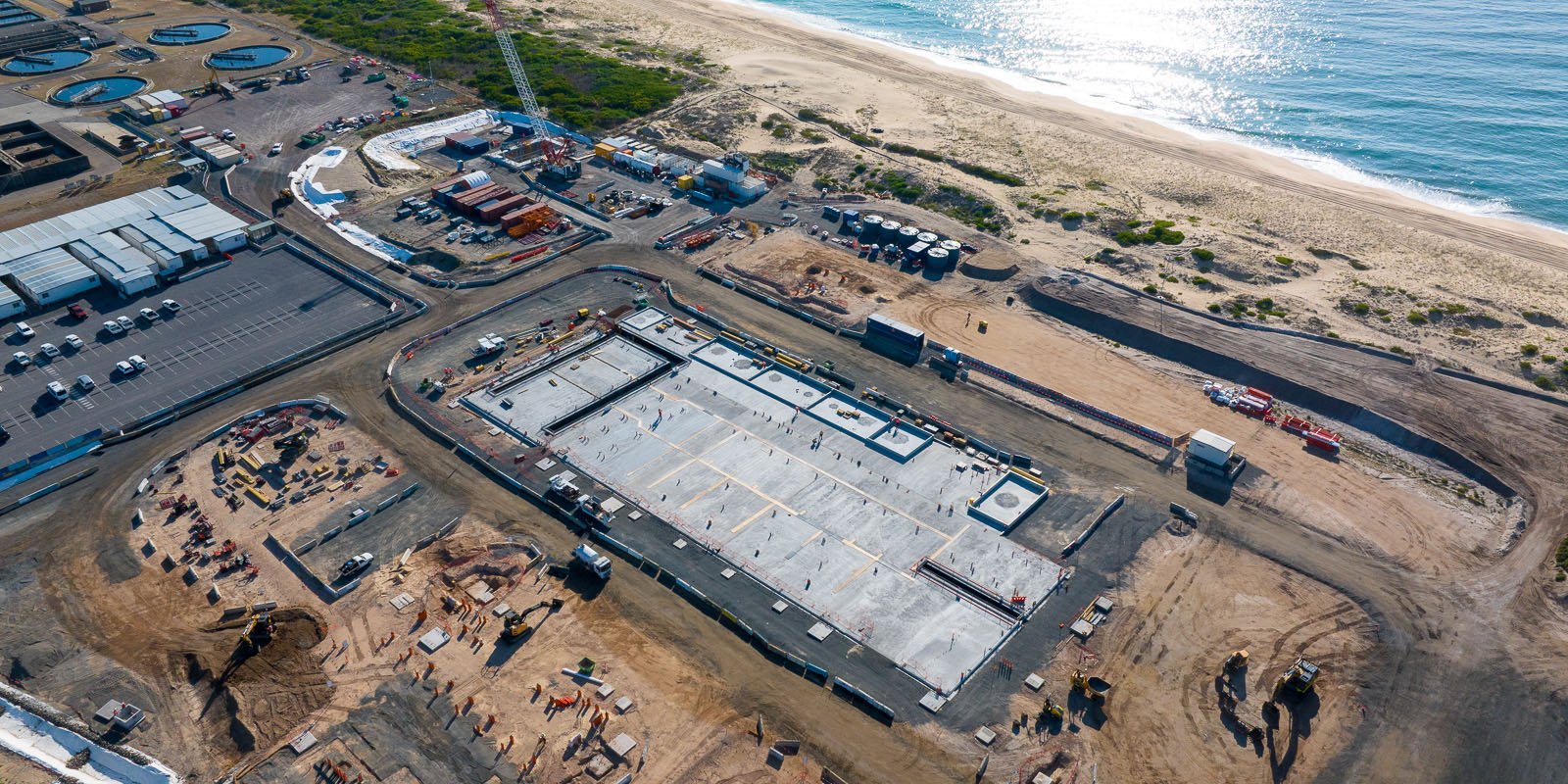
Hunter Water has confirmed its jack-up barge work platform is now positioned offshore from the Belmont Desalination Plant site, marking the start of marine works and tunnelling.
Hunter Water Acting Chief Executive Officer Jennifer Hayes said: “Now that the jack-up barge is in place, we’re progressing into the most complex and technical phase of the marine and tunnelling works, crucial to delivering a reliable, rainfall-independent drinking water source for our community.”
“Working closely with our delivery partner John Holland, we’re committed to completing this work safely, with minimal disruption to beach users and marine life," she said.
Saving water and caring for Country through Pun Pun project at Willum Warrain
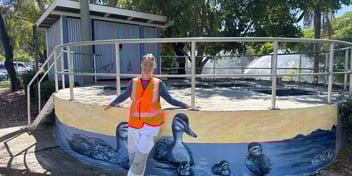
Willum Warrain Aboriginal Association on the Mornington Peninsula is progressing its ‘Water for our Pun Pun’ project with support from a South East Water community grant.
Willum Warrain Executive Officer Peter Aldenhoven said: “This project will help prevent the Pun Pun’s water level dropping and becoming stagnant, supporting our commitment to caring for Country while using water responsibly. We estimate that rainfall should fill the tank 26 times per year," he said.
South East Water Senior Manager First Peoples Glenn Pellegrin said: “Projects like this help protect our environment and honour connections to land and water and show how partnering with local Aboriginal gathering places can result in initiatives that heal and connect to the land, seas, and waterways of the Bunurong/Boon Wurrung peoples.”
Water performance report shows increase in customers accessing support
The Essential Services Commission’s annual water performance report shows Victorian households continue to face cost of living pressures, with a 23% increase in households accessing state government funded Utility Relief Grants compared to last year.
Essential Services Commission Chairperson and Commissioner Gerard Brody said: “More customers are receiving financial support, which shows cost of living pressures continue to impact Victorian households, but it’s encouraging to see water businesses stepping up and helping Victorians access the support on offer.”
“Water businesses must continue to focus on supporting their customers and communities as we head into the hotter and dryer months, and anyone struggling to pay their bills should talk to their water business as soon as possible," he said.
Free TAFE NSW course launched to boost non-urban metering capability
TAFE NSW has launched a free, three-hour online Trade Meter Installer course designed to fast-track qualified tradespeople into becoming duly qualified persons (DQPs) under NSW non-urban metering regulations.
TAFE NSW said around 6,500 sites across NSW need compliant meters installed and maintained, creating strong demand for skilled and accredited installers.
The course is open to eligible applicants including irrigation technicians, plumbers, engineers, hydrographers, fitters-welders, electricians and other relevant trade specialists.
Unitywater shellfish reef trial expands in Moreton Bay
Unitywater is expanding its shellfish reef trial in the Pine River, adding two new installation sites to improve water quality and increase local shellfish populations.
Unitywater Executive Manager Sustainable Infrastructure Solutions Mike Basterfield said: “We’re pleased to expand this trial with two new sites downstream from Unitywater’s Murrumba Down Wastewater Treatment Plant. The initial site achieved a reduction of 7.24 kilograms of nitrogen in the Pine River.”
International
Research suggests rolling raindrops contribute more to erosion
A new study published in the Proceedings of the National Academy of Sciences suggests the journey of raindrops rolling downhill may contribute more to erosion than the initial splash impact.
Researchers observed raindrops on a hillside in Ecublens, Switzerland collecting sand particles as they rolled, and replicated the effect in the lab using a 1.2-metre tilted sand bed. The team found rolling drops form “sandballs” that can move up to 10 times more soil than splash erosion alone.
Want water insights delivered weekly? Subscribe to Source, the Australian Water Association’s newsletter.