



 by Chris Manning
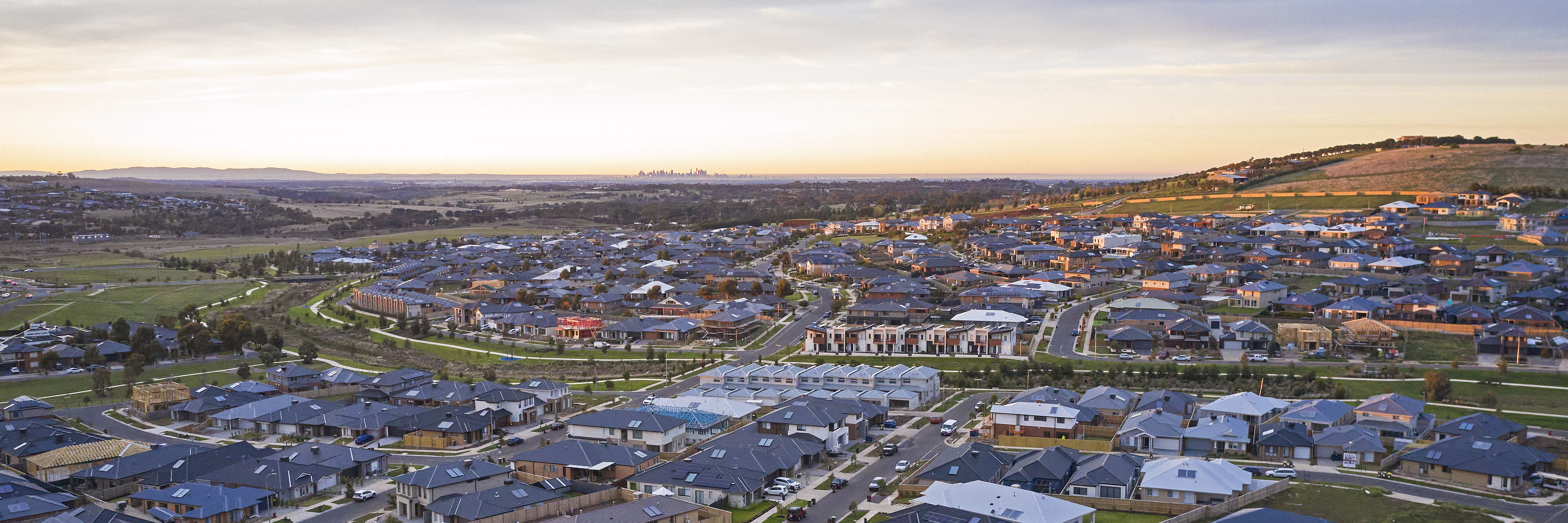
Australia's housing challenge is often framed as a race to build more homes, faster. The Ozwater'26 panel, Water Sensitive Housing: Building Healthy, Resilient and Sustainable Communities, challenged that framing by making one point clear: speed and scale matter, but they must not come at the cost of long-term liveability, affordability and resilience.
The session brought together perspectives from planning, development, water utilities and research. A shared message emerged: water sensitive housing is not a competing priority in the housing crisis. It is part of delivering homes and neighbourhoods that can remain healthy, affordable and resilient in a changing climate.
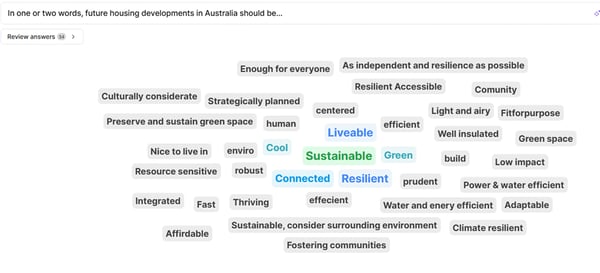
Audience responses reinforced this ambition. When asked what future housing developments in Australia should be, participants highlighted aspirations such as "resilient", "sustainable" and "liveable", alongside green, connected, cool, affordable, accessible, integrated, efficient and strategically planned. These responses point to a broader shift in expectations. Housing is not only about dwellings. It is about the places, systems and environments that allow communities to thrive.
Moving beyond short-term trade-offs
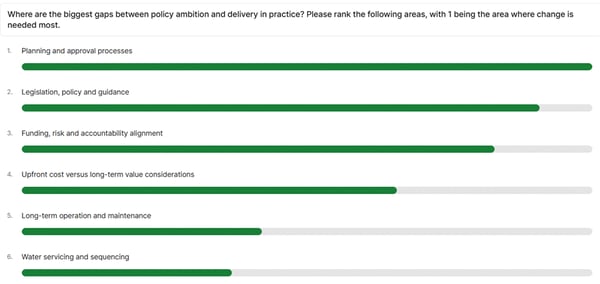
The panel and workshop participants recognised why these outcomes are difficult to deliver. An audience poll identified factors such as complex approval processes, regulatory uncertainty and inconsistent requirements can make water and environmental outcomes appear like barriers to faster delivery. This perception can encourage risk-averse decision making and narrow the affordability debate to upfront costs and supply targets.
This framing misses the bigger picture. Housing decisions made today will shape costs, risks and opportunities for decades. Poorly planned development can increase exposure to urban heat, flooding, water insecurity and degraded open space. It can also transfer higher costs to residents, governments, utilities and communities over time. But, integrating water, landscape, servicing and climate resilience from the beginning can support healthier, cooler and more adaptable neighbourhoods.
Getting the foundations right early
A recurring theme was the need to move water sensitive and servicing decisions upstream. Too often, stormwater, alternative water sources, integrated water management and long-term maintenance are negotiated late in development assessment, after key decisions about layout, density, staging and servicing have already been made. At that point, opportunities narrow and solutions can become more costly, difficult or contested.
Embedding these considerations earlier in strategic planning gives developers, agencies and decision makers clearer expectations from the outset. It also reduces ambiguity and supports faster, more confident approvals. The panel pointed to the value of clearer standards, better sequencing, stronger coordination and, where appropriate, more prescriptive requirements so that water sensitive outcomes are not treated as optional extras.
The discussion also challenged the assumption that housing delivery, affordability and sustainability inevitably conflict. Demonstration projects and practical examples show that integrated approaches are feasible and can provide better long-term value. They build confidence, reduce uncertainty and show how well-designed housing can support water security, biodiversity, urban cooling, public open space and community wellbeing.
From examples to standard practice
But examples are not enough. Scaling water sensitive housing requires stronger governance, funding models and accountability arrangements. We also must address operation and maintenance from the start, rather than trying to resolve it after construction. Without clear responsibility for who pays, who maintains and who benefits, good ideas struggle to move beyond pilot projects.
Leadership and organisational capability are just as important. Delivering water sensitive housing needs collaboration across disciplines and institutions that do not always work together easily. Planners, utilities, developers, designers, regulators, researchers and communities all influence outcomes. Champions, communities of practice and cross-sector leadership help build shared understanding, maintain momentum and create the conditions for experimentation and problem solving.
The panel proposed a practical pathway to make water sensitive housing standard practice:
- First, bring water into housing development decisions earlier.
- Second, value long-term outcomes alongside upfront costs.
- Third, create clearer standards and delivery pathways.
- Fourth, build the evidence, tools and partnerships needed to scale successful approaches.
Water Sensitive Cities Australia is continuing this conversation via a project that aims to balance housing growth, climate resilience and liveability across Australia. We are looking for funding partners from all jurisdictions, including consortiums of government agencies, water utilities, councils and water practitioners, to advance water sensitive affordable housing at scale.
You can find more information about the project and how to get involved here.
Share


