



Dr Josie Douglas on why water rights are the new land rights
 by Cecilia Harris
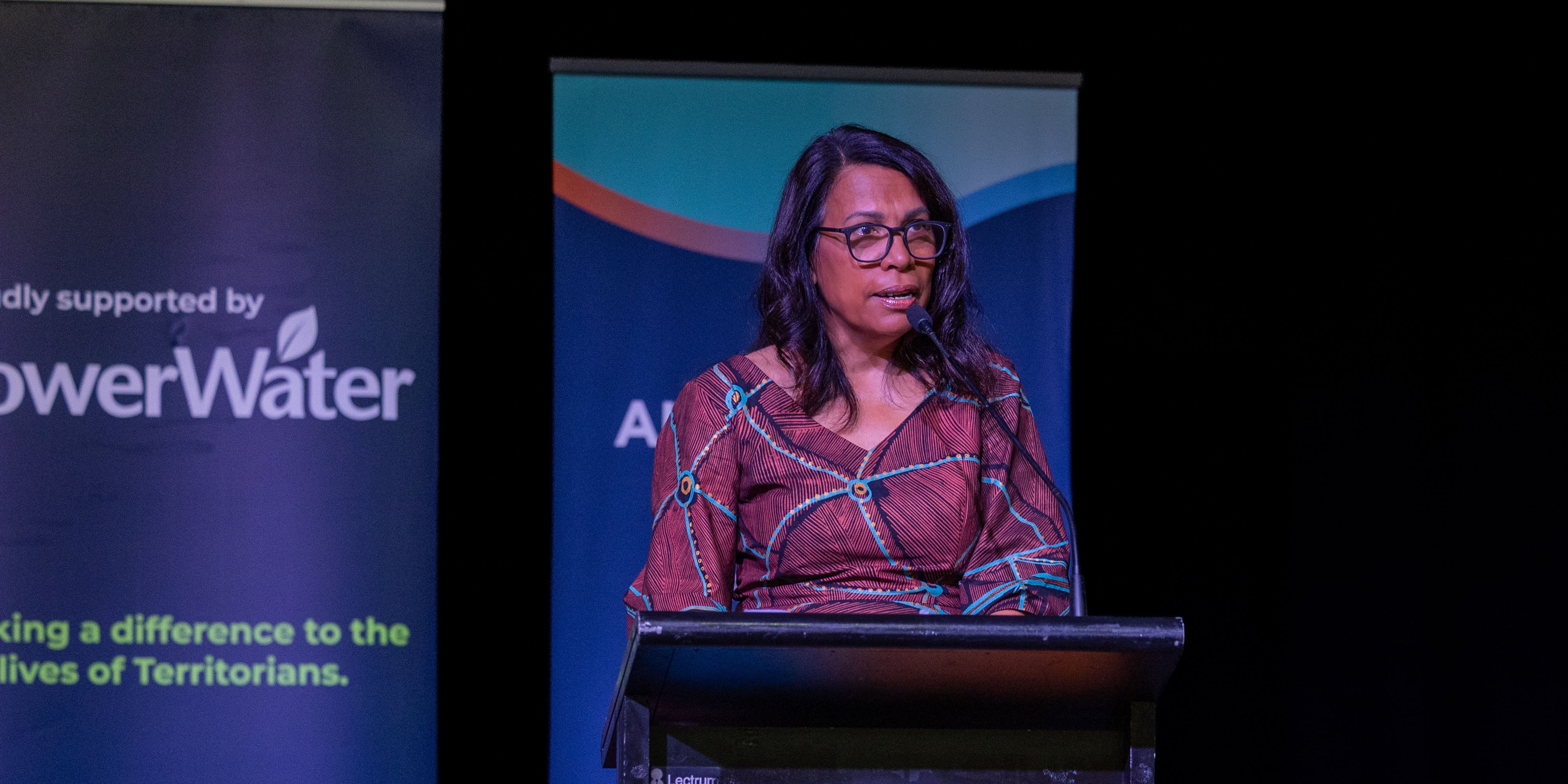
Aboriginal people have regained rights to vast areas of land in the Northern Territory, yet decisions about the water connected to that land remain largely in other hands. For Central Land Council leader Dr Josie Douglas, that divide sits at the heart of water injustice.
Delivering a keynote at Voices from the Bush 2026 in Mparntwe (Alice Springs), Douglas connected water ownership, decision-making and access to safe drinking water.
“When we talk about water rights for Aboriginal people, the rights to access, use and own water is part of it," she said.
“But the bigger picture is that the decision-making power over water remains with governments, and this power is not shared with Aboriginal people. This is why our Council say water rights are the new land rights.”
Water is life
Douglas, the Central Land Council’s General Manager Professional Services, began with the significance of water to the council’s members.
“Water is of ancestral and spiritual significance for our members and many First Nations people. Water embodies, sustains and connects all life," she said.
Douglas traced the gains made through land rights and native title, alongside the continuing exclusion of Aboriginal people from water ownership and control.
“Hard-won land rights have not translated into water rights for Aboriginal people," she said.
Douglas described aqua nullius as the colonial fiction that water belonged to no one before colonisation, denying Aboriginal ancestral water laws, and justifying and reinforcing colonial systems of governance.
“Despite reclaiming more than 50% of the land, some estimates show Aboriginal people hold only 2% of all the water licence in the Northern Territory. In the Murray-Darling Basin, Aboriginal organisations hold less than 0.2% of water rights," she said.
While Aboriginal water reserves are a step towards addressing that exclusion, Douglas pointed to their limited reach.
“Aboriginal water reserves are only available in water planning areas, which covers around 16% of the Northern Territory. And there is no water available where the government has already over-allocated water in the planning area by giving out water licences before the Aboriginal water reserve was introduced," she said.
“While it is a welcome effort to make water available specifically for Aboriginal people to access for economic development, we need to go further to meaningfully challenge embedded power dynamics at play.”
When communities must fight to be heard
Douglas pointed to the Singleton Station groundwater licence south of Tennant Creek as an example of those power dynamics. Native title holders opposed the scale of extraction and its potential impacts on cultural values and groundwater-dependent places.
“In August, the High Court of Australia ruled that the Singleton Station water licence was unlawfully granted," she said.
"It found the minister failed to adequately justify the 30-year licence instead of the standard 10 years, and failed to provide native title holders with procedural fairness in the consideration of impacts on their cultural values.
“The fact that native title holders had to go all the way to the High Court highlights the systemic inequalities that undermine Aboriginal people's self-determination and water rights.”
Douglas called for cultural protections to be restored in water plans.
“Despite this win in the High Court, we have also seen some steps backwards. For example, water plans have removed specific protections for cultural values, which we would like to see put back in," she said.
“Together to me means partnership, shared decision-making and equal power. True partnership needs to be earned and maintained through trust and accountability.”
Drinking water is part of water justice
Douglas also connected water justice to the daily experience of remote communities.
“Providing good drinking water to remote communities is part of addressing water injustice. It means people can be on Country and live good lives," she said.
“We know that Power and Water and Indigenous Essential Services are working very hard with what they have to overcome this history."
Despite efforts, ageing infrastructure, water quality concerns and the consequences of water that fails to meet community expectations have consequences, Douglas said.
“When poor taste or distrust in the water leads people to avoid it, or turn to unsafe alternatives, and when the hardness causes severe scaling and build-up on taps and fittings that cause leaks and shorten the lifespan of showers, toilets, washing machines, the health hardware, these issues are far more than aesthetic," she said.
"They have flow-on health impacts for sanitation and housing across the Northern Territory.
“Water insecurity also blocks community projects from going ahead, including dialysis centres that keep elders on country and sports and arts projects that communities are seeking to fund from their own land use income.
“We are hearing from our constituents that they worry about their water. For themselves and their families, there is concern for future generations. People want more information, and they want to have a say in their water management.”
Starting with people
Douglas called for sustained and increased NT and Federal investment in remote community and homeland water infrastructure, the return of water advisory committees, and stronger legal protection for cultural values.
“Fundamental parts of the solution are social and cultural. We need to see more collaborating with communities on their aspirations, managing community water use, and sharing information with communities to build trust in their water," she said.
“No more chipping away without us. We want cultural values protected and Aboriginal people and all Territorians empowered to meaningfully participate in decision-making in water planning and licensing.”
Douglas stressed that protecting Country and supporting development could work together.
“We can and do have sustainable projects that protect sacred sites and have meaningful local benefits. And we shouldn't accept anything less," she said.
Her closing challenge extended to every funding and policy decision delegates could influence.
“Water planning starts with people. Collectively, we can create change. Let's turn working together into a solid reality," she said.
“I ask you to walk with our members and actively try to overcome water injustice with every funding and policy decision you have the privilege and responsibility to make or to influence.”
Interested in learning more about Voices from the Bush 2026? Take a look here.


