
 by Cecilia Harris
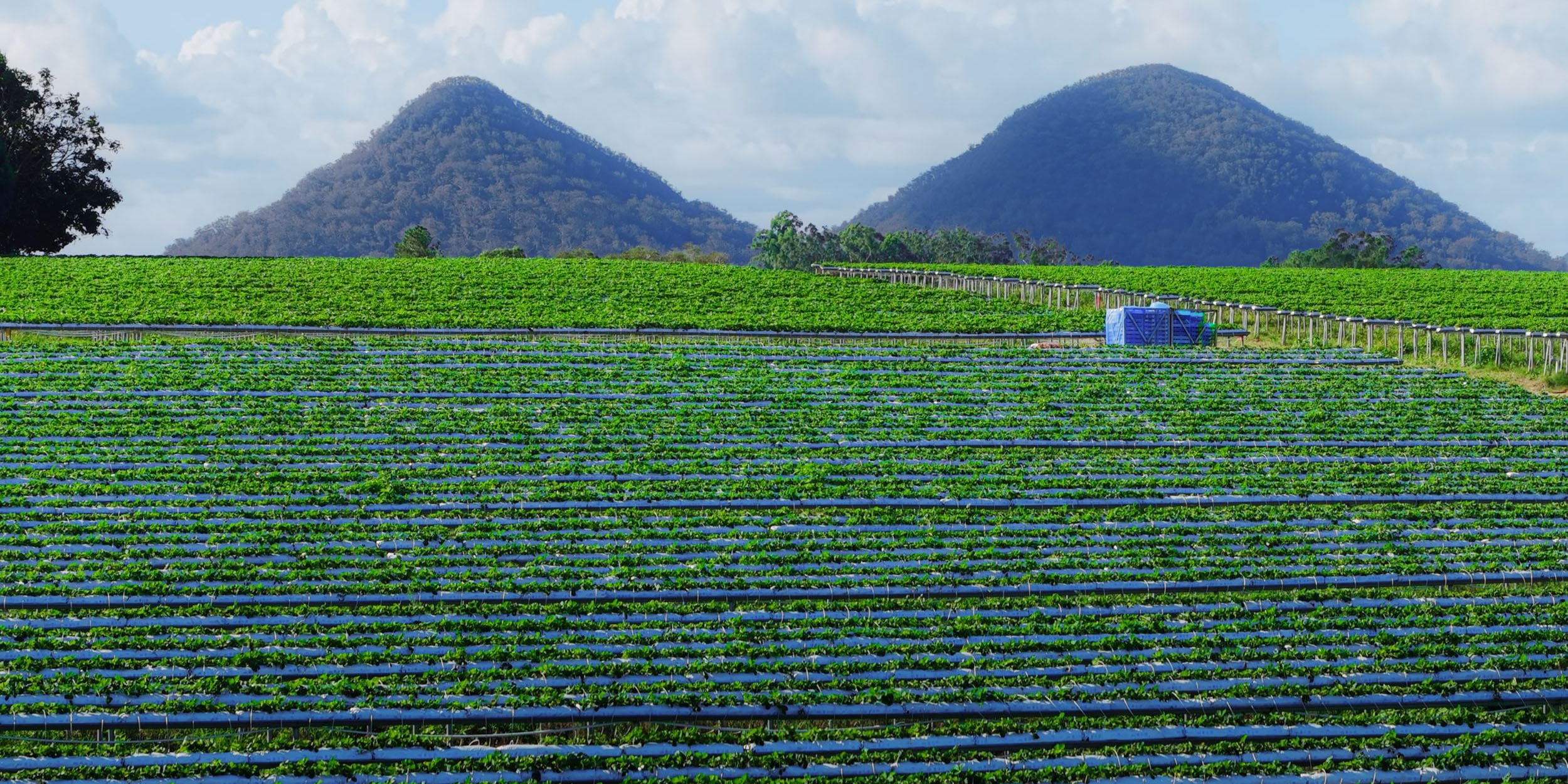
The Wamuran Irrigation Scheme is demonstrating what becomes possible when recycled water infrastructure is designed around the businesses who will use it.
Delivering 2.6 gigalitres of high-quality recycled water each year to growers in Queensland’s Wamuran region, the scheme supports agricultural production while diverting 11 tonnes of nitrogen and 1.8 tonnes of phosphorus from the Caboolture River annually.
But the project’s defining innovation is more than the productive reuse of wastewater; it is the collaborative model through which the scheme was conceived, designed and delivered, bringing farmers into the project as partners from the beginning.
This approach has earned Unitywater, Wamuran Irrigation Scheme Joint Venture partners Pensar, Twin View Turf and Piñata Farms, GHD and Abergeldie Complex Infrastructure the 2026 Infrastructure Project Innovation Award (Metro), sponsored by CPB Contractors, at the Australian Water Awards in May.
According to Unitywater Executive Manager, Customer Delivery, Rhett Duncan, the project challenges the conventional approach to recycled water infrastructure.
“Class A recycled water for agriculture is not a new concept. It’s done quite regularly around the country and around the world,” he said.
“What sets this project apart is that it was formed through collaboration between all the parties involved. It has been built from the ground up to be absolutely fit for purpose for the end use it is serving.
“More traditionally, we build a recycled water scheme and say, ‘Here it is, come and get it’. With this one, we really engaged and sought to understand our customers’ needs.”
Nominations for the 2026-27 awards season are now open. Nominate outstanding organisations, individuals, and students here.
Building demand into the design
As population growth increased wastewater volumes entering Unitywater’s Caboolture South Wastewater Treatment Plant, the utility recognised an opportunity to redirect a growing resource towards an established agricultural district.
“The challenge with recycled water is that, when you point a pipe in a different direction away from a river, the end user has to be able to take the volume you’re sending that way,” Duncan said.
“We had the treatment plant, and a few kilometres up the road we had the Wamuran Valley, which is a significant farming community producing a large proportion of Australia’s berries and turf. We recognised there was an end user that would benefit from a reliable, drought-resilient water supply.”
Turning that opportunity into a viable scheme required sustained engagement with the farming community. Third-generation farmer Gavin Scurr said Piñata Farms became involved when Unitywater began canvassing local growers about the concept.
“We could see it had a lot of benefits, not only for our own businesses but for the broader community. That led us to become part of the joint venture to design and construct the scheme," Scurr said.
"Being involved as large customers enabled us to help develop something that was genuinely fit for purpose.”
Piñata Farms grows berries, which means water quality, pressure and consistency are critical. Twin View Turf brought different seasonal and operational requirements, with turf irrigation concentrated during summer and often undertaken at night.
“The two businesses are very complementary. By having the end customers involved, we could help ensure as much of the water as possible would be used," Scurr said.
“The size of the pipes, the consistency and regularity of the supply, and the quality of the water all mattered. We had three parties that were strong in their individual fields, and collectively we ended up with something that will stand the test of time.”
Designing for different needs
The scheme supplies Class A recycled water under pressure to farm gates, where on-farm infrastructure carries it directly to crops. This avoids open on-farm storage and helps maintain water quality through to its end use.
Developing one system capable of supplying berry crops through drip irrigation while also meeting the high-volume requirements of turf production introduced considerable technical complexity.
“The irrigation systems at Piñata Farms activate and deactivate very quickly. If the scheme doesn’t operate at the pressure and speed required, the water isn’t distributed across the crop properly. Those nuances all had to be worked through," Duncan said.
The project also incorporated the former Moodlu Quarry as a shared storage facility, helping to balance continuous treated wastewater production against variable agricultural demand. For Scurr, the success of the design is reflected in how Piñata Farms now uses the supply.
“That could easily have been the other way around. If it wasn’t fit for purpose, we would use our own water first and treat the recycled water as a backup.”
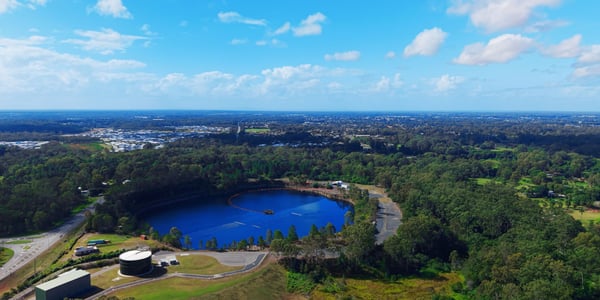
Moodlu Quarry
Creating confidence beyond the farm gate
The scheme’s value becomes particularly clear during dry conditions. While farm dams depend on rainfall, wastewater continues to be generated throughout the year, providing growers with greater certainty when making planting decisions.
“Once our on-farm dams are empty, we’re out of production,” Scurr said.
“This scheme gives us the confidence to plant a full crop every year because we know the water is there. The cost of establishing a crop is significant, so unless you’re confident you can get it through to harvest, you hedge your bets and plant less."
That confidence produces benefits extending well beyond individual farming operations. Piñata Farms employs about 400 people in the region across picking, packing, forklift operation and transport.
“When drought affects farmers, the town suffers too. The guarantee of water for the farming community enables the broader community to remain stronger when conditions are dry," Scurr said.
“We’ve taken water that was going down the river and put its nutrients back into growing crops. It enables us to employ more people, and those people contribute to the local economy. It’s not just a water project. It’s a community project.”
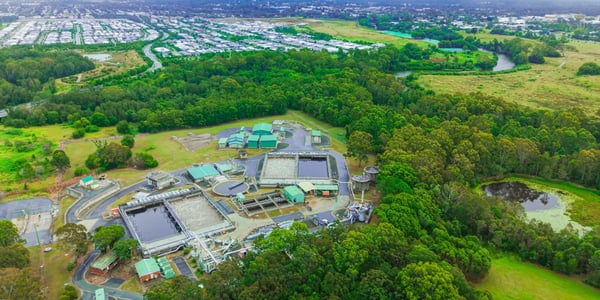 Caboolture South Wastewater Treatment Plant
A model grounded in partnership
Delivering the scheme required more than a decade of planning, continued engagement with foundation growers and close cooperation with regulators, council and the local community.
Construction also involved installing 22 kilometres of pipeline through a complex urban and peri-urban environment, as well as navigating supply and workforce disruptions during the COVID-19 pandemic.
Despite these challenges, Scurr said the partners remained focused on a shared outcome.
“All parties had a common goal, which was a fit-for-purpose scheme. Pensar did an amazing job delivering the infrastructure through challenging circumstances," he said.
"The route went through Caboolture, past schools and hospitals, and under railway lines and highways. It wasn’t simply a pipeline through an open paddock.
“We have delivered what we set out to do, and it will be there for generations. We were happy to underwrite it with our reputation and to be large customers, but it was never only about us. The intent was to leave a legacy for the broader community.”
As wastewater volumes increase with population growth, Unitywater is now engaging more prospective customers and considering opportunities to expand the scheme through the Wamuran Valley.
For Duncan, its broader lesson is that successful recycled water projects begin by understanding demand rather than assuming it will emerge once infrastructure is built.
“It’s not ‘build it and they will come’,” he said. "It’s asking: what do you want, what are your risks, what do you need and how can we satisfy that? Then it’s about finding a solution that creates value for all parties.
“We are facing water security and climate change challenges, so this helps us focus on where recycled water can be used instead of increasing demand on precious drinking water supplies.
“It encourages us to view wastewater as an asset and a resource, and to ask how we can add value to it for utilities, customers and communities. Wamuran is a fantastic case study of how that can be successfully delivered through infrastructure on the ground.”
Nominations for the 2026-27 awards season are now open. Nominate outstanding organisations, individuals, and students here.
Share


%20(1).jpeg?width=352&name=Hunter%20Water%20aerating%20water%20pumped%20from%20the%20Tomago%20Sandbeds%20before%20treatment%20and%20supply%20to%20the%20network%20(1)%20(1).jpeg)