Beyond awareness: how lived experience shapes inclusion
 by Cecilia Harris
Across the water community, there is growing recognition that diversity and inclusion policies and strategies alone are not enough. According to WaterAble Deputy Chair Tania Beer, what matters is how inclusion is understood in practice day-to-day, and whose perspectives are shaping that understanding.
Led by VicWater, WaterAble is an Australian water sector initiative supporting and promoting the inclusion of people with disability by providing a platform for advocacy, shared experiences, resources and industry collaboration.
“I saw that WaterAble were looking for an events manager, and I was really keen to help out,” Beer said. “While I am not needed in that role anymore, since WaterAble restructured into a national program, I still want to help. So I am now on the committee."
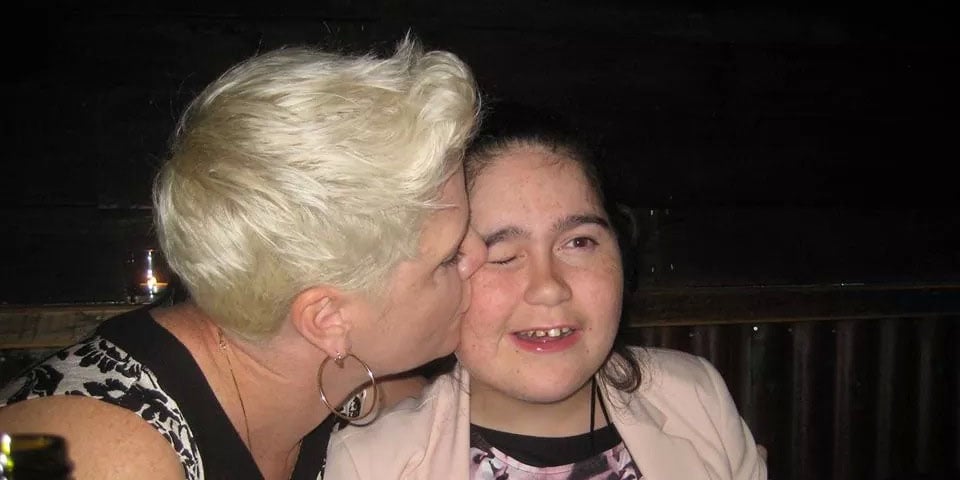
Beer’s dedication to contributing to WaterAble is informed by personal experience with disability, as well as being a primary carer for her daughter who lived with disabilities, and the impact this experience has had on her perspective.
“In 1990, I gave birth to a little girl who was born a couple of months premature. After five days, she started having seizures. Her brain didn’t develop properly, and her optic nerve didn’t attach to the brain. Long story short, she had very significant disabilities,” Beer said.
“Back then, there wasn’t much tact from specialists. When she was first diagnosed, I was told: ‘She’ll never walk, she’ll never talk.’
“But she did all of those things and more. She was an incredible human being. I lost her to cancer just over 10 years ago.”
Beer said she spent her entire adult life caring for, advocating for, and supporting a unique and beautiful individual, an experience that has informed her approach to advocacy now.
“After she passed, part of my motivation for joining WaterAble was to carry on her legacy and support people with disability in a different capacity,” Beer said.
Aside from working with WaterAble, Beer also founded Mothers of Angel Children, a grief support service for people living in Castlemaine and surrounding areas.
"There’s nothing worse than losing a child. When something like that touches your life, you don’t stop carrying it,” she said.
Lived experience matters
Aside from her experiences as a primary carer for her daughter, Beer also lives with fibromyalgia, a chronic pain condition.
“I experience daily migraines, fatigue, brain fog, and muscle and joint pain similar to rheumatoid arthritis,” she said.
“My biggest motivation is supporting people who don’t typically have the same opportunities to participate. I’ve always been someone who advocates and stands up for people who face additional challenges.”
Beer said it is easy to talk about things clinically or study them, but unless you have experienced the challenges yourself, it’s very difficult to understand.
“You just don’t get it until you’ve lived it,” she said.
“Over the years, as a parent of a child with disability, you meet many others in similar situations. It becomes like a family. For a lot of people, it’s not just one person; you end up caring about many people in similar situations as if they’re your own.”
This lived experience continues to shape how Beer approaches inclusion: not as a framework, but as something that is experienced day-to-day.
Beer said that, historically, people with different needs, including those from marginalised groups, face very real challenges.
“People with disabilities often struggle to put themselves forward. They may not see the value in what they have to offer because they haven’t been encouraged enough,” she said.
“Barriers exist in how language and information are presented, and how opportunities are communicated. I’ve done a lot of work to make things more accessible, including using plain language, simplifying forms, and making processes easier to understand.”
Despite this important work, Beer said hesitation around disclosure remains a persistent issue, all due to people being concerned with the risk of being misunderstood.
“Many people are hesitant to disclose a disability because they fear being judged or overlooked. That makes me sad, because they should feel proud of what they achieve,” she said.
“You can say you value diversity and inclusion, but when it comes to reality, people can still be overlooked. And reasonable adjustments are usually quite simple. Often it’s just someone saying: ‘I could do my job better if I had this simple thing.’
“But some people are hesitant to even ask. And this is usually because they have had experiences where they have not been seen or understood before.
“There’s often a concern that they won’t be liked as much or won’t be considered if they disclose something different about themselves.”
The role of WaterAble
Beer said people with disabilities require a culture that genuinely supports people, not one that limits opportunities after disclosure.
"Sometimes all people need is for someone to understand that their challenges are real and to support them,” she said.
“At Coliban Water, I’ve developed a profile as someone who understands reasonable adjustments. People ask me how to approach conversations or request support.
“Sometimes people ask me to sit with them as a support person because they’re nervous. And I feel privileged that people come to me for support.”
Looking ahead, Beer sees the opportunity to expand the impact of WaterAble to help drive greater visibility and understanding around the perspectives and needs of people with disabilities.
“WaterAble has helped raise the profile of disability and enabled conversations that may not have happened before,” she said.
“I’m excited for WaterAble to expand into other states and water authorities. There are so many people who could benefit from being members,” she said.
Are you interested in learning more about WaterAble? Take a closer look here.