Melissa Carroll on leading with empathy through lived experience
 by Cecilia Harris
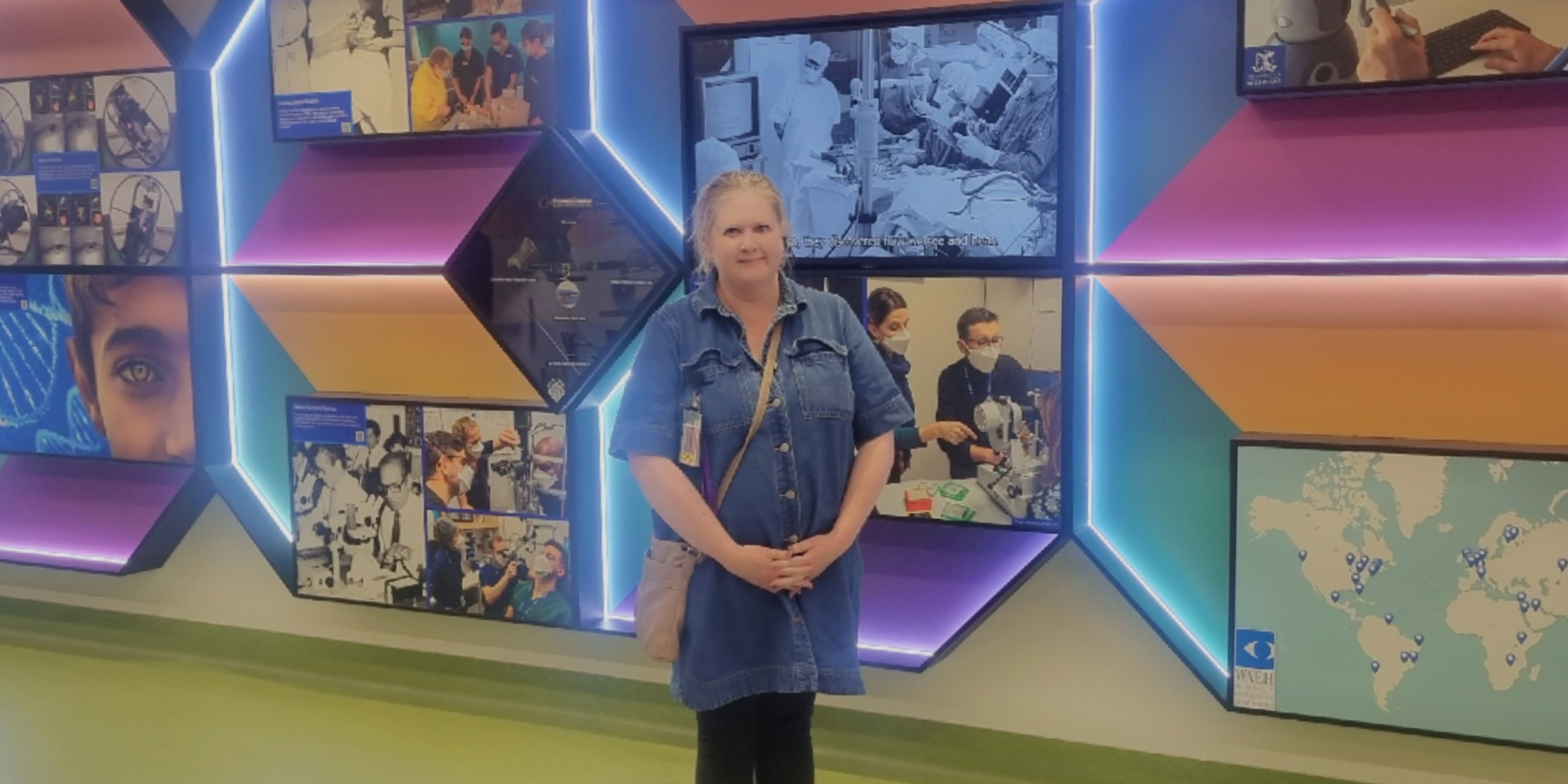
Creating inclusive workplaces starts with empathy – listening to people’s lived experiences and designing systems that support them to thrive. For Melissa Carroll, that lesson came through the WaterAble, where she found not only greater confidence in her leadership, but also a renewed belief in the power of community and authentic connection.
The WaterAble Leadership Program gives people with disabilities across the water community the tools, networks and support to lead confidently. It’s part of WaterAble’s mission to build a stronger, more inclusive water sector – one that reflects the diversity of the communities it serves. For Carroll, the experience was transformative.
“The WaterAble Leadership Program gave me a chance to step back from my day-to-day role and really think about how I lead. I walked away with more confidence and a better understanding that leadership isn’t about a title, it’s about making space for others and encouraging different perspectives,” she said.
Carroll’s journey into the water sector wasn’t straightforward. She began her career in biomedical science and paramedicine, a field she loved, until a medical complication changed the course of her life.
“I couldn’t continue in that field because I lost my eye and I wasn’t told beforehand that I couldn’t drive an ambulance with monocular vision,” she said.
“The ironic thing was that I could drive the same type of vehicle as an SES volunteer, but not as a qualified paramedic. It was disheartening, but I eventually found my niche in the water industry and loved it.”
Carroll began working in administration within the water sector before moving into an executive assistant role, and later as an administration officer for Victoria and Tasmania. As her organisation’s contracts expanded across local councils and private water authorities, so did her responsibilities.
“What drew me to water was the idea of being part of something essential. Water is such a critical service, and I liked knowing my work helped underpin the safety, quality, and sustainability of those services,” Carroll said.
Learning to lead through lived experience
For Carroll, leadership and inclusion are inseparable from her own health journey. Diagnosed with a rare genetic condition, she was the sixth person in Australia to receive that diagnosis and only the second in the world to experience its reported complications.
“It hasn’t always been easy,” she said. “Living with something so rare often means navigating challenges without a clear path and sometimes feeling like people around you don’t quite understand what you’re carrying. Those experiences shaped how I see inclusion and accessibility, because I know firsthand how important it is when workplaces make space for difference."
Joining WaterAble gave Carroll the chance to turn that understanding into advocacy.
“What WaterAble gave me was the chance to step into a different kind of space, one where my personal experiences weren’t a barrier, but a strength,” she said.
“It reminded me that leadership isn’t about having all the answers. It’s about listening, creating safe spaces, and making sure that people’s contributions, whatever their circumstances, are valued.”
Carroll hopes future participants in the leadership program will gain that same confidence.
“You don’t need to wait until you’re in a senior role to lead. Leadership happens in the everyday choices you make, in how you support your colleagues, and in how you bring your authentic self to work,” she said.
A deeper sense of belonging
Carroll describes WaterAble as a space that goes beyond professional development, one that invites participants to reflect, connect and rebuild their confidence.
“WaterAble isn’t just about becoming a leader within the water industry, it’s about discovering who you are at your core, and how your abilities and experiences connect with the sector,” she said. “The program went deep, emotionally and personally. It stripped you back to rebuild you stronger.”
Participants shared stories, many deeply personal, and supported each other through honest conversations. That openness reshaped Carroll’s understanding of inclusion.
“Hearing other people’s experiences made me realise inclusion and accessibility aren’t abstract ideas , they’re about real barriers that people face every day. It also reshaped my idea of leadership: it’s less about tasks, more about creating an environment where people feel safe and valued,” she said.
The biggest takeaway was confidence and a reminder that small changes can create meaningful impact.
“As a visually impaired person, I understand that water treatment plants aren’t always accessible, they’re industrial environments. But there are still small changes that can make a big difference. I felt more empowered to talk with my managers about accessibility and inclusion after the program,” Carroll said.
Practical tips for inclusion
Carroll said accessibility should be considered from the outside in, first thinking about how people access a service before they even walk through the door: “You can’t design inclusively if you start from the inside out.”
And just as importantly, workplaces must not underestimate the value people with disabilities bring.
“People with disabilities bring unique perspectives that others might not see, and that can change everything,” Carroll said.
Her advice to organisations is simple but powerful: start with listening, stay curious, and don’t underestimate the impact of small actions.
“Too often organisations roll out big initiatives without really asking people what they need. True inclusion starts with understanding people’s experiences and then being willing to adapt,” she said.
“Inclusion doesn’t always mean sweeping policy changes, it can be as simple as making sure meeting notes are clear, allowing flexible start times, or giving everyone the chance to contribute their ideas. Those small shifts create a culture where people feel valued.”
And inclusion is everyone’s responsibility: “It’s not just up to managers or HR. Any one of us can set the tone by modelling respect, challenging assumptions, and making space for others. Culture is built in those daily moments.”
“Accessibility and inclusion aren’t one-and-done, workplaces and people’s needs are always changing. Stay curious, keep asking questions, and see inclusion as a journey rather than a box to tick,” she said.
For Carroll, WaterAble was more than a professional development program, it was a catalyst for empowerment.
“Even with the complications of my condition, I learned that I could step into leadership, share my perspective, and help create change,” she said. “My hope for future participants is that they too leave feeling empowered, connected, and ready to carry what they’ve learned into their own workplaces, because when they do, the impact ripples far beyond themselves.”
Interested in learning more about the WaterAble Leadership Program? Learn more and register your interest here.