



AWA advocacy helps elevate new competency benchmark for NSW local water utilities
 by Cecilia Harris
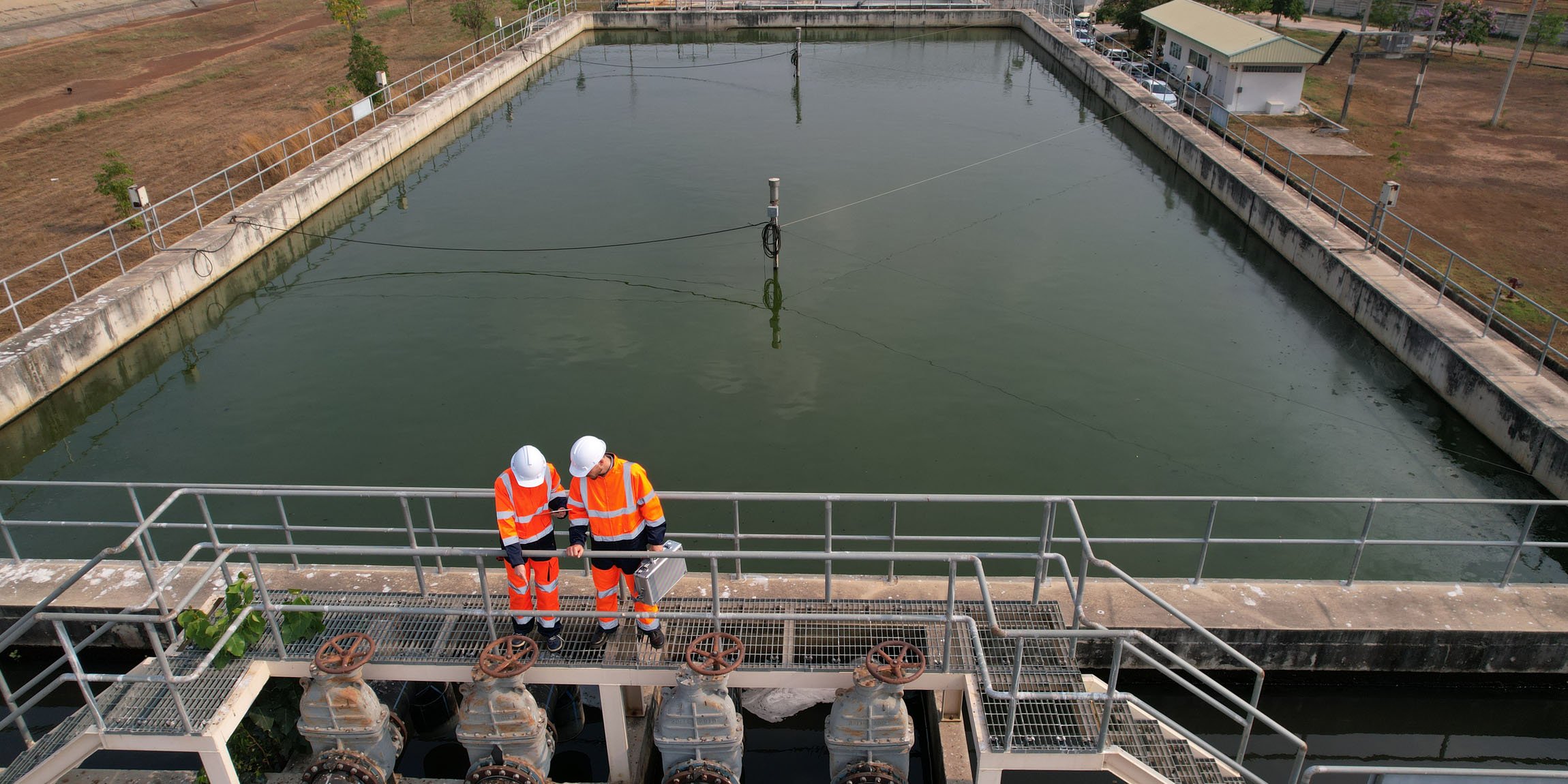
For regional utilities managing high-risk public health and environmental responsibilities with limited resources, establishing clear and consistent training expectations is essential to building a capable, sustainable workforce.
Targeted advocacy by the Australian Water Association (AWA) has helped drive meaningful progress on skills and training for local water utility operators in NSW, supporting the further development of a new competency benchmark and stronger alignment between industry, government and training providers.
NSW Department of Climate Change, Energy, the Environment and Water, Manager Workforce Futures Lisa Andersons said AWA’s engagement created direct access to decision-makers at a critical moment.
“AWA gave us as NSW Committee members the opportunity to sit at the table with Minister Jackson and Minister Whan to raise the issues directly with them that are impacting the NSW water industry,” she said.
“If the Ministers are aware of it and supportive of it, we're much more likely to get good outcomes ensuring this is embedded in the industry for the long term.”
Led by NSW DCCEEW and published in July 2025, the Competency benchmark for local water utility operators in NSW sets out a consistent framework defining the skills and competencies required for operators across regional NSW.
“This is a new approach to a long-standing problem in the industry. We’re setting a really clear expectation of what it means to be a competent operator and then providing the framework to achieve it,” Andersons said.
Operators in regional NSW perform high-risk roles, managing public health, environmental and work health and safety risks daily. Yet despite the need for training, there has historically been limited guidance on what competency should look like across the sector.
“They have requirements to be trained, but there’s very little guidance on what that actual training should be,” Andersons said.
By clearly articulating core competencies, the benchmark addresses fragmented training pathways and inconsistent capability levels across utilities of different sizes and locations.
It also aims to strengthen workforce mobility and resilience, encouraging operators to build capability across water, wastewater and networks rather than narrowly defined functions.
Regional realities
The benchmark specifically applies to local water utilities in regional NSW, where operators often perform broad, multi-skilled roles and resources are limited. In smaller utilities, training delivery can be particularly challenging.
“If you’re an operator in a very small water utility, you’re unlikely to have enough people to run a training program with one council,” Andersons said.
The benchmark provides clarity that can help coordinate regional collaboration, enabling neighbouring councils to aggregate demand and attract trainers to deliver relevant, face-to-face training locally.
“We’re trying to enable that regional collaboration, meeting up with your neighbours so the trainers can come out and deliver training at your plant,” she said.
By clarifying expectations across the state, the benchmark also helps strengthen both supply and demand for training. Clear requirements create consistent demand from operators and utilities, providing greater certainty for registered training organisations and supporting discussions with the NSW Department of Education about funding mechanisms.
Support and shared ownership
Following its release, the benchmark was shared with NSW Ministers and relevant departments, prompting engagement across portfolios. Because the initiative represents a shift in how competency is defined and delivered, ministerial backing has been essential.
“We have to have support from everyone – from operators all the way up to the Ministers – or it just won’t happen,” Andersons said.
To support implementation, NSW DCCEEW established an Advisory Panel in November comprising representatives from the NSW Department of Education, TAFE NSW, registered training organisations, government departments and water industry experts.
“It’s about shared ownership of the benchmark, not one department saying this is what you must do, but giving ownership across the water and training industries,” Andersons said.
“Driving positive change requires people to work together. It does not happen in isolation”.
The panel provides expert advice to ensure the benchmark aligns with legislation, regulatory requirements and operational realities, and that it can be embedded effectively into business-as-usual workforce planning.
Elevating recognition of operators
Beyond training alignment, the benchmark also aims to strengthen professional recognition for operators whose work is often unseen but critical.
“Operators play a critical role, but they’re often behind the scenes,” Andersons said. “Hopefully it will lead to better recognition of operators themselves.”
While further work is required to fully embed the benchmark across regional NSW, strong foundations are now in place.
Collaboration across water and training sectors, ministerial engagement and a clear competency framework provide a practical pathway to strengthen workforce capability and operational resilience.
Are you interested in broader advocacy work led by the Australian Water Association? Take a look at the upcoming National Policy Forum on 27 March 2026 in Canberra, where sector leaders, policymakers and industry experts will come together to shape the future of water policy in Australia.


