Week in water: updates from across the water community
 by Water Source
Across Australia, major reforms, infrastructure upgrades and community partnerships are shaping the final stretch of the year for the water sector.
From sweeping environmental legislation and national biodiversity innovation, to state-level resilience projects, education initiatives and climate research, the sector continues to evolve its response to changing conditions and community needs.
Utilities are reinforcing preparedness for summer, deepening engagement with customers and investing in systems that build long-term sustainability. Internationally, digital transformation and real-time monitoring remain key drivers of global water management progress.
National
Environmental protection reform bills pass Parliament
The Australian Government’s Environment Protection Reform Bills have officially passed Parliament, paving the way for what Prime Minister Anthony Albanese described as long-overdue change.
“Everyone agrees that the laws as they stand are broken and need to be reformed. Getting these laws passed is vital to protect our environment and to boost productivity in our economy," Albanese said.
The reforms will introduce Australia’s first National Environment Protection Agency, maintain federal approval for “water trigger” projects, establish National Environmental Standards and increase penalties for significant breaches. With staged implementation to come, the Government has emphasised continued consultation as transitional arrangements are developed.
National Biodiversity DNA Library launched
CSIRO has unveiled the National Biodiversity DNA Library (NBDL), a world-first reference resource designed to dramatically expand environmental DNA monitoring.
“The NBDL will enable monitoring of ecosystems quickly and at scale using eDNA,” said Dr Jenny Giles, Director of the NBDL. She said the initial data release “greatly increases our ability to monitor fish species just by reading eDNA in seawater samples… The NBDL will be game changing.”
The release includes reference sequences for nearly 2,500 marine fish species, representing about half of Australia’s marine fish biodiversity.
New national drought framework sets long-term direction
The Future Drought Fund has released its Monitoring, Evaluation and Learning Framework 2024–2028, outlining how the fund will track impact, adapt programs and support resilience for farmers and regional communities.
The framework focuses on transparent evaluation, cultural safety, First Peoples data sovereignty, and building an evidence base for future climate resilience investments.
States and territories
Gold Coast trials world-first vertical biosolids drying system
The City of Gold Coast and IPMF Technologies have progressed a pioneering biosolids drying trial at Coombabah Sewage Treatment Plant.
Early results indicate the vertical drying system can reduce biosolids volume by up to 85% at ambient temperatures, without external heat. The demonstration system has been running since April and will continue through to May 2026. Findings will be presented at Ozwater’26.
Western Australia releases new 20km climate projections
The WA Government has released a state-wide 20km climate dataset, offering detailed projections for temperature and rainfall under multiple emissions scenarios.
The dataset is available via the Shared Location Information Platform (SLIP) and is intended for technical users and will support planning across government, business and local decision-making.
Unitywater crews respond to widespread storm impacts
Following wild weather across Queensland’s south-east, Unitywater has deployed additional crews to manage water and wastewater interruptions caused by power outages and infrastructure damage.
“Unitywater crews have been attending sites where infrastructure has been damaged or power outages have impacted local water or wastewater services and we continue to be ready to respond as quickly and safely as possible,” Executive Manager Customer Delivery Rhett Duncan said.
Duncan noted that storms present multiple risks: “On Monday night, the intense wind ripped a tree out of the ground in Beachmere and took one of our water mains with it as its roots had grown around the pipe… it was a complex job for our crews to repair.”
Duncan reminded residents to store emergency drinking water ahead of forecast storms: “This will cover three days’ worth of drinking and basic hygiene needs if an outage occurs in your area.”
Hunter Water completes reservoir upgrades for summer demand
Hunter Water has finalised renewal works at several key reservoirs and delivered a new reservoir at Cameron Park, boosting reliability as summer begins.
“These reservoir upgrades are a great milestone to reach as we welcome the first day of summer,” Acting CEO Jennifer Hayes said.
Hayes urged continued water efficiency, noting the region’s shallow storages and high evaporation rates: “As we turn the calendar over to December, it’s the perfect time to build good habits so that we ensure we are conserving our most precious resource.”
Expressions of interest open for Loch Garry Customer Committee
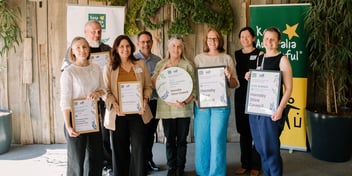
Goulburn-Murray Water has opened expressions of interest for its new Loch Garry Customer Committee, the final addition to the utility’s updated customer committee model.
“Our customer committees play a vital role in representing community interests and guiding GMW’s future direction,” said General Manager Water Delivery Services Warren Blyth.
“Your insights and local knowledge are crucial to ensuring our services meet community needs now and into the future.”
Zombie fish return to Merrigum ponds
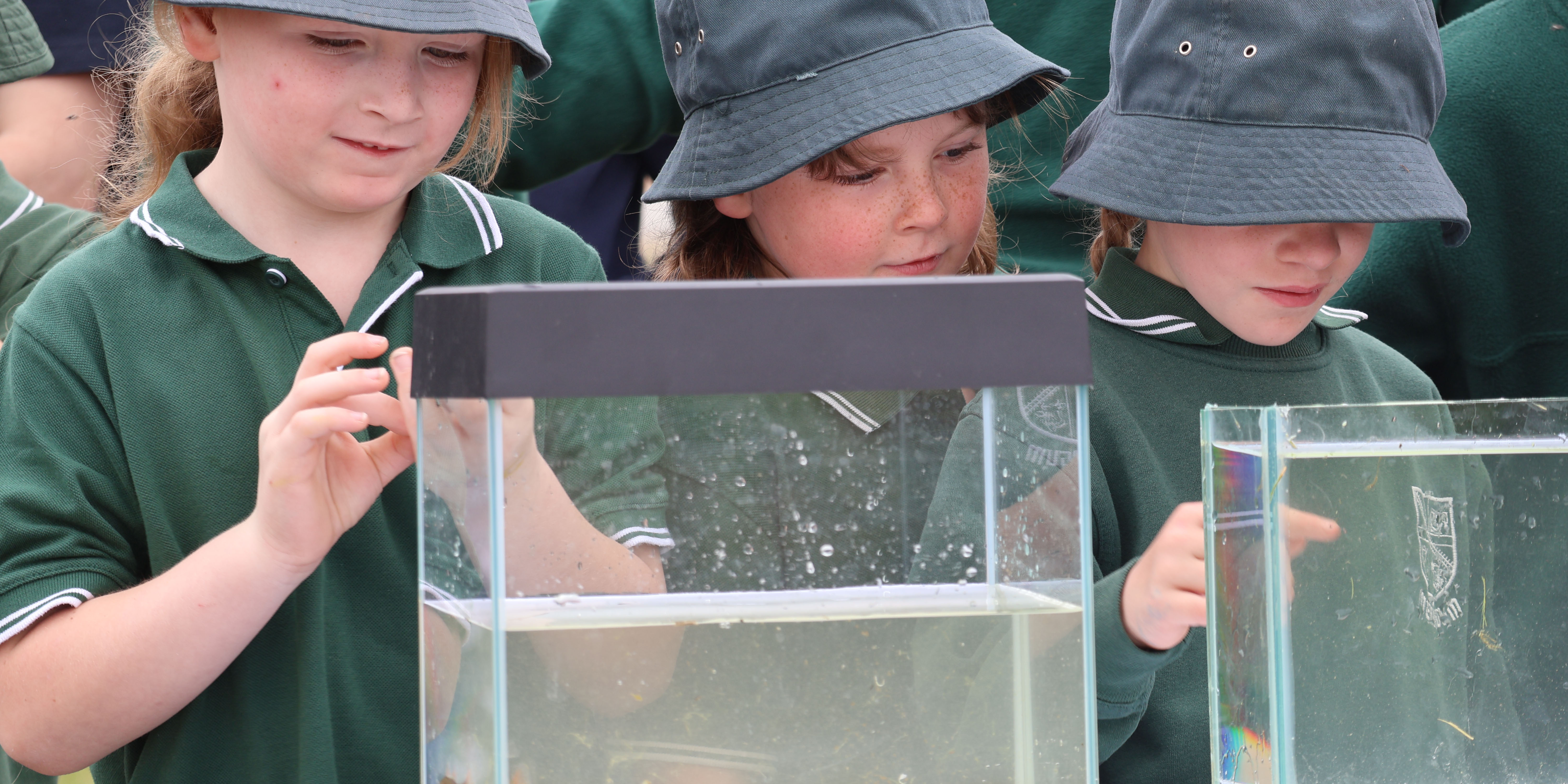
A species once declared locally extinct in Victoria, the Southern Purple-Spotted Gudgeon, has been released into Merrigum’s Dunyak Moira Fishing Ponds.
Dr Steve Capewell, Managing Director of Goulburn Valley Water, said the release showcases the site’s unique conservation role: “Dunyak Moira is more than a fishing spot – it’s a place where conservation, recreation, and community come together.”
Capewell said the project “sets a benchmark for how we manage water assets for the benefit of people and the environment.” The fish, bred at SEA LIFE Melbourne Aquarium, will eventually support repopulation efforts across Victorian waterways.
TasWater brings Water Guardians to the stage
TasWater has toured 20 Tasmanian primary schools with a live theatre adaptation of its Water Guardians storybooks, focusing on water literacy and sustainability.
“Our customers have told us they want to see us develop educational programs around water conservation and sustainability,” said Acting General Manager Customer and Community Kate Crawford.
“By bringing the Water Guardians books to life on stage in primary schools across the state, we’re starting that conversation with the next generation.”
National Theatre for Children Managing Director Tobias Benn highlighted the impact of performance: “Theatre has a unique power to engage young minds… helping students connect with vital messages about water conservation and sustainability in a way that’s fun, memorable and distinctly Tasmanian.”
International
Southern Annular Mode in most positive state in 1,000 years, review finds
A new scientific review has revealed that the Southern Annular Mode (SAM), one of the Southern Hemisphere’s most influential climate drivers, is now in its most positive state in over a millennium.
Lead author Dr Ariaan Purich said: “The SAM influences temperature, rainfall, ocean circulation and Antarctic ice. Because it affects so many parts of the climate system, we need to know how it will change so we can better anticipate the challenges facing Antarctica and the Southern Hemisphere in the decades ahead.”
Published in Nature Reviews Earth & Environment, the research highlights the long-term climate implications of persistent positive SAM phases, including shifts in westerly winds, changing rainfall patterns and pressures on Antarctic systems.
Want water insights delivered weekly? Subscribe to Source, the Australian Water Association’s newsletter.