Week in water: updates from across the water community
 by Water Source
Across Australia’s water community, major contracts, bold collaborations and surprising survey results are making headlines.
Nationally, new leadership appointments and major infrastructure investments signal strong momentum across utilities and industry. In the states and territories, organisations are working together on long-term regional resilience, reducing water losses, and supporting fast-growing communities.
Internationally, fresh research is reshaping how scientists understand clouds and the way those clouds influence global climate predictions. Take a look at all the updates below.
National
Veolia secures $700m in new contracts
Veolia Australia has secured $700 million in water operation and maintenance contracts with Australian water utilities. The agreements span Central Highlands Water, Hunter Water and Seqwater, and are aimed at boosting water security and operational efficiency.
Veolia CEO Estelle Brachlianoff said the new contracts reinforce the company’s long-term commitment to innovation and sustainability: "Our ambition is simple: support our clients to provide the most resilient, efficient and sustainable water systems for Australian communities, while creating local jobs and delivering lasting value for our partners and the planet."
CSIRO confirms Lake St Clair as Australia’s deepest lake
A high-tech CSIRO mapping mission has produced the first high-resolution 3D map of Tasmania’s Lake St Clair, unveiling its true depth of 163 metres, exceeding previous estimates and making it deeper than Bass Strait.
Using a combination of multibeam sonar and LiDAR, the team revealed dramatic underwater cliffs and ravines carved by ancient glaciers.
“Our mapping confirms that Lake St Clair is absolutely Australia's deepest lake, with the next deepest lake being less than 100 meters deep,” said CSIRO hydrographic surveyor Augustin Déplante.
States and territories
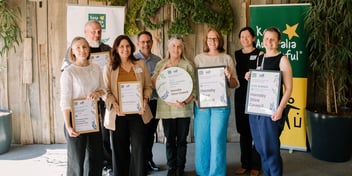
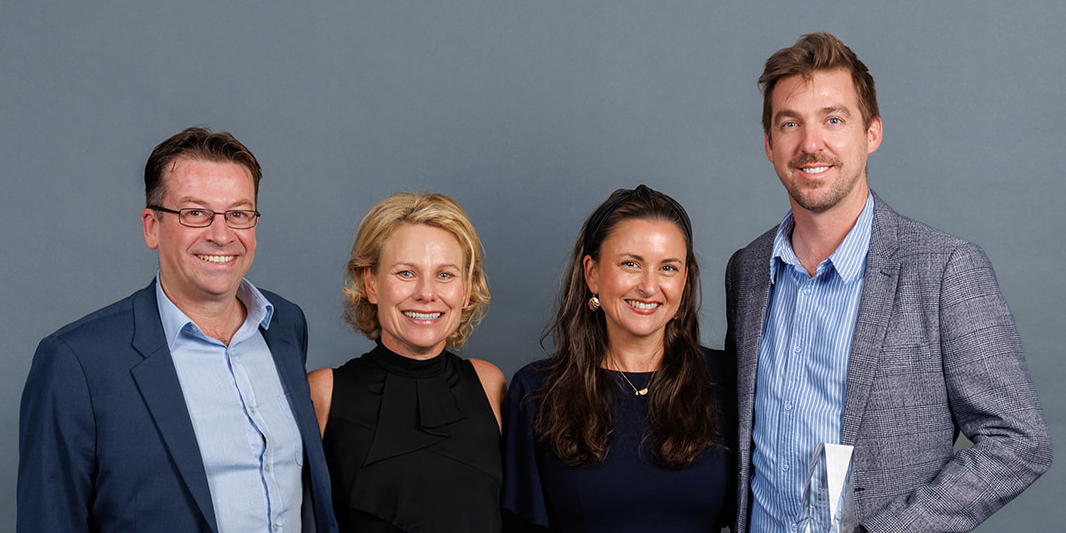
Unitywater wins award for community engagement
Unitywater has won the 2025 UDIA Queensland Excellence Award for Community Engagement for its Aura and Harmony Infrastructure Program, recognising its values-led approach to working with residents, councils, environmental groups and Aboriginal and Torres Strait Islander partners.
“This award is a testament to the power of genuine collaboration and engagement, having a no-surprises approach and being a good neighbour,” Executive Manager Strategic Engagement Joshua Zugajev said. The project will ultimately provide essential services to more than 71,000 residents across two major growth areas.
Northern Urban Water Accord launched
Seven northern Victorian water corporations have joined forces to launch the Northern Urban Water (NUW) Accord, a coordinated approach to long-term regional water planning across an area serving nearly 750,000 people. The Accord strengthens existing collaboration and aims to better prepare the region for increasing climate variability and shared service pressures.
Coliban Water Managing Director Damian Wells said: “Dry conditions are currently impacting large parts of the state, not long after devastating floods. These extremes highlight the urgent need for a new way forward – one that’s collaborative, bold and region-wide.”
The corporations say the partnership provides a united platform to lift resilience and improve outcomes for communities and the environment.
GMW opposes expanded voluntary buybacks
Goulburn-Murray Water has reiterated its concerns about the Commonwealth’s expansion of voluntary water buybacks in the southern connected Basin, warning the move risks undermining the long-term viability of irrigation communities.
GMW Chair Justin Hanney said: “These non-strategic purchases create a Swiss cheese effect, where the patchy nature of the buybacks means we are delivering less water but still have the same costs relating to infrastructure operation and maintenance.”
GMW is urging a more considered, strategic approach to water recovery to avoid compounding financial pressures on remaining customers.
EOIs open for new developments at Lake Eildon
Expressions of interest are now open for commercial developments across 16 parcels of land at Lake Eildon, offering opportunities in tourism, recreation, renewable energy, telecommunications and environmental services. The area draws around 200,000 visitors each year.
“We’re eager to explore a range of commercial opportunities with interested parties which will help unlock the full potential of the region,” GMW General Manager Water Storage Services Jon McKeown said. The utility is seeking proposals that demonstrate sustainable development and benefit local communities.
Leak detection boosts water efficiency in Baw Baw
Gippsland Water has completed a proactive leak detection program across the Baw Baw region, surveying 425 kilometres of mains and identifying 99 network leaks and 29 customer-side leaks. The work aims to strengthen service reliability and reduce water loss ahead of expected summer pressures.
“By identifying and repairing these leaks, we’ve reduced the amount of water lost and improved the reliability of our services,” Managing Director Sarah Cumming said. “The insights from this program will help shape future works and allow us to take more proactive measures to maintain our network.”
Work progresses on Launceston sewer transformation
TasWater is advancing preliminary design and early works for the Launceston Sewer Transformation Project, a significant modernisation of the city’s ageing sewer infrastructure.
“This is the beginning of a once-in-a-generation investment that will deliver lasting benefits for Launceston and its waterways,” TasWater Project Director of Major Projects Andrew Truscott said.
“This project will improve the treatment of the community’s wastewater; ensuring we meet modern environmental standards and provide the infrastructure capacity we need for future development.”
Essential infrastructure to support 7,000 homes in Melbourne’s north
Yarra Valley Water is constructing new water and sewer infrastructure to support strong population growth in Donnybrook and Kalkallo. The project will improve reliability for 2,800 existing households and provide drinking water, recycled water and sewerage services for a further 4,500 homes.
“We’re ensuring essential services keep up with Melbourne’s growth,” YVW General Manager Asset Services Bridie Fennessy said. “This project will give thousands of new and existing households access to reliable and long-term water and sewerage services.”
Tree roots identified as major cause of wastewater blockages
Unitywater has reported that tree roots caused one in five wastewater blockages across Moreton Bay, the Sunshine Coast and Noosa last financial year, with teams responding to more than 3,000 incidents.
“Our data tells us Buderim, Clontarf and Caboolture are the suburbs with the most tree root blockages,” Executive Manager Customer Delivery Rhett Duncan said. “Tree roots seek out water and penetrate pipes, continuing to grow and causing major issues like blockages and wastewater overflows.”
International
SMEC parent company strengthens global infrastructure leadership
Parent company of SMEC, SJ Group has announced new senior appointments to guide its Infrastructure + Energy division through rapid shifts across decarbonisation, digitalisation and the global energy transition.
James Phillis has been promoted to Chief Executive, with Murray Kretschmer joining as Chief Operating Officer following more than 25 years at Arup.
“Engineering and design have always shaped the world around us, but today, they must rise to even greater challenges,” said Sean Chiao, Group CEO of SJ Group. “As infrastructure evolves globally, driven by decarbonisation, digitalisation, and the energy transition, our clients are looking to us for bold thinking and quality delivery.”
Cloud droplet microphysics challenges climate models
New research involving the University of Washington has found that current climate models may be oversimplifying how cloud droplets form and cluster. Published in Geophysical Research Letters, the study used rare centimetre-scale observations of stratocumulus clouds and discovered that real droplet size distributions vary far more than many simulations predict.
The researchers warn that this lack of microphysical detail may affect how models estimate sunlight reflection and drizzle formation, processes that play a major role in global temperature projections. The findings point to the need for sharper representation of cloud structures in future climate modelling.
Want water insights delivered weekly? Subscribe to Source, the Australian Water Association’s newsletter.