Week in water: updates from across the water community
 by Water Source
This week in water, the Murray–Darling Basin Plan enters a critical review phase, new drought resilience data highlights national progress, and major investment flows into innovative water science and regional infrastructure.
Consultation is opening on the future direction of one of Australia’s most significant water reform frameworks, while fresh reporting from the Future Drought Fund underscores the scale of work under way to strengthen climate resilience across regional communities.
At the same time, governments are backing managed aquifer recharge, desalination and groundwater investigations to secure supplies in a drying climate. Utilities are deepening partnerships to unlock agricultural development and accelerate multi-billion-dollar capital programs in high-growth corridors.
Internationally, new research is prompting closer scrutiny of the growing presence of microplastics in bottled drinking water.
National
Basin Plan Review consultation begins
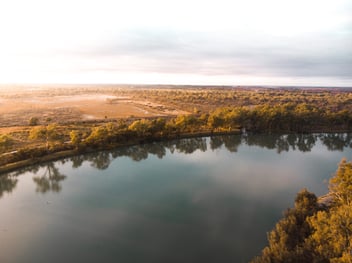
The Murray–Darling Basin Authority (MDBA) has released a Discussion Paper to support public consultation on the Basin Plan Review, as required under the Water Act 2007 before the end of 2026.
“Today’s release of the Discussion Paper kicks off the Basin Plan Review,” MDBA Chief Executive Andrew McConville said.
“Through the Discussion Paper the Authority has explored progress that has been made to date and considered some of the issues and challenges for the Basin as we look forward over the next decade.”
Consultation will run for 12 weeks from 5 February 2026 to 1 May 2026, with the final Review to be delivered to the Commonwealth Government before the end of the year.
Future Drought Fund annual report released
The Future Drought Fund (FDF) 2024–25 annual report has been released, marking the first year of a new four-year funding cycle under the Drought Resilience Funding Plan (2024 to 2028).
As of 30 June 2025, 42 additional regional drought resilience plans were finalised, bringing the total to 57. More than 59,000 people have benefited from or contributed to leadership opportunities or locally led actions, and over 67,000 farmers have taken part in training and skills development initiatives.
The year also saw the establishment of a First Nations Advisory Group and development of a targeted grant, Strengthening Drought Resilience on Country, alongside the release of a new Monitoring, Evaluation and Learning Framework.
State and territory
GMW partnership supports $90 million almond development
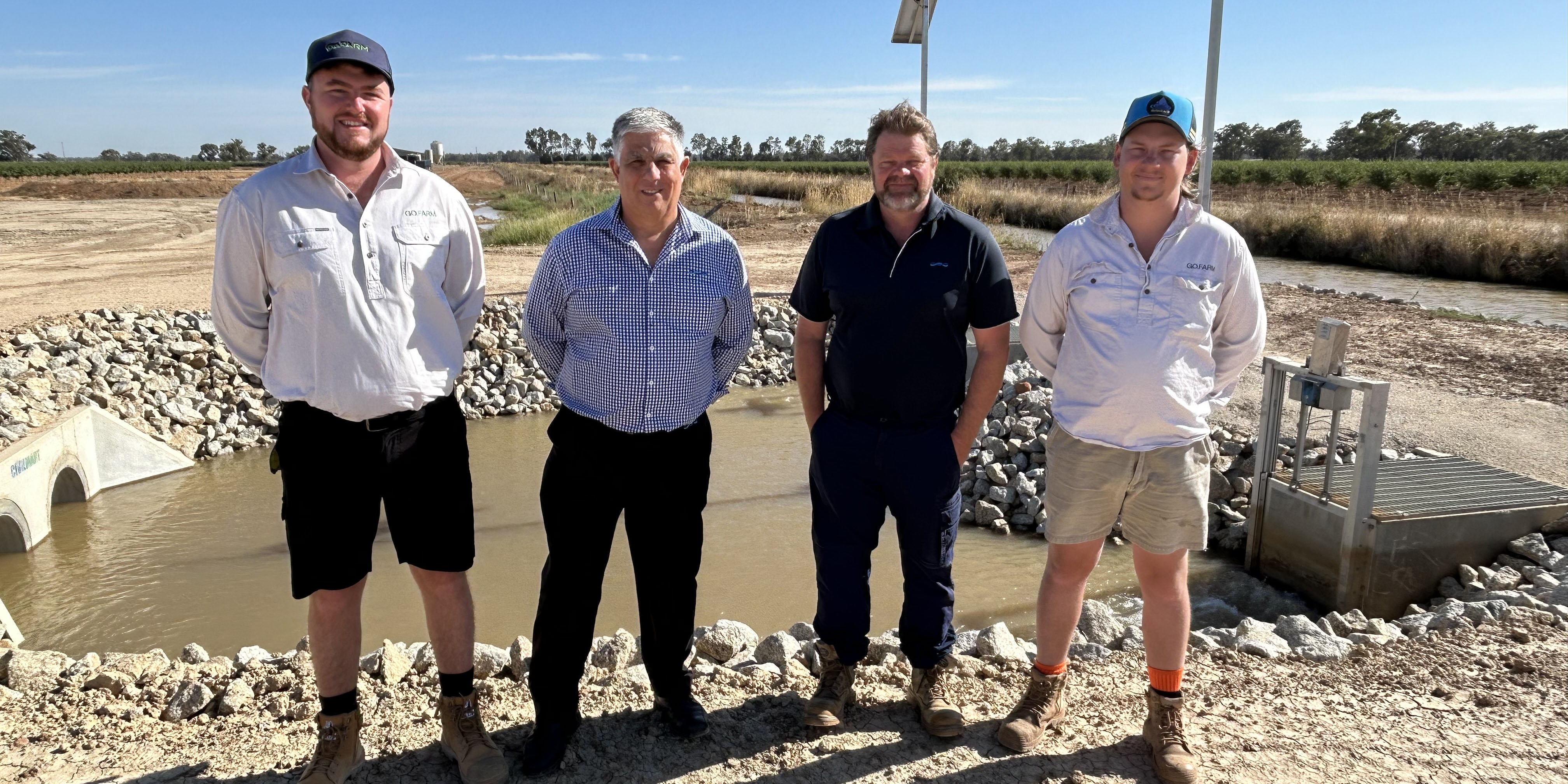
Goulburn-Murray Water (GMW) is continuing its work with agricultural investment company GO.FARM to progress the $90 million ‘Goulburn Gold’ almond development in Coomboona near Shepparton.
GMW has supported site amalgamation, relocation of service points and private works licensing to improve water and infrastructure flexibility across the property.
GMW General Manager of Water Delivery Services Warren Blyth said: “It’s fantastic to work alongside companies like GO.FARM who are establishing significant projects in the region,” he said.
“It also showcases our commitment to delivering reliable and affordable services for our current and future customers.”
$6.2 million boost for South Australian water science
The Federal and South Australia Governments are investing $6.2 million into three new water science projects, including a nation-leading managed aquifer recharge (MAR) pilot at Loxton.
The $4.8 million Loxton project will establish an aquifer storage and recovery – reverse osmosis facility at the Loxton Research Centre, treating brackish groundwater and storing surplus water underground for future agricultural use.
South Australian Minister for Climate, Environment and Water Lucy Hood said: “It is vital we invest in research to help us better understand our state’s water resources and improve them with the right infrastructure in response to climate change.
“Incorporating new and alternative measures will ensure our regional and remote communities have access to stable, climate-resilient water sources into the future.”
Unitywater expands collaborative delivery partnership
Unitywater has welcomed Abergeldie into its collaborative delivery partnership, supporting its $2 billion capital investment program across South East Queensland.
Unitywater CEO Anna Jackson said the expansion would help meet growing demand in one of Australia’s fastest-growing regions.
“As our service region experiences unprecedented population growth and with the 2032 Olympic and Paralympic Games on the horizon, South East Queensland is entering the largest period of sustained infrastructure delivery in its history,” she said.
“Ultimately, our infrastructure exists to serve our customers and the collaborative delivery partnership model brings together the infrastructure owner, designers and contractors to streamline the project delivery process to deliver better cost, time and quality outcomes.”
International
Study finds higher microplastics in bottled water
New research has found that some brands of bottled water contain significantly higher levels of microplastics and nanoplastics than treated tap water.
Ohio State University researchers analysed samples from four treatment plants near Lake Erie and six bottled water brands, finding bottled water contained three times as many nanoplastic particles as treated drinking water.
Want water insights delivered weekly? Subscribe to Source, the Australian Water Association’s newsletter.