


Week in water: updates from across the community
 by Water Source
This week’s water community activity spans support for Murray-Darling Basin communities, environmental watering achievements and infrastructure renewals to strengthen service reliability.
Updates include waterway protection in Newcastle, customer service improvements in Tasmania and an educational LEGO model showcasing the urban water cycle.
NATIONAL
Environmental water deliveries reach 20,000 gigalitre milestone
The Commonwealth Environmental Water Holder has delivered 20,000 gigalitres of environmental water to rivers, wetlands and floodplains across the Murray-Darling Basin since beginning its work in 2009.
Deliveries have supported 11 internationally significant Ramsar wetlands, native fish populations, waterbird breeding and threatened species recovery. Environmental watering has also helped flush 4.3 million tonnes of salt from the Basin and maintain river connections during dry periods.
Commonwealth Environmental Water Holder Dr Simon Banks said: “The benefits of environmental water extend well beyond rivers, wetlands and floodplains. Healthier waterways support regional communities, recreation and tourism, improve water quality, and help sustain industries that rely on resilient river systems,”
“Environmental watering has also created opportunities for stronger partnerships with First Nations peoples, supporting cultural connections to Country, the sharing of Traditional Knowledge, and the protection of culturally significant sites and species.”
STATE AND TERRITORY
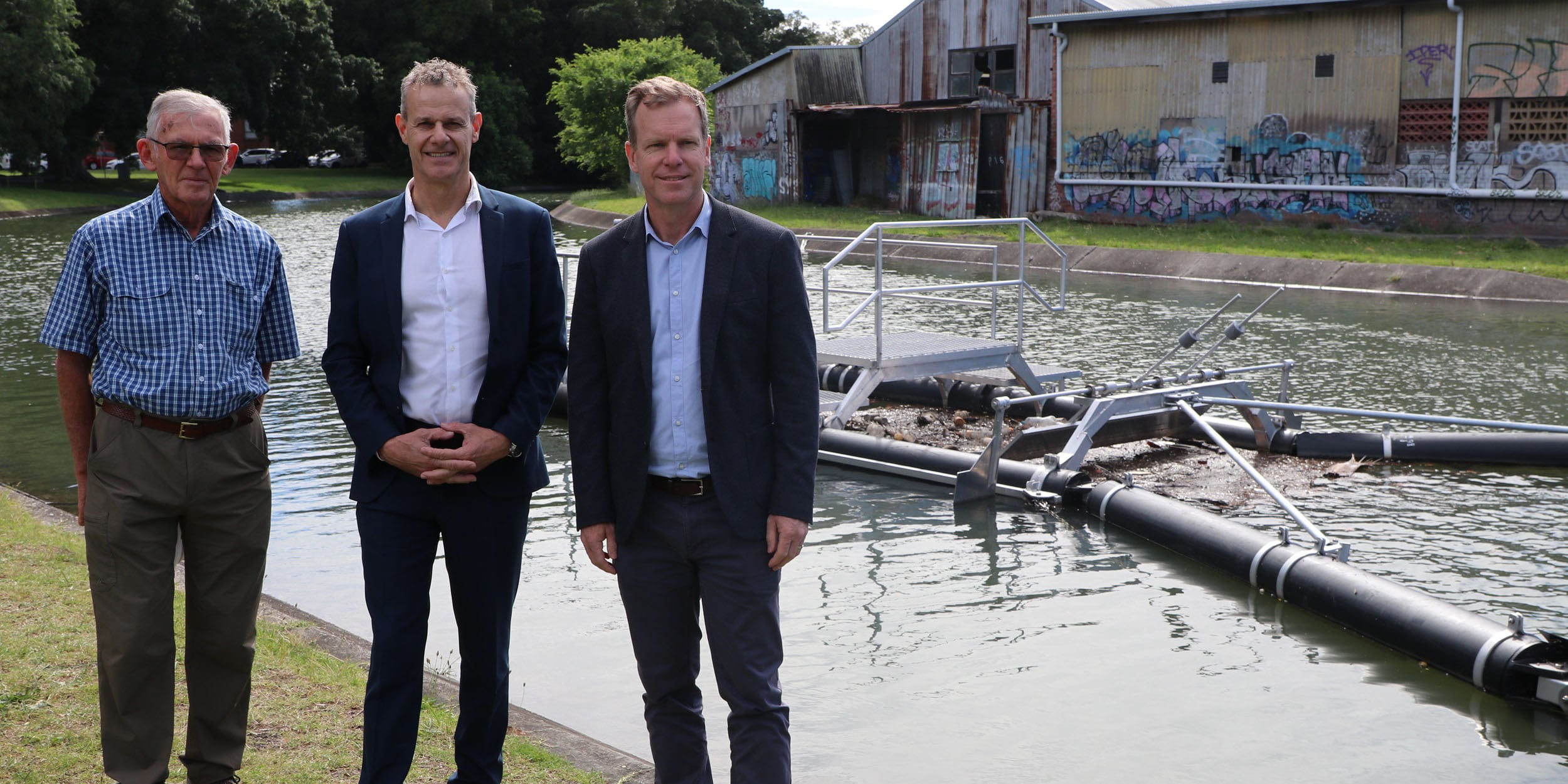
New litter trap helps protect Newcastle’s Throsby Creek
Hunter Water has installed a floating litter trap and boom system on Styx Creek, helping prevent stormwater-borne rubbish from entering Throsby Creek and its downstream mangroves.
Supported by the NSW Government’s Local Small Commitments Allocation, the system has been designed for tidal conditions and allows maintenance crews to safely remove captured litter. The project complements ongoing water quality monitoring in the Throsby Creek catchment.
Hunter Water Executive Manager Strategy and Engagement David Derkenne said: “Styx Creek carries stormwater from a highly urbanised catchment. By intercepting litter before it reaches Throsby Creek, this trap will help reduce pollution and protect the environment.”
Basin communities share in $50 million for regional resilience
New South Wales communities will share in $50 million through the Sustainable Communities Program, supporting 20 projects to create jobs, diversify regional economies and strengthen resilience in the Murray-Darling Basin.
Funded by the Australian Government and delivered by the NSW Government, the round includes $4.15 million for water-efficient rice breeding facilities in Leeton and $3.75 million for water infrastructure across the Buronga-Gol Gol growth corridor. The program helps communities adjust to voluntary water buybacks and a changing climate.
Minister for the Environment and Water Murray Watt said: “These innovative projects will help local businesses to increase productivity, diversify their operations, stay competitive and use less water doing it,”
“With our climate getting hotter and drier, it’s more important than ever that we take steps now to ensure the future of the Murray-Darling system.”
Tyers pump station renewals strengthen emergency supply readiness
Gippsland Water has completed renewal works at its Tyers raw water pump station, improving the condition and reliability of an emergency supply asset built in the early 1950s.
Works included replacing uneven concrete flooring in the valve pit, improving drainage and applying protective coating to pipework. All four pumps have also been tested to identify potential issues before the station is needed during an emergency.
Gippsland Water Managing Director Sarah Cumming said: “Maintaining the facility helps ensure it remains fit for purpose and reliable when needed, supporting the water supply to the Tyers and Traralgon water treatment plants.”
TasWater launches online portal for customer accounts
TasWater has launched myTasWater, a new online portal giving eligible customers a simpler way to manage accounts, view bills, make payments and compare quarterly water use.
Developed in response to customer feedback through Price and Services Plan engagement, the portal brings account information and services together, while existing customer service channels remain available.
TasWater General Manager Customer and Community Callan Paske said: “Whether customers want to view a bill, update their details, compare their water usage or submit an enquiry, they can now do it quickly and conveniently online, any time of day.”
Water main renewals strengthen Greater Western Water’s network
Greater Western Water has 15 water main repair and upgrade projects underway, helping prevent leaks and bursts and maintain reliable services across its network.
Delivered with Downer and Interflow, the renewals include replacing an ageing main on Francis Street in Melbourne’s CBD, with completion expected in December 2026. Depending on asset condition, projects involve replacing pipelines or relining existing mains.
Greater Western Water General Manager Asset Planning and Delivery Ian Burton said: “These renewals are an important investment in the long-term reliability of our network and help ensure we can continue delivering safe and reliable water straight to our customers' taps,”
Coliban Water seeks customer priorities for future services
Coliban Water is inviting customers to help shape its water and sewerage services for 2028 to 2033 through an online survey open until close of business on 20 November 2026.
The survey will inform broader engagement for the utility’s next price submission to Victoria’s Essential Services Commission, covering proposed services, investment and prices.
Coliban Water Managing Director Damian Wells said: “By sharing their experiences and expectations, customers help us make informed decisions, balance service and affordability, and develop a plan that reflects the needs of the communities we serve.”
Melbourne Water trials native planting above pipeline corridor
Melbourne Water has started a two-year project to green a 1.3-kilometre stretch above the Preston-North Essendon pipeline, testing native plants suited to the urban corridor.
Up to 1,900 plants will provide around 580 square metres of greening, with species and planting locations selected to protect the pipeline from root damage and maintain access for crews. The first planting involved Melbourne Water, Yarra Valley Water, Regen Melbourne and Connected Corridors.
Melbourne Water General Manager Service Programs Matthew Daley said: “We’re learning what grows well here, so we can bring more vegetation, habitat and green space to the neighbourhood while protecting the pipeline beneath it,”
South East Water launches new Reconciliation Action Plan
South East Water has launched its Reconciliation Action Plan for 2026 to 2028, strengthening Traditional Owner partnerships, cultural safety and the inclusion of First Peoples’ knowledge across the organisation.
Endorsed by Reconciliation Australia, the Innovate RAP will guide water management decisions and support opportunities for Aboriginal and Torres Strait Islander people and businesses, while building relationships with communities on Country.
South East Water Managing Director Carla Purcell said: “We're committed to nurturing our relationships with First Peoples, and we'll continue to work with Traditional Owner groups to understand and support their connection to Country.”
INTERNATIONAL
LEGO model brings urban water cycle to life
An educational LEGO IDEAS proposal is seeking support to turn the urban water cycle into an official set, highlighting water and wastewater services and the people who deliver them.
The Urban Water Cycle comprises almost 5,000 pieces and eight stations, following water from a river through drinking water treatment and wastewater treatment before returning it to the river. Seven minifigures represent roles including operators, laboratory analysts and leak detection technicians.
The proposal needs 10,000 supporters to enter LEGO’s review phase for potential production. Water associations across Europe and North America have shared the project to encourage support. Support the project here.
Want water sector insights delivered weekly? Subscribe to Source, the Australian Water Association's newsletter.


