Using digital engineering to improve water system resilience and performance
 by Chris Ryan
In the lead up to Ozwater’26, we’re sharing this recent feature from Principal Sponsor Autodesk. Featuring insights from Chris Ryan, Autodesk APAC Head of Water Infrastructure, the article outlines how digital engineering is helping utilities respond to ageing assets, population growth, climate variability and workforce pressures, and why resilience needs to be designed in from the get go, not retrofitted later.
Are you interested in learning more about what’s on offer at Ozwater’26? Take a look at the program here.
The Australian water sector's resilience is being tested. Utilities across the country are dealing with multiple, overlapping pressures at once, including ageing assets, population growth, tightening regulatory expectations, climate variability, and workforce constraints.
Building resilience means addressing these challenges together through targeted investment, smarter operations, and better use of data, so services perform when they are needed most.
Ageing infrastructure
Across many Australian water networks, the most critical assets are also the oldest. Pipes installed decades ago are reaching the end of their design life. Treatment plants built for simpler demand profiles are now expected to meet higher standards, manage emerging contaminants, and operate within constrained budgets. The result is infrastructure that is increasingly brittle, with more breaks, leaks, unplanned outages, and reactive maintenance, often during peak demand or extreme weather.
Ageing infrastructure also contributes to hidden losses through non-revenue water, reducing system capacity while undermining financial sustainability. As energy costs rise and climate impacts intensify, this lost water becomes harder to justify and more expensive to recover.
Building resilience starts with visibility. Utilities need a clear understanding of what assets they have, how they are performing, and where failure would have the greatest consequence. Risk-based renewal programs that prioritise consequence rather than age help focus investment where it delivers the most value.
While wholesale replacement is rarely feasible, targeted interventions can make a meaningful difference. Pressure management, proactive leak detection, and focused pipe rehabilitation can extend asset life, reduce failure rates, and defer major capital expenditure. Digital asset management supports the shift from reactive responses to informed, preventative decision-making.
Population growth and urban congestion
Population growth continues to drive demand, but the greater challenge is where that growth occurs. Australia’s major cities are absorbing much of it, and urban congestion turns even routine water upgrades into complex, high-risk projects. Permitting, stakeholder coordination, traffic management, and community disruption all add cost and time, while tolerance for service interruptions continues to decline.
At the same time, customer expectations are rising. Urban customers expect consistent pressure, fewer outages, strong performance, and clear communication. In dense environments, even short disruptions affect more people, more businesses, and more essential services, amplifying both operational and reputational risk.
In urban systems, resilience is built by increasing capacity without relying solely on excavation and expansion. Demand management becomes a core strategy. Smart metering, data-led pricing structures, and targeted pressure reduction can defer costly network upgrades. Fit-for-purpose reuse and recycling can reduce reliance on potable supply for irrigation, industrial processes, and some municipal uses.
Distributed approaches, including local storage, decentralised treatment, and integrated stormwater management designed using Autodesk’s InfoWorks applications, can further reduce peak stress on centralised systems.
Planning confidence is equally important. Scenario modelling, digital twins, and integrated capital planning allow utilities to test options, respond faster, and align investment with population growth, land-use change, and service expectations.
Regional and remote communities
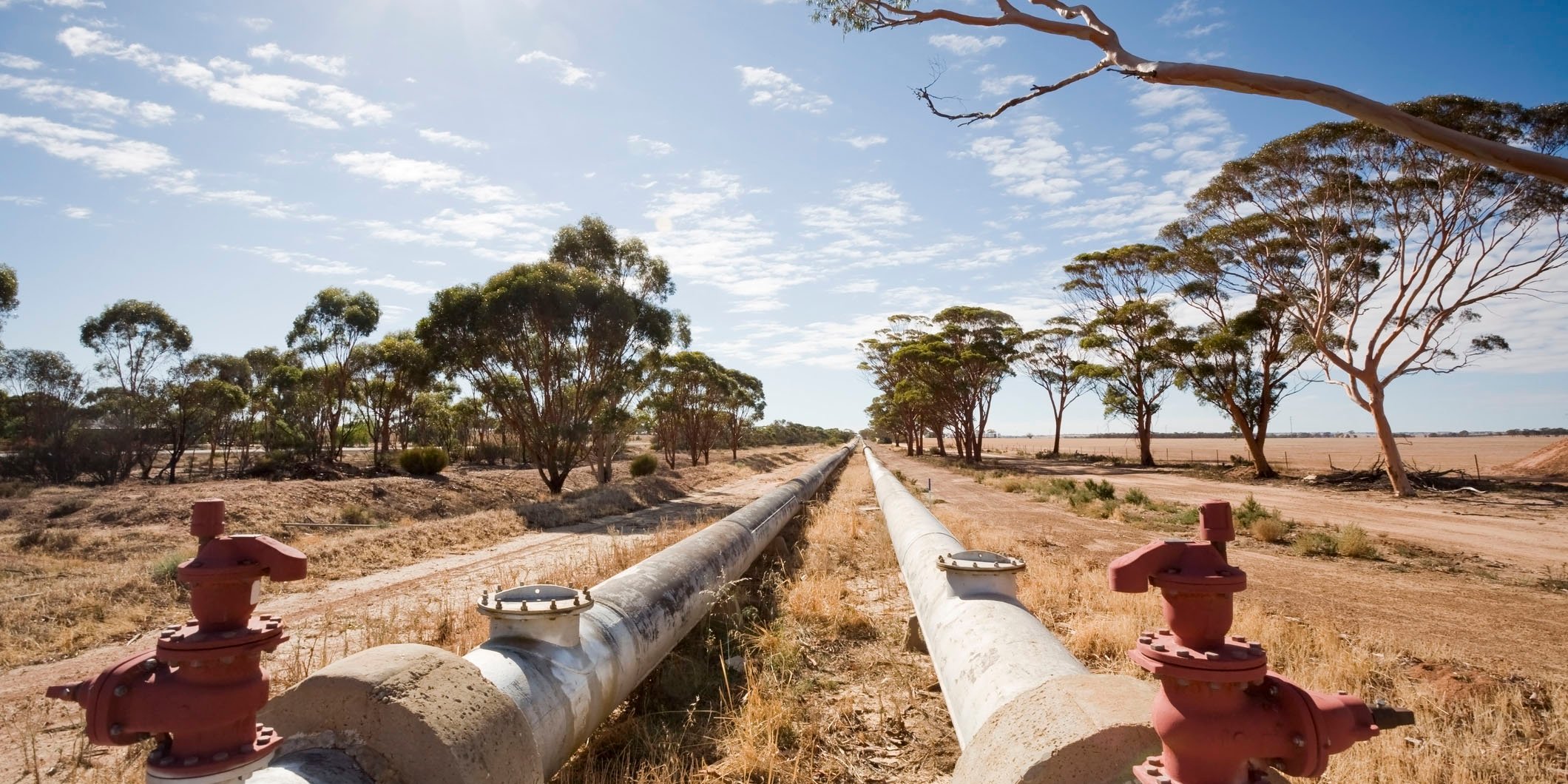
Regional towns and remote communities operate under a different set of constraints. Smaller rate bases limited technical workforces, long supply chains, and variable source water quality all influence what is practical. In many cases, a single bore, pump station, or treatment system underpins an entire community’s water security. When it fails, redundancy may be limited or unavailable.
In these contexts, building resistance prioritises reliability, simplicity, and maintainability. Solutions must match local capability, including robust mechanical systems, standardised components, and monitoring that can be supported remotely. Condition-based maintenance is valuable, but only when data is reliable and response pathways are clear.
Remote telemetry, automated alarms, and operational dashboards can help small teams identify issues early, while regional collaboration can pool expertise, strengthen response capability, and create shared procurement opportunities.
Building resilience also includes strengthening compliance, ensuring dependable disinfection and monitoring, and investing in operator training and support. Modular upgrades, mobile treatment systems, and staged expansions often provide the most practical path, delivering immediate improvements while keeping future options open as conditions evolve.
What resilience water systems look like in practice
Resilience is not delivered through a single project. It is built through a balanced portfolio of capital investment, operational discipline, and community outcomes:
- Risk-based investment: Prioritise assets by likelihood and consequence of failure, not just age. Autodesk’s Info360 Asset cloud solution supports this approach.
- Loss reduction: Treat leakage reduction and pressure management as capacity creation, not routine maintenance.
- Adaptive supply strategies: Diversify sources where feasible through reuse, stormwater harvesting, aquifer recharge, and interconnections to reduce single points of failure.
- Digitally enabled operations: Use monitoring, analytics, and predictive maintenance to move from reactive to proactive, particularly where workforce capacity is limited.
- Urban delivery discipline: Design upgrades with constructability and disruption minimisation in mind, coordinating early with transport agencies and other utilities.
- Regional and remote support models: Standardise assets, enable remote assistance, and build shared capability across regions.
A resilient future is built deliberately
Ageing infrastructure will not wait. Population growth will not slow evenly. Regional and remote challenges will not be solved using metropolitan approaches. The opportunity for the Australian water sector is to treat resilience as a design requirement, creating systems that degrade gracefully, recover quickly, and adapt as risk and demand change.
That means making disciplined choices, including renewing the most critical assets, reducing losses, managing demand intelligently, and tailoring solutions to local conditions. With Autodesk’s suite of digital tools, these decisions can be made with greater accuracy, speed, and confidence.
By doing so, water service providers can protect public health, support economic activity, and maintain community trust, not by promising uninterrupted service, but by demonstrating the capability to withstand uncertainty and keep water flowing when it matters most.
Chris Ryan is APAC Head of Water Infrastructure at Autodesk.
Are you interested in learning more about what’s on offer at Ozwater’26?
Take a look at the program here.


%20(1).jpeg?width=352&name=Hunter%20Water%20aerating%20water%20pumped%20from%20the%20Tomago%20Sandbeds%20before%20treatment%20and%20supply%20to%20the%20network%20(1)%20(1).jpeg)