



 by Water Source
A sophisticated new sewage treatment plant that will turn wastewater into high-quality, Class A+ recycled water suitable for non-drinking uses is at the centre of the Queensland Government’s plan to revitalise Great Keppel Island (Woppa).
The investment, designed to a Category C cyclone rating, will transform the island’s infrastructure, ensuring it can continue to thrive as a key destination for tourism and regional development.
The sewage treatment plant is fully funded by the Queensland Government as part of the Great Keppel Island (Woppa) Concept Master Plan, which was led by the community and key stakeholders and provides a roadmap for the island’s future.
Livingstone Shire Council awarded the design and construction of the new sewage treatment plant to RSK business Pensar, with the design work starting in October 2024 and construction following in August 2025. The plant is expected to be fully operational in June 2026.
Built different
In keeping with the island environment, all containers, structures and tanks are designed to a Category C cyclone rating in line with Australian Standards and local council building regulations. The design also considers the proximity to salt water for corrosion and other environmental factors such as UV, temperature, soil movement, humidity and rainfall to ensure reliability in the harsh conditions.
Pensar’s Chief Operating Officer David Brown said the company was proud to partner with Livingstone Shire Council to deliver such an important piece of infrastructure for Great Keppel Island.
“This project is a great example of how innovative engineering can provide long-term benefits for both the community and the environment," he said.
"Extensive field sampling and testing were undertaken to inform a robust process design that was developed and completed in-house by Pensar’s process engineering team.”
The team, who are skilled and experienced in regional and remote infrastructure delivery, have engaged with multiple stakeholders as part of the project, including Traditional Owners, government bodies, accommodation providers and residents.
“We know how important Great Keppel Island is to a great many people and we want to ensure expectations are clearly understood and met," Brown said.
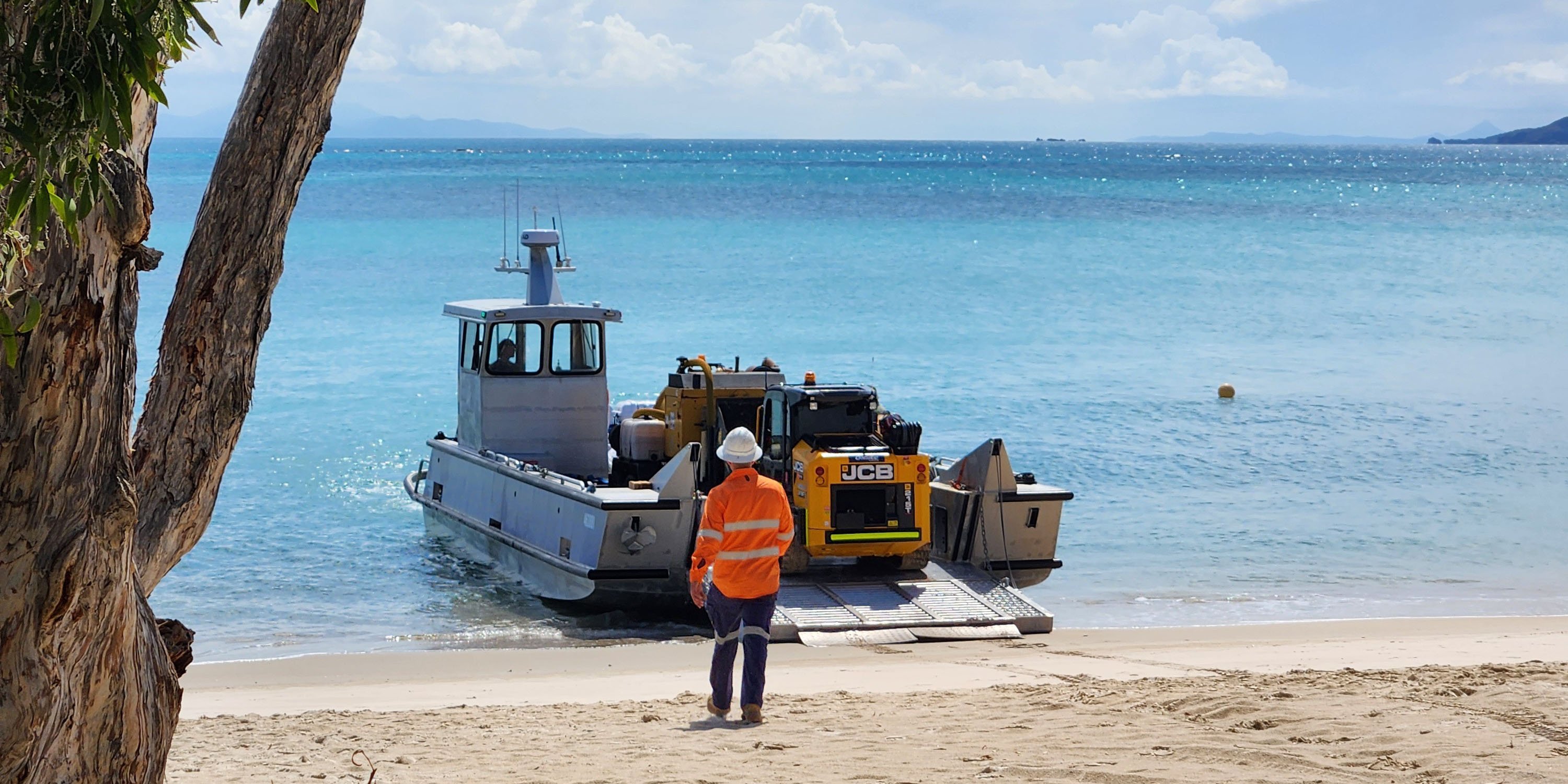
"The environmentally sensitive nature of the location, adjacent to the Great Barrier Reef Marine Park, has required detailed planning and strict adherence to statutory requirements. All materials and equipment had to be transported via private barge and unloaded during high tide windows, requiring precise logistical planning and coordination.”
Remote project delivery
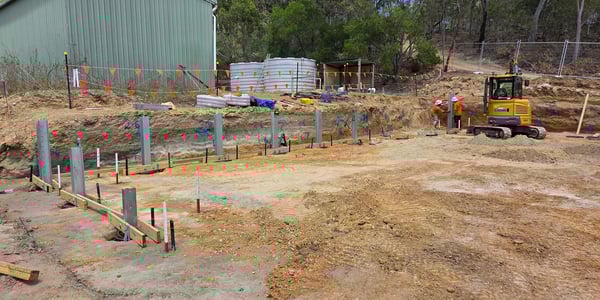
The remote location also meant that Pensar has not had access to an on-island concrete supply and so the project team has managed all batching and mix designs in-house to meet programme and quality requirements.
Brown added that completion of the first stage of the sewage treatment plant project will provide sufficient capacity to service the Great Keppel Island Hideaway Resort, Great Keppel Island Holiday Village, new visitor amenity blocks and northern freehold allotments on Fisherman’s Beach, with capacity for future growth.
The completion of this project will be a vital step towards supporting Great Keppel Island’s long-term sustainability and reputation as a premier tourism destination with capacity to support future development opportunities aligned with the Great Keppel Island (Woppa) Concept Master Plan.
The project will deliver a membrane bioreactor plant producing Class A+ effluent, sized for 480 equivalent persons.
The project scope includes:
- site investigations (survey, geotechnical, environmental, services, influent quality)
- design and construction of a new 480 equivalent persons or 100 kL/day membrane bioreactor sewage treatment plant producing Class A+ effluent
- installation of two duplex and 10 simplex sewer pumping stations (SPS) serving businesses and residents for the northern freehold allotments on Fisherman’s Beach
- replacement of existing septic systems with new residential SPS units
- construction of a main SPS to transfer wastewater to the new plant
- power reticulation from the island’s micro-grid to new assets
- expansion of the effluent irrigation system, including 25,000 m² of new sprinkler irrigation
Brown added that the sewage treatment plant is a packaged plant designed to be as easily transportable as possible, with a significantly reduced establishment and installation time compared to most traditional treatment plants.
“It consists of custom fitted shipping containers that hold the plant rooms and critical electrical equipment. These will work in conjunction with heavy duty PE tanks that contain the critical process-related equipment, such as the membrane bioreactor and aerators and make up the system that treats the island’s sewage into recycled water that will be used to irrigate the island’s open spaces," he said.
"The plant is fully automated with remote monitoring and control and is designed to consider the maintenance challenges relating to the remote location of the site on an island.”
The plant offers 500 kL of wet weather storage to mitigate overflows during wet weather events. The main sewage pumping station has been designed to effectively manage wet weather events.
..jpeg?width=600&height=300&name=New%20Class%20A+%20recycled%20water%20treatment%20plant%20underway%20for%20Great%20Keppel%20Island%20(Woppa)..jpeg)
Support for tourism
Member for Keppel Nigel Hutton said the new treatment plant was critical infrastructure that would bring Great Keppel Island’s tourism potential to life.
“A key priority of our bold tourism plan Destination 2045 is to create more unique ecotourism experiences throughout Queensland, and Great Keppel Island is a shining example of this,” Hutton said.
“Great Keppel Island’s new wastewater treatment plant will play a key role in revitalising the island’s ecotourism potential by improving its wastewater and energy systems.
“By helping support nature-based tourism, Great Keppel Island’s wastewater treatment plant project supports the Queensland Government’s Destination 2045 goal of building a resilient tourism sector that protects the state’s natural icons.”
Livingstone Shire Council Mayor Adam Belot said the project was a major step forward for the island’s long-term sustainability.
“This is a landmark moment for Great Keppel Island and the broader region," he said.
"By replacing outdated systems with reliable infrastructure, this investment helps protect the island’s sensitive environment and supports future tourism and community use in a responsible way, ensuring Keppel can continue to thrive as a key destination for tourism and regional development.”
Share


