



Keeping water services running through a season of emergencies
 by Cecilia Harris
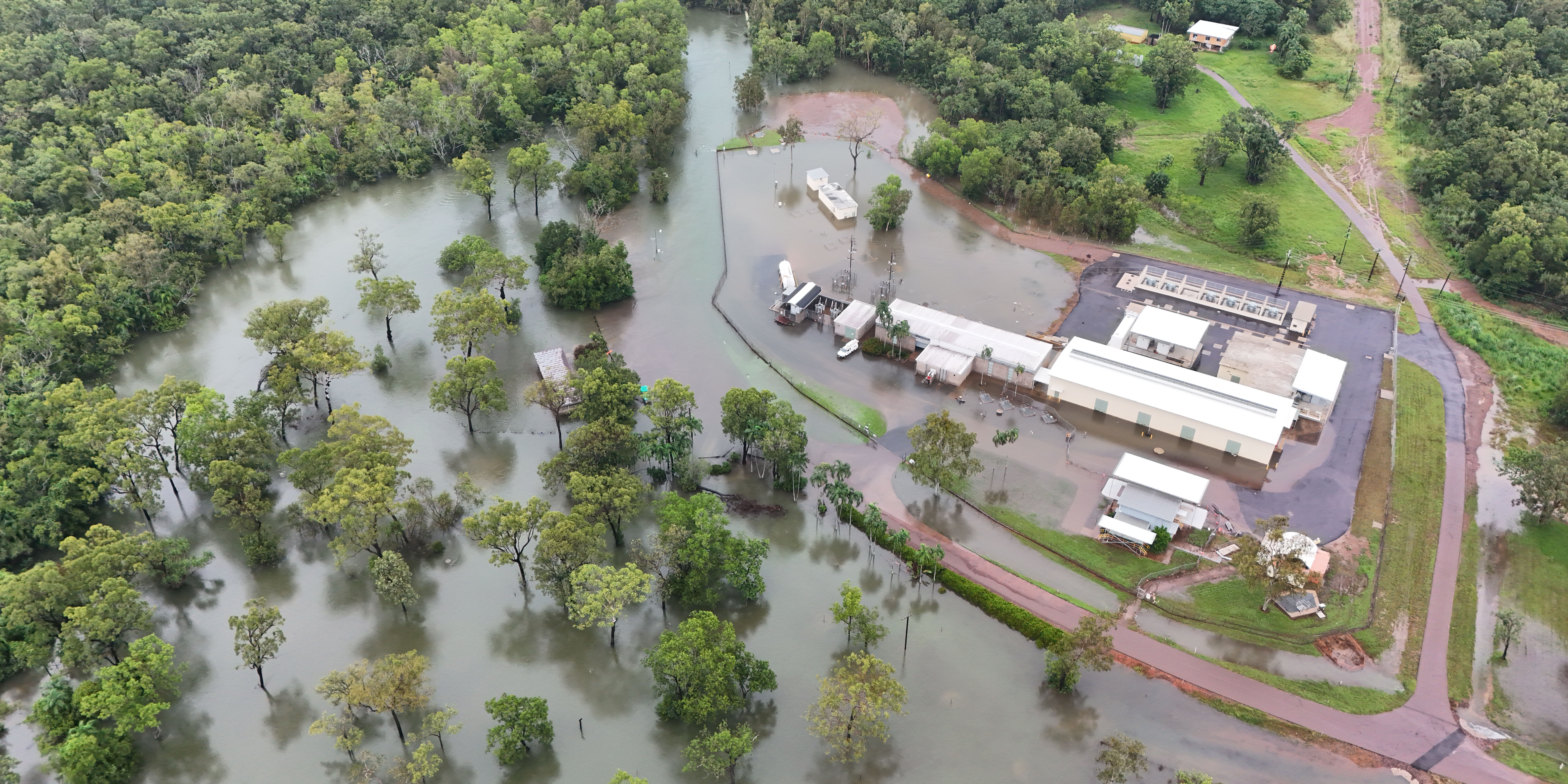
Maintaining essential services through repeated emergencies tests more than infrastructure. For Power and Water Corporation, the Northern Territory’s 2025–26 severe weather season demanded sustained coordination across water and power services, while teams balanced immediate restoration, ongoing operations, and longer-term recovery.
More than 10 Incident Management Teams were activated between September 2025 and April 2026, with incidents including cyclones, flooding across multiple regions, and the flooding of the Darwin River Dam pumphouse, classed as a one-in-200-year event.
Power and Water’s Acting Executive General Manager Water Services Kylie Collins said the challenge lay in the concentration and overlap of events across a geographically dispersed service area.
“The amount of incidents, the rolling nature of them, the length of time they occurred in and the effort required to get through them – this all makes this past year unprecedented for us in that way," she said.
Delivering both power and water services added to that pressure, while also bringing operational advantages.
“Servicing both power and water comes with some really great advantages because we get to work shoulder to shoulder with the people that are responsible for getting the power back online, and that enables some of our water infrastructure to get back online,” Collins said.
“But the overall impact across the business is far greater than if we were just looking at one service.”
Responding across separate systems
Power and Water’s 96 individual water systems require local responses. For Nick Ralph, Field Supervisor, Sewer Headworks Regional North, the challenge was sustaining that capability as incidents accumulated.
“What makes repeated events particularly challenging is that you’re not just responding to one incident and returning immediately to normal operations. You still have essential services to maintain, recovery activities to progress, and people and resources that need to remain available for the next event,” Ralph said.
“The reality is that the same operational workforce still has normal infrastructure, maintenance, faults, compliance and on-call obligations while emergency response is occurring.”
Collins said contractor relationships and support between regions helped extend the workforce available to respond.
“We have a small but mighty team, but we also have a whole lot of really strong relationships with providers in our community, too, so our workforce can expand,” she said.
“And also, if there is no weather system causing havoc in the Central Australian region, then those crews can come up to the Top End to help, and vice versa."
Safety guided prioritisation, followed by customer impact. Collins said teams worked in parallel across service areas, restoring services in remote communities alongside larger centres.
“The number one thing we need to do is to ensure safety,” she said. For water services, that meant assessing whether supply remained safe, then providing information to NT Health, which is the body responsible for issuing boil water notices where needed.
“Is our system secure? And if we're still supplying water, is it safe? These are important first steps for any disruption to provision,” Collins said.
Keeping communities informed
Public communication was embedded in Power and Water’s incident management response, alongside its participation in the broader Northern Territory Government emergency response framework.
“A core part of our incident management response is keeping that open communication with our communities, keeping them informed of things,” Collins said.
That included information about outages, restoration, water quality, and any action customers needed to take. Ralph said local relationships were also essential to overcoming access and logistical constraints.
“Severe weather can affect access, communications and the ability to move people, equipment and materials where they are needed. That means preparedness and local relationships become particularly important,” Ralph said.
“You need good information from the ground, clear operational priorities, and effective coordination between our teams, communities and other organisations involved in the response.”
Restoration also needed to account for longer-term recovery, Ralph said.
“Restoring a service is obviously critical, but doing that safely and sustainably is equally important. The objective is to stabilise the immediate situation while also identifying what is required for longer-term recovery," he said.
“Remote resilience is as much about people, logistics and relationships as it is about physical assets.”
Supporting people through repeated responses
Sustaining that capability required attention to cumulative fatigue, Ralph said, including workload monitoring, rotation, and clear handovers.
“Operational staff understand what loss of those services means to a community, particularly during an emergency,” he said.
“That sense of responsibility is a real strength, but as leaders we also have a responsibility to make sure we don't rely indefinitely on individual goodwill. Resilience needs to be built into the organisation.”
For Collins, restoring supply was one stage of a much longer task, with temporary arrangements often requiring further work after customers’ services returned.
“It's the quiet recovery that happens in the background, and that's the really big piece that some people don't consider or remember,” she said.
“But often those arrangements are makeshift or not necessarily permanent. So you have the recovery continuing behind the scenes when everyone's got their services back and they're not thinking about you anymore. There's still that pressure to continue to deliver and rectify services, but to make them better for next time, as well.”
The season has already prompted practical changes. At a Katherine sewer pump station, rapidly rising water prevented the team from positioning a generator as planned. Deploying the generator required a specialised truck, and access constraints meant the equipment could not be removed for about two months.
A raised platform now allows the generator to remain permanently on site.
“We've built a raised platform in there, put the generator on, and it's there permanently, rather than pulling it in with a truck and placing it there,” Collins said.
At Darwin River Dam, preparations include plans to raise selected pump motors and communications equipment above potential floodwater during the wet season, when demand is lower.
“That pump station has been there for some 50 years and never flooded before,” Collins said.
Alongside those immediate adaptations, Collins said further planning would inform changes in future years.
Ralph said capturing that experience was essential to improving investment decisions: “We need to capture what occurred, understand the consequences of asset vulnerabilities, and use that evidence when prioritising maintenance, renewals, resilience improvements and future investment".
“Access, redundancy, communications, availability of critical equipment and the ability of our people to operate and restore assets all contribute to how resilient a service actually is," he said.
“The biggest lesson for me is that resilience is a combination of assets, people and preparedness. Severe weather tests all three, and our job is to make sure the lessons from each event translate into a stronger system for the next one.”
Interested in learning more about responding to and recovering from extreme weather? Take a look at past event papers on Indigo.


