 by Water Source
Young Water Professionals went beneath Yarra Park to explore how one of Melbourne’s best-known sporting precincts transforms wastewater into a reliable resource for park irrigation, cleaning and toilet flushing.
Held alongside the AWA/IWA Young Water Professionals Conference in Melbourne, two site tours hosted by TRILITY offered attendees a close look at the Yarra Park Water Recycling Facility, owned by the Melbourne Cricket Club (MCC) and operated and maintained by TRILITY.
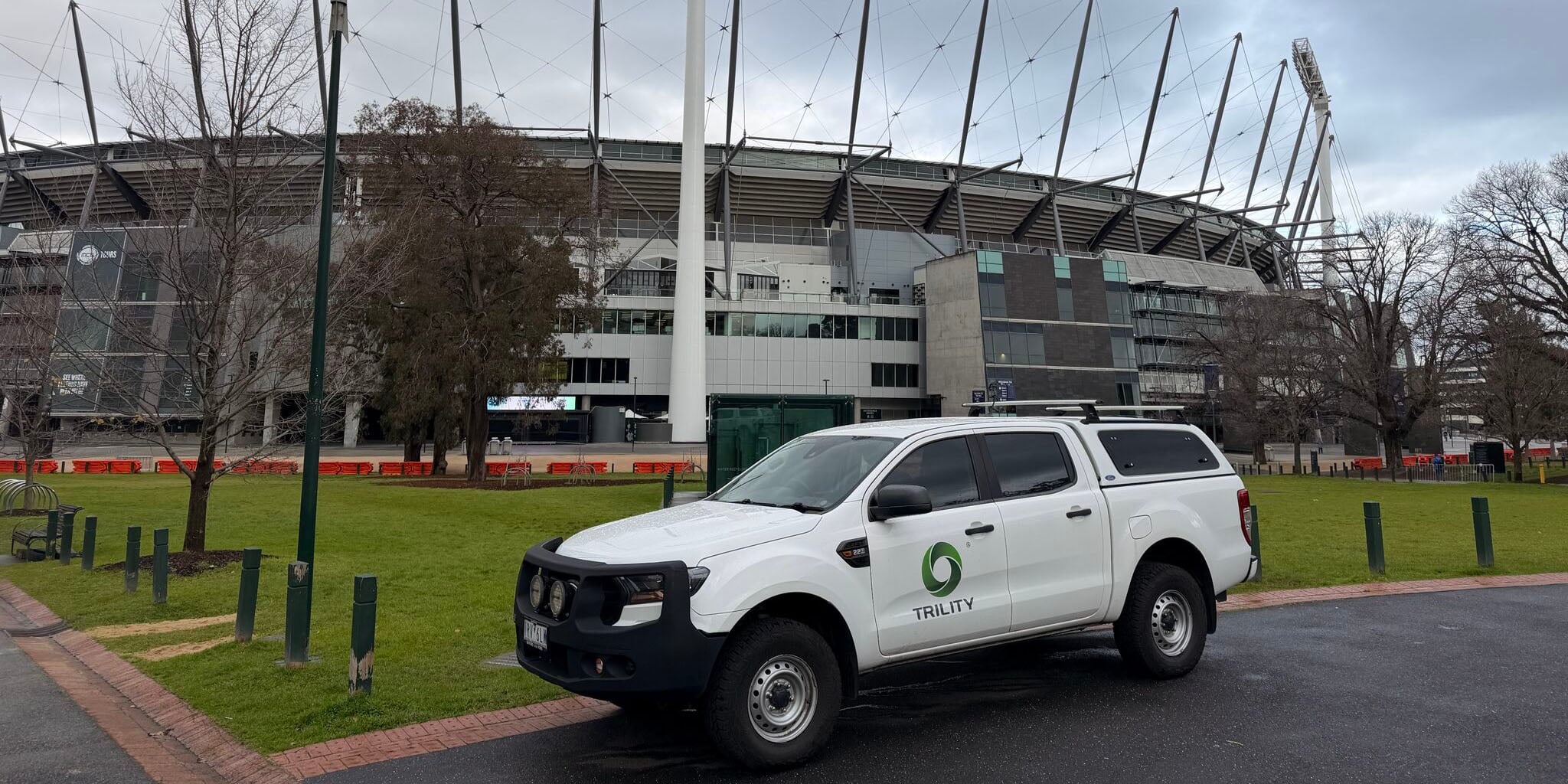
The experience began outside the Melbourne Cricket Ground (MCG), where TRILITY operations staff provided an overview of the facility’s history and role within the precinct.
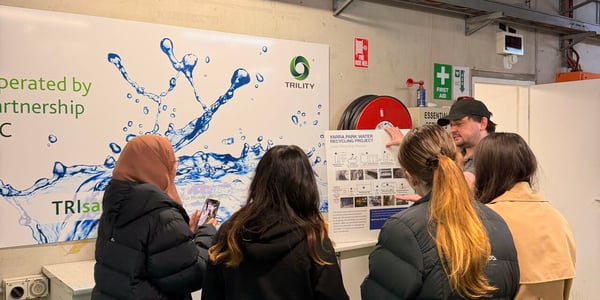
From the surface, there is little indication of the infrastructure operating beneath the surrounding parkland. After the introduction, the groups were escorted underground into the treatment plant, where operations staff explained the facility’s processes, equipment and day-to-day management.
The tours gave YWPs an opportunity to ask questions directly of the people responsible for operating the facility and to see how recycled water production works in practice.
Supporting a major public precinct
Located beneath Yarra Park, adjacent to the MCG, the facility produces Class A recycled water for several non-drinking uses across the precinct.
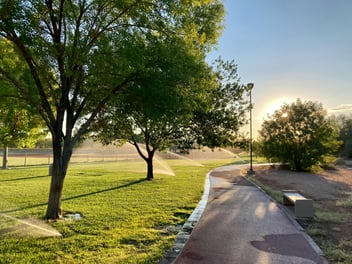
During summer, it can produce 600m³ of recycled water each day, primarily for irrigating Yarra Park. In winter, the facility produces 200m³ each day for toilet flushing and washdown within the MCG.
The facility supplies recycled water by aligning production with seasonal needs, supporting Yarra Park - an essential inner-city public space for recreation, community activities, and major events.
The park is also home to scarred trees of cultural significance to the Wurundjeri people, the Traditional Owners of the land on which the MCG and Yarra Park are located.
Multiple barriers protect water quality
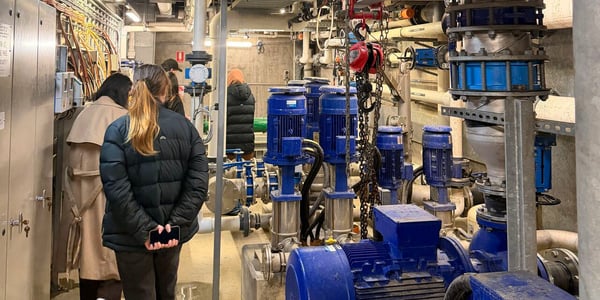
Inside the facility, the tour groups were introduced to the multiple treatment barriers used to produce Class A recycled water.
Wastewater first passes through screening and grit removal before entering the membrane bioreactor (MBR). Within the MBR, biological nutrient removal is achieved through a series of treatment zones, including a bioselector, anoxic and aerobic zones, before the mixed liquor is filtered through the membrane tank. The effluent then passes through ultrafiltration followed by ultraviolet irradiation and chlorine disinfection.
The facility was designed and constructed to meet the Victorian Department of Health requirements for Class A recycled water production. As part of these requirements, the ultrafiltration system undergoes annual bacteriophage challenge testing to verify ongoing virus removal performance and demonstrate continued compliance with the treatment validation requirements for pathogen reduction.
A two-stage odour-control process also helps address the challenges of operating a wastewater treatment facility beneath a heavily used public park. Odorous air is treated through a wet chemical scrubber followed by an activated carbon filter before being discharged to the atmosphere.
Process waste, including screenings, waste activated sludge, backwash water and waste from chemical cleaning, is discharged to the sewer.
These systems demonstrate the range of operational controls required to produce recycled water reliably and safely, particularly at a facility located in the heart of a busy sporting and community precinct.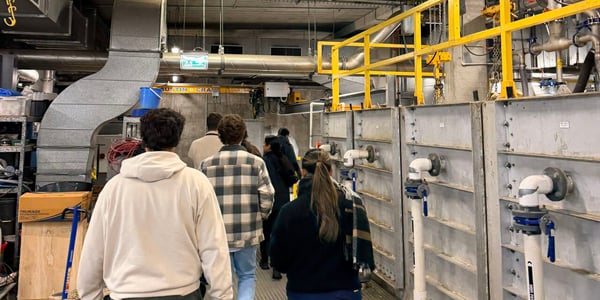
Learning from day-to-day operations
TRILITY operates and maintains the facility on behalf of the MCC. While the plant is automated, it is staffed for eight hours a day, five days a week to ensure that operations and maintenance requirements are met to the highest standard.
For YWPs, moving through the plant alongside operations personnel provided insight that cannot always be gained from process diagrams or technical documentation.
The tour connected each stage of treatment with the practical work involved in monitoring equipment, maintaining water quality, managing chemical dosing and ensuring the facility continues to meet its environmental and public health obligations.
It also highlighted the value of designing water infrastructure around its surrounding environment. Building the facility underground enabled recycled water to be produced close to where it is used without removing valuable surface space from Yarra Park or disrupting the area’s visual amenity.
For the YWPs who descended beneath Yarra Park, the tours offered more than a look at an impressive treatment facility. They provided a practical demonstration of how thoughtful design, reliable operations and fit-for-purpose treatment can help embed water recycling within the everyday life of a city.
Interested in learning more about the Yarra Park Water Recycling Facility? Find out more here.
Want to know more about AWA's YWP community? Find out more here.
Share