Fabiana Tessele: why the conditions behind innovation need a rethink
 by Cecilia Harris
The water community has long focused on advancing technology to solve increasingly complex challenges, but according to Tessele Consultants Director, Dr Fabiana Tessele, the real determinant of performance often sits elsewhere, including in the conditions that shape how engineers think, collaborate and make decisions.
Vice President of the AWA WA Branch and Past Director of the AWA Board, Tessele has a career spanning Brazil, the Middle East and Australia. Throughout the years, she has observed a consistent pattern: technical capability is rarely the limiting factor to innovation.
“I’ve worked with very strong engineers on complex projects, but often the constraint wasn’t knowledge. It was the environment,” Tessele said.
“When communication is fragmented and people are under constant pressure, assumptions aren’t challenged early. Uncertainty stays in the background, and problems show up later, usually when they are more expensive to fix.”
In a sector where complexity is increasing across water reuse, resource recovery and decarbonisation, Tessele argues that the quality of thinking has become as critical as the technology itself.
Tessele’s philosophy that innovation is less about introducing new tools and more about creating the conditions for better thinking has been shaped over time, beginning early in her career in Brazil, where she worked in open, highly collaborative research environments that encouraged questioning and exploration.
“You were never repressed. It was always very open; people challenged your ideas and there was always a conversation about what you think or want to explore,” she said.
That experience stood in contrast to more structured corporate environments she later encountered, where rigid processes and performance metrics often constrained how teams approached problems.
“I kept thinking, ‘What am I doing with my life?’,” she said of her time in large organisations. “I wanted to enable people to do more, not just check if they were in the office on time or filling in timesheets.”
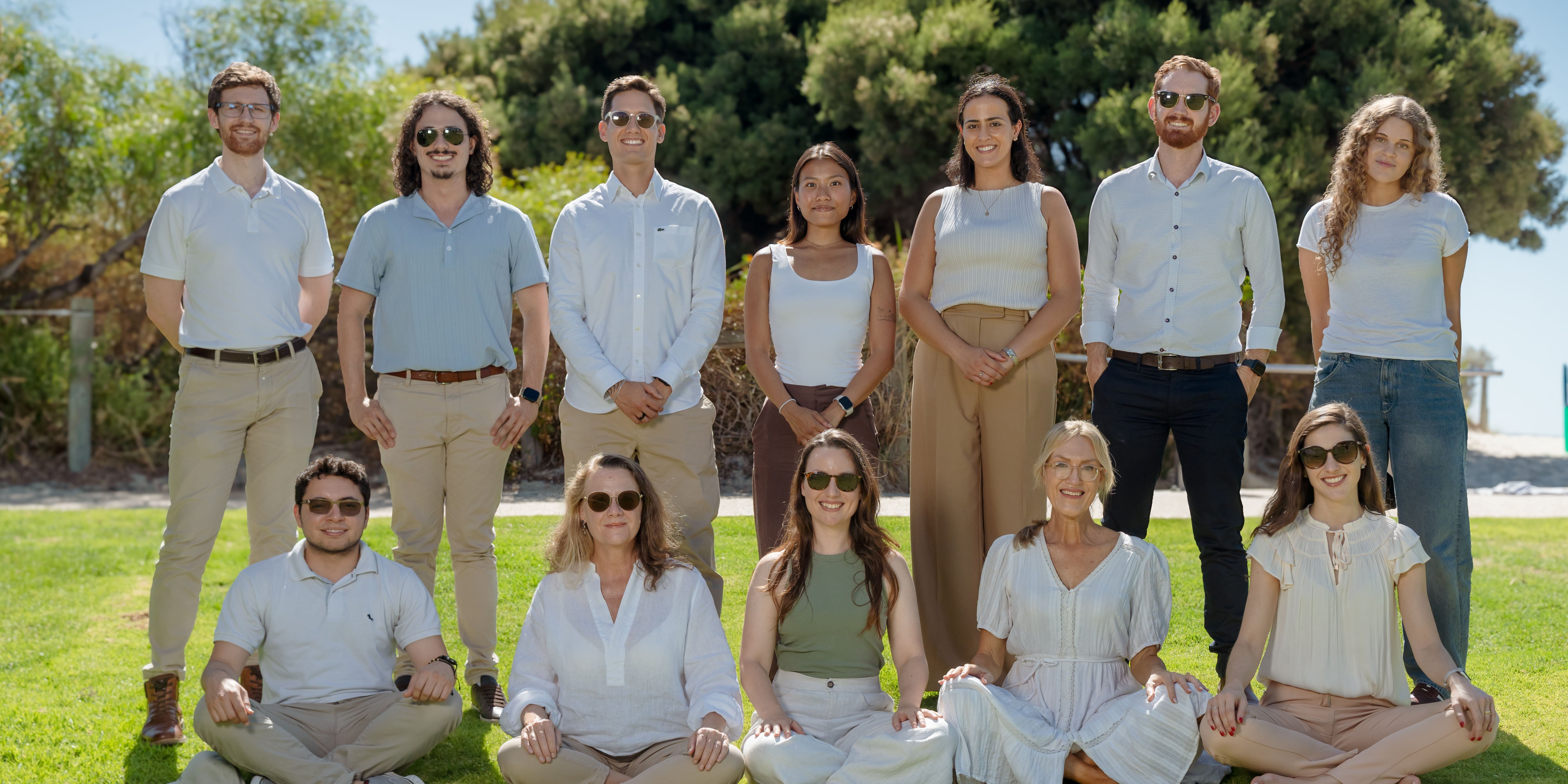
That tension ultimately shaped the foundations of Tessele in Australia, where the business has been deliberately structured to prioritise cognitive space, collaboration and trust.
“I always thought that if I grew my business, I didn’t want it to be a typical, rigid engineering firm,” she said. “This place we’ve created is cool. People are allowed to work from home, but everyone comes into the office.”
Safety as technical practice
While concepts like psychological safety and wellbeing are often framed as cultural or organisational priorities, Tessele positions them as practical enablers of technical rigour.
A recent example emerged during the development of pilot anaerobic digestion reactors. Initially planned in partnership with a university, the approach appeared sound on paper.
However, as the project progressed, concerns began to surface within the team around safety responsibilities, operational flexibility, and whether they could replicate real industrial conditions.
“Because the team felt comfortable raising those concerns, we didn’t just push through. We paused and rethought the approach,” she said.
The result was a significant shift in direction, including the creation of Tessele’s own R&D Hub, providing full control over testing conditions and data generation.
“It was a big decision, but it completely changed the outcome. We can now test things properly, and the data we generate is much more reliable,” she said.
The decision was not just technical, but cultural. In practice, Tessele argues, surfacing uncertainty early is one of the most effective ways to reduce risk and improve long-term outcomes.
“The earlier we surface uncertainty, the more resilient and efficient our solutions become,” she said.
Rethinking how decisions are made
In high-risk, high-variability systems such as water reuse and resource recovery, uncertainty is not something that can be eliminated – only managed. What differentiates outcomes, according to Tessele, is how teams are enabled to engage with that uncertainty.
“In environments where people feel rushed, teams tend to move quickly towards familiar solutions. It feels efficient, but it can limit how deeply problems are explored,” she said.
At Tessele, the approach is intentionally different.
“In large consultancies, the first question is often, ‘What similar project have we done before?’ We do the opposite. We ask, ‘What have we never done before?’,” she said.
This shift requires time and investment, but Tessele argues it leads to more robust engineering outcomes.
“We are not here to replicate knowledge. We are here to create knowledge,” she said.
That approach is reinforced through the company’s R&D capability, where pilot-scale experimentation complements modelling and enables teams to test assumptions under real conditions.
“Instead of just modelling, we actually test combinations, measure outputs, and feed that data back into models,” she said.
From culture to performance
While elements such as team dynamics, informal communication and even workplace environment can appear secondary to technical work, Tessele argues they play a direct role in performance.
“Engineering work requires a lot of concentration. It’s not just about knowing things, it’s about being able to think clearly for long periods and communicate well,” she said.
At a practical level, this translates into deliberate choices about how teams interact.
“Things like shared meals or informal conversations create natural pauses. They help people reset and talk through ideas more casually,” she said.
In diverse teams, these interactions also support better understanding across different communication styles and cultural perspectives.
“In diverse teams, trust is built when people feel understood – not when they are managed the same way,” she said.
Over time, this improves alignment, reduces friction and enables issues to be identified earlier in the process.
Designing for a more complex future
As the water sector navigates increasing complexity, Tessele believes there is still a tendency to focus on technical inputs while underestimating the role of working environments in shaping outcomes.
“There’s a lot of focus on technology, modelling and compliance, but less attention on how decisions are actually formed along the way,” she said.
This becomes more significant as the sector moves into areas such as circular economy, where variability and uncertainty are inherent.
“If we want sustainable outcomes, we need to design not only our systems, but the way we think about them,” she said.