 by Cecilia Harris
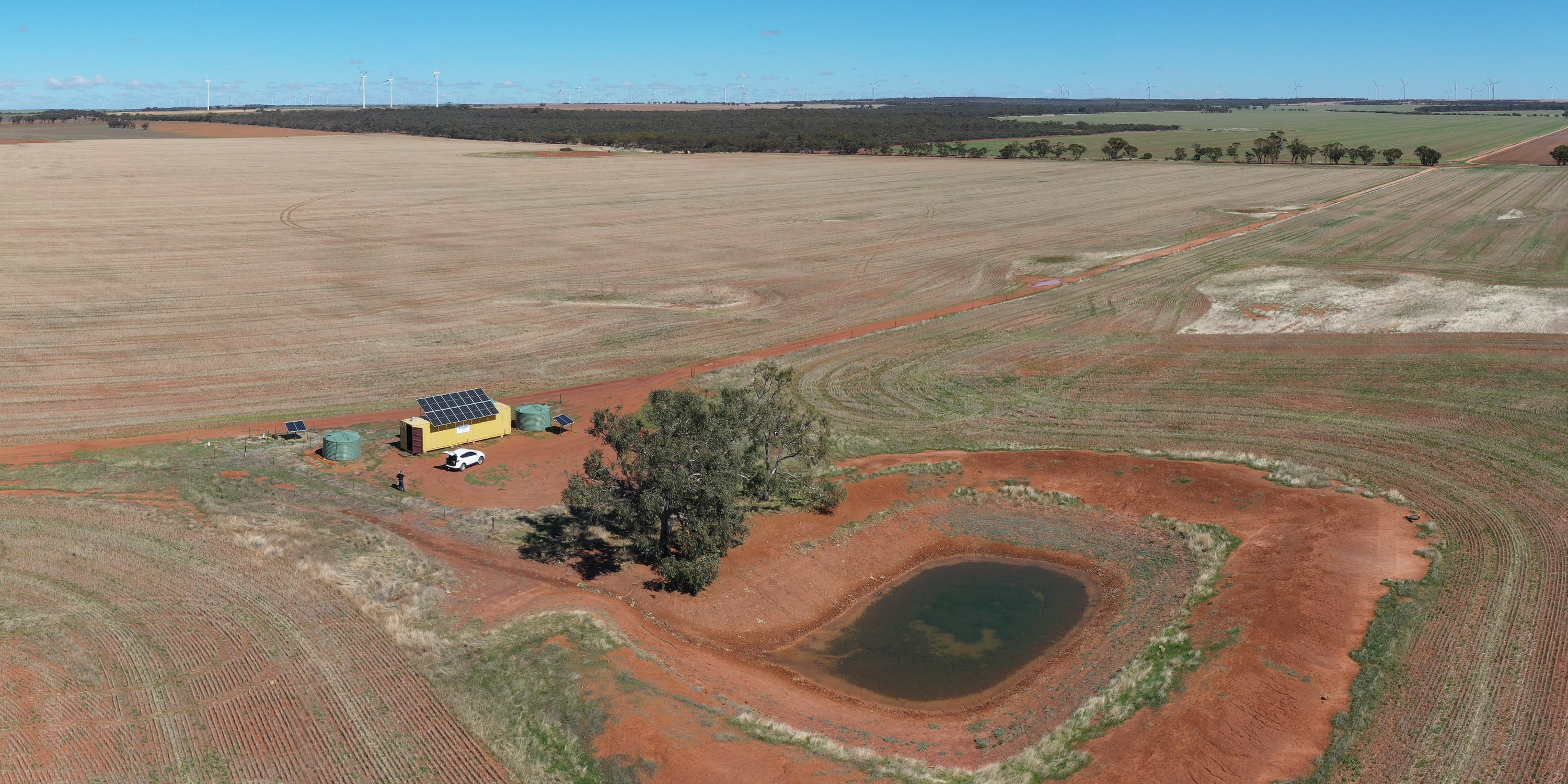
Facing decades of severe drying, Western Australian wheatbelt farmers urgently need sustainable water sources. One innovative initiative is trialing on-farm desalination to convert brackish groundwater into a reliable resource for agriculture.
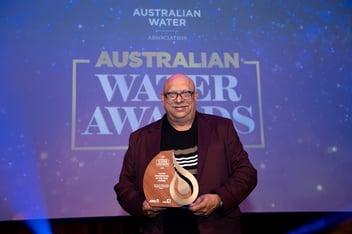
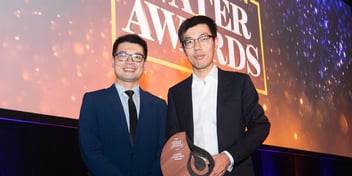
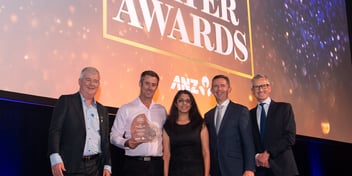
Earlier this year, the WaterSmart Farms project won the national Organisational Excellence award (sponsored by Hydroflux) at the Australian Water Awards. The Organisational Excellence award recognises significant and innovative initiatives within the water sector that drive prosperity and sustainability.
Delivered by the Department of Primary Industry and Regional Development (DPIRD) in partnership with Water Corporation and a consortia of Universities (Murdoch, Curtin and University of WA) and farmer groups (Grower Group Alliance), the project supports the adoption of on-farm desalination plants in agricultural regions to process brackish groundwater into a suitable ‘non potable’ resource for agriculture.
DPIRD Senior Principal Research Scientist Dr Richard George said the WaterSmart approach has been developed in response to the decades-long drying trend experienced across the agricultural region.
"The southwest of WA has been drying for about 50 years. Since 2000, there’s been an increased number and duration of dry seasons. The normal water supply systems for wheatbelt farms have been challenged multiple times now,” he said.
“In 2018, 2019 and 2020, we encountered the first multi-year dry event the southern wheatbelt had experienced. Farmers not serviced by the comprehensive piped water supply scheme faced a situation where they were running out of water.
“Farmers with livestock began selling significant portions of their flock, with over 2 million head sold. This dry wasn’t about fodder; it was all about water."
The 17-million-hectare wheatbelt was engineered with around 200,000 small farm dams, but between 2018–2020, over 75% of those were dry, with public and private water carting taking place to meet basic farm and community needs, Dr George said.
"The catalyst for this project was to upskill existing supply options like dams, and test new technologies to find ‘non-potable’ water where we hadn’t looked before. A focus was to find and treat saline groundwater that underlies the wheatbelt. Specifically, the project targeted ways to find fractures deep within the bedrock and support farmers trialing reverse osmosis desalination,” he said.
“If the water we found was the right quality, we wouldn’t need to treat it. But if it was brackish, as many of the groundwater sources are, then we’d use desalination.
“We had already seen the state shift to large-scale coastal seawater desalination for Perth and connected communities and so it was a logical next step to try that same technology at a small scale (less than 60 KL/day units) using saline groundwater instead.”
Nominations for awards are now open. Nominate standout projects here.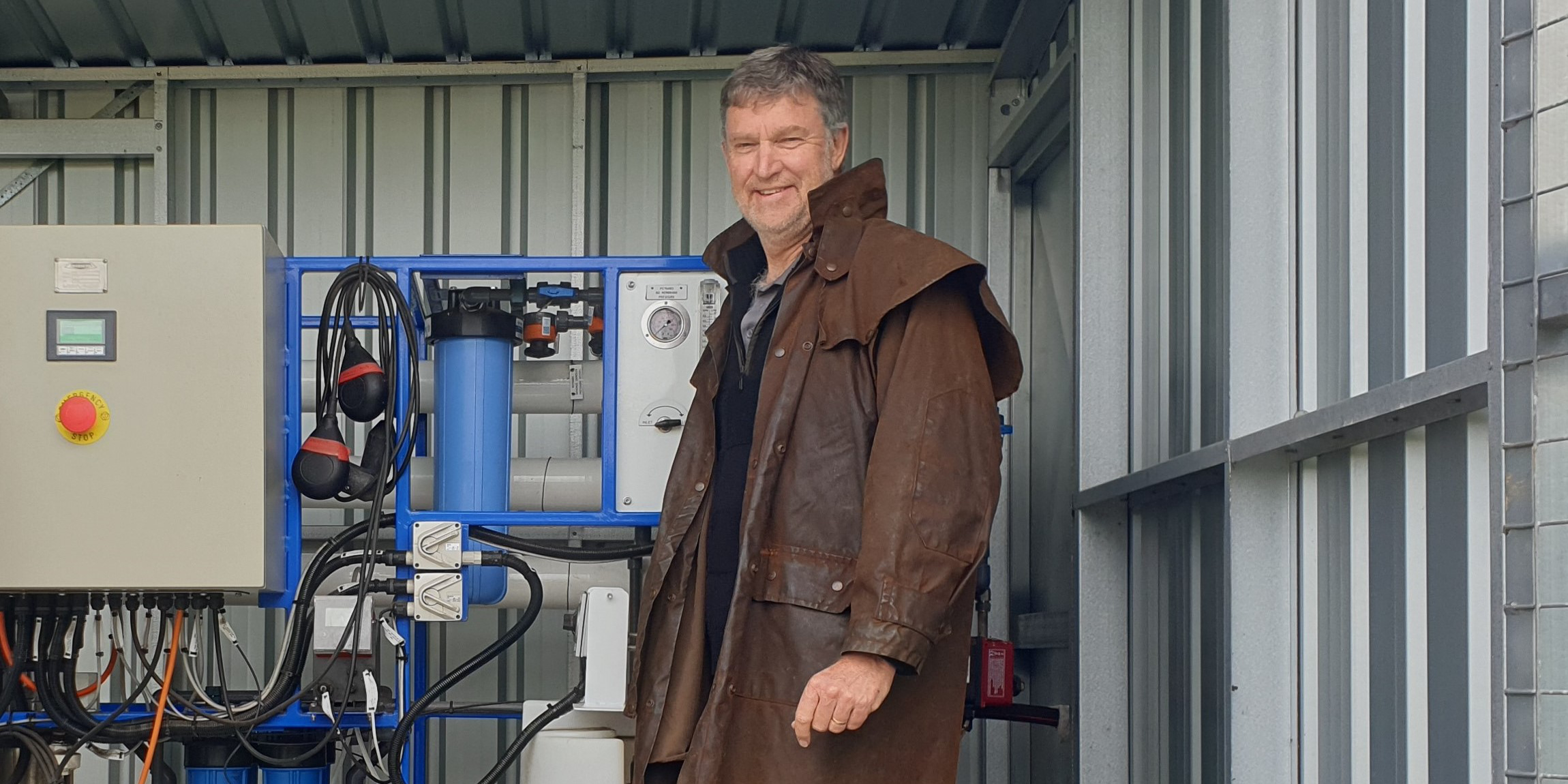 Dr Richard George at a Tambellup desalinator.
Towards resilience
To deliver a comprehensive analysis of these two new technologies and develop ways to increase the performance of farm dams, the WaterSmart Farms initiative developed research and extension partnerships.
“We set up three main research streams. The University of Western Australia focused on dam performance, improving catchments and water retention (WaterSmart Dams). Murdoch University covered desalination, including analysing over 50 early farm adopter RO systems, as well as constructing four new systems – three government and a school,” he said.
“Curtin University focused on fractured rock exploration technology, locating drill sites at 100 metres below the clay layer, while DPIRD drilled and analysed each target.
To deliver the research and extension, we engaged with over 60 farmers and grower groups across the agricultural area. They became our partners.”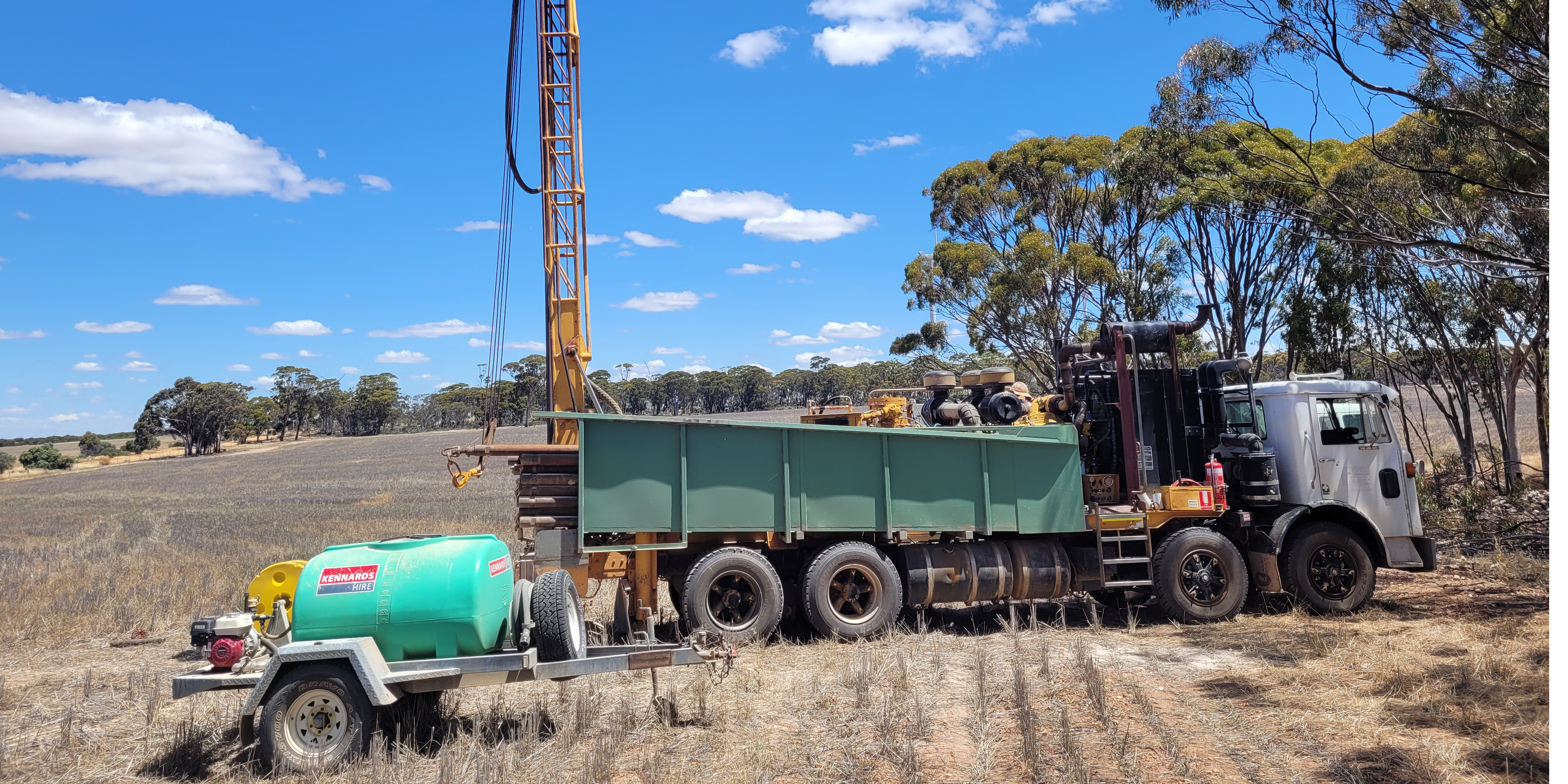
Success in action
Fractured rock drilling was more successful than expected, Dr George said.
“Using field geophysics at sites selected by the project team, we located groundwater at a success rate greater than 50%. This is compared to 5% using previous methods. Most of the sites delivered more than 50kL/day groundwater, of a quality suitable for livestock. In other cases, the water was suitable for brackish water reverse osmosis,” he said.
“In parallel, the team worked with over 50 farmers evaluating RO systems installed over the drought. The major learning was that farmers had evolved the use of RO.
“Instead of operating full time, like large commercial systems, wheatbelt farmers were using the systems intermittently. Across the 4-years evaluated, we also found that the permeate use had changed from primarily livestock, to spray water. Increased efficacy was reported when RO water was used to spray weeds.
“We found a large variability in performance, cost and use, where no two units operated the same.”
In the case of the four (4) units built with communities, use was much higher.
“Annual production was as high at 10ML, and combined capital and operating costs were similar to Scheme water. The difference was in several cases, the Scheme was unavailable,” Dr George said.
"Wongutha School is one such case. They had limited local water of poor quality, with the only option to cart water from the nearby town of Esperance. With support from the WaterSmart project and National Water Grid Fund, a 40 kL/day solar RO system, running up to 18 hours per day, was installed. It’s a remote supply, off-grid, non-potable system.”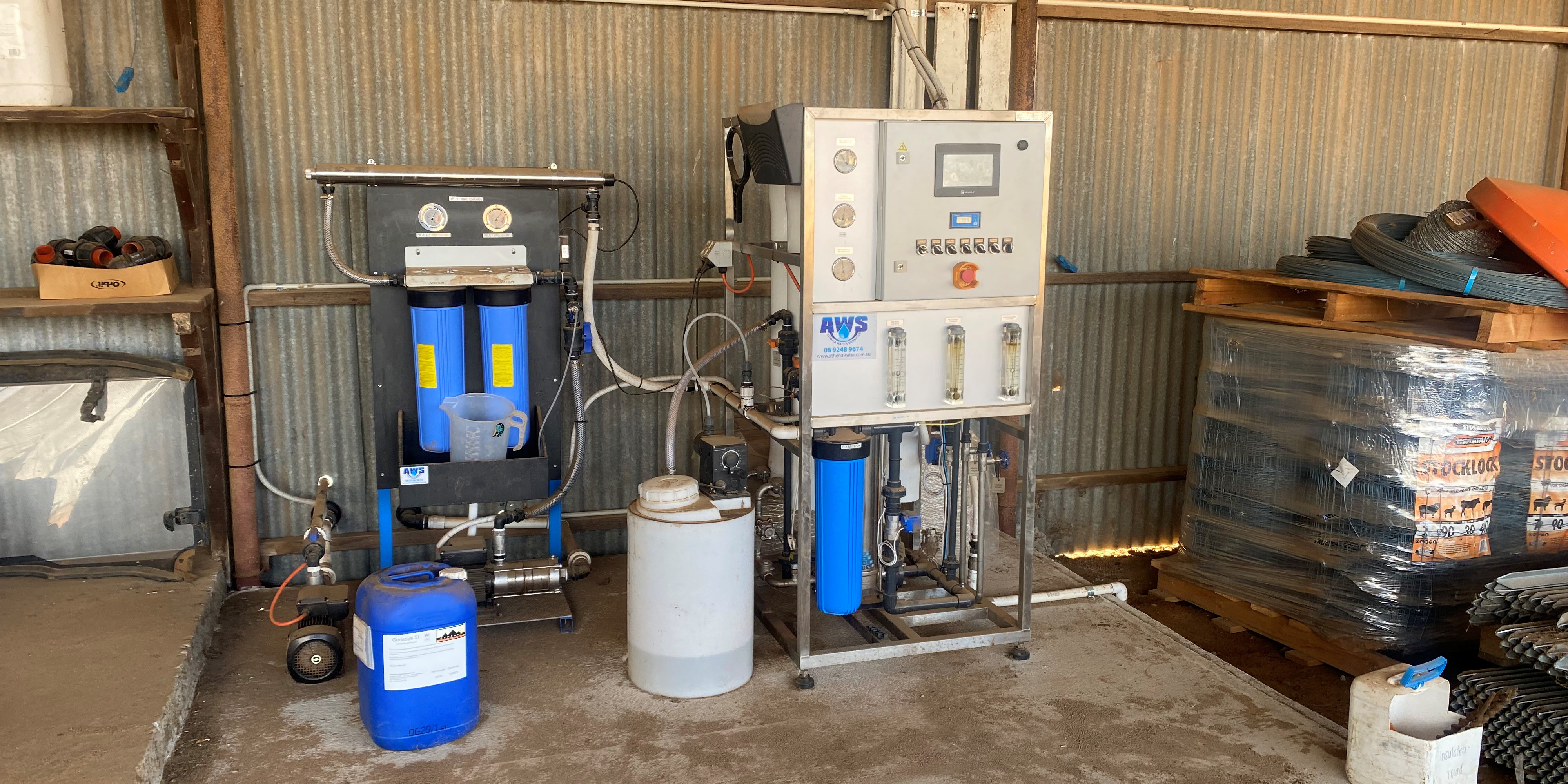
Key to success
Dr George said there’s still a lot to be done to achieve water security and resilience in dry regions, but the project is certainly helping farmers to consider and explore alternative options in their area.
"In the middle of the drought, you’ve got the top metre of soil that’s dry, but for 100s of metres down it’s saturated. The question was, can we access sufficient groundwater at a quality for direct use, or if it’s too saline, can we treat that water to make it suitable. We proved we can. Now the task is to turn this proof of concept into a viable non-potable regionally available system,” he said.
“That’s what this whole project is about: understanding what’s available beneath our feet, and what it takes to use it sustainably.
“It’s about keeping things simple where possible. Using a dam when you can, a bore where its available and desalination when necessary’.
“And, most importantly, it’s about partnerships, knowing who can do what, and making it all fit together."
Do you know about a fantastic water initiative that deserves the spotlight? Nominations for the state and territory awards are now open. Nominate standout projects here.
Share