



Week in water: updates from across the community
 by Water Source
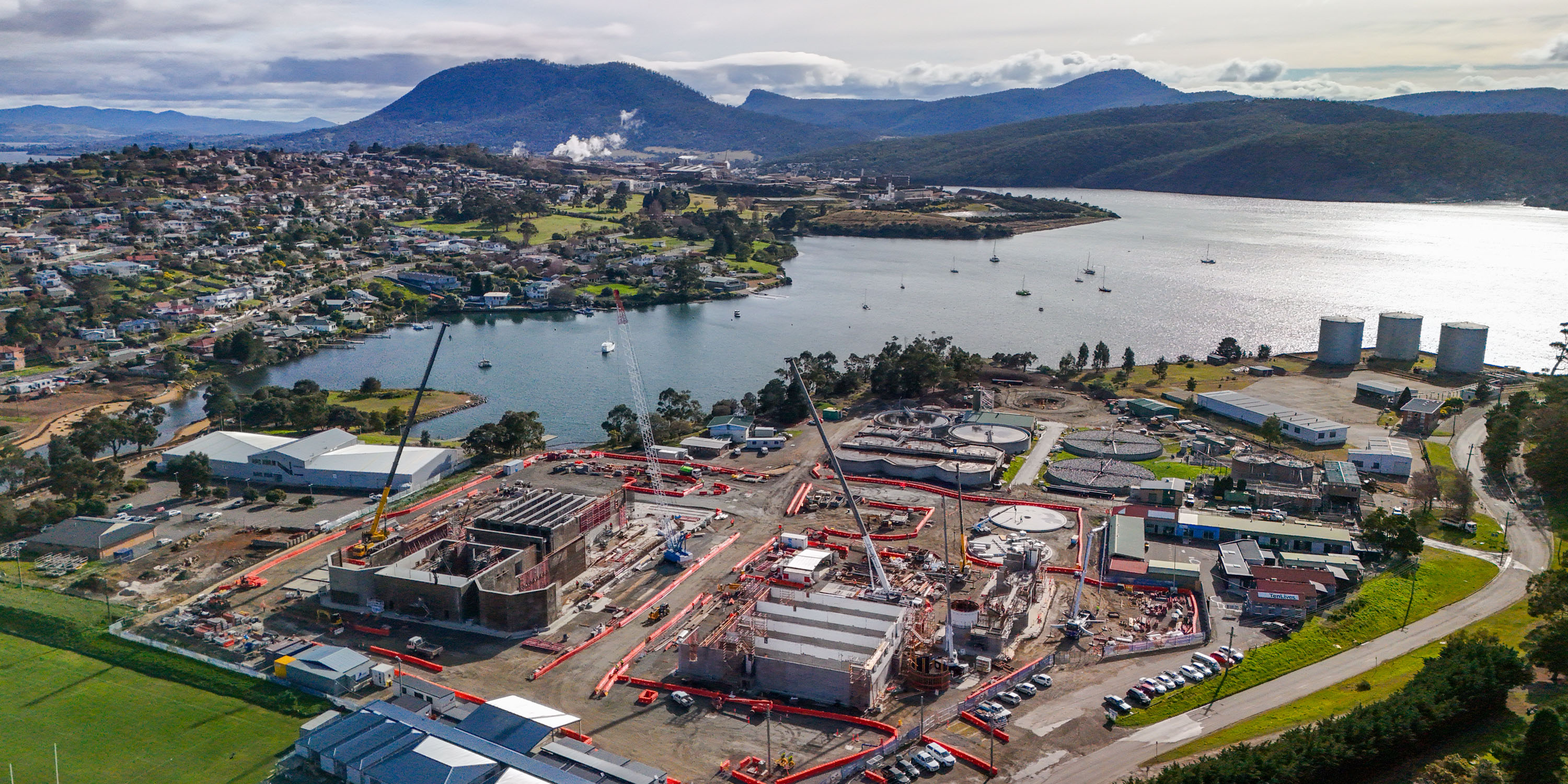
This week in water, smarter groundwater management is coming to Australia with new remote monitoring technology, while a milestone in Hobart marks progress on one of the state’s largest-ever wastewater projects.
Research breakthroughs are unlocking new sustainability solutions—from a salt-resistant solar desalination system to a textile waste transformation that could reshape global purification practices.
Internationally, artificial intelligence is emerging as a major future driver of water demand, while global experts warn of an era of "water bankruptcy" and governments prepare for stricter drinking water safeguards.
National
Smarter bore water control launched in Australia
Grundfos has launched a new generation of smart controllers for residential groundwater systems, aimed at improving performance, monitoring and water pressure reliability.
The CU 302 controller includes Bluetooth and WiFi connectivity for real-time diagnostics and remote control via the Grundfos GO, Grundfos Home, and Grundfos Connect platforms.
Sam Ryder, Regional Managing Director Oceania, said: “The CU 302 is more than a controller, it’s the next step in intelligent water management for residential systems”.
“With built-in connectivity, homeowners and professionals can monitor their water systems from their phones, keep pressure consistent, and address issues before they become costly breakdowns,” he said.
“It transforms water management from reactive fixes to proactive, reliable, and energy-efficient control."
State and territory
Sustainability at the heart of Hobart sewer transformation
A healthier Derwent is one step closer, with the Selfs Point Sewer Transformation now more than 50% complete.
This once-in-a-generation project is redefining how Hobart manages wastewater, helping the city keep pace with growth while delivering smarter, more sustainable infrastructure for decades to come.
TasWater General Manager Project Delivery Tony Willmott said: “Reaching the 50% mark is a major project milestone and is a reflection of the hard work happening on the ground every day”.
“To date we have delivered a number of major achievements on the project including 6,500 cubic metres of concrete poured at the Selfs Point site, which is enough to build foundations for more than 300 homes and the installation of more than 2,500 tonnes of reinforcing steel, stretching from Hobart to Launceston and back if laid end to end,” he said.
Solar-powered desalination prototype developed
Researchers from Monash University have developed a solar-powered desalination prototype that can produce safe drinking water continuously, overcoming a common technical barrier in existing systems.
The prototype, SunSpring, uses a floating porous membrane embedded with microscopic carbon “flowers” to absorb sunlight and distil seawater. The system can generate up to 18 litres of drinking water per day and is designed to prevent salt build-up over time.
Professor Neil Cameron, Monash Warwick Alliance Professor of Polymer Materials, said: “This solar still, which we have called SunSpring, generates up to 18 litres of fresh, drinkable water per day from seawater and can operate continuously without becoming clogged by salt deposits”.
Textile waste turned into purification materials
The UNSW Sustainable Materials Research and Technology Centre has published new findings on the use of waste textiles to create activated carbon for purification applications.
The research shows that these recycled materials can be used to manufacture activated carbon for water, air, gas, food and beverage filtration, as well as broader industrial use, offering a more sustainable alternative to conventional methods.
Professor Veena Sahajwalla said: “We show it is very possible to not only help ameliorate the growing waste textiles problem being experienced globally”.
“But to reform this waste stream usually destined for landfill into highly valued activated carbon materials that can be used in many purifications systems, such as for water, air, gas, food and beverage, as well as for numerous other crucial industrial applications”.
International
AI expansion could drive 30 trillion litres in new water demand
The rapid global expansion of artificial intelligence (AI) is set to drive a 129% increase in water demand across the AI value chain by 2050, according to new research by Xylem and Global Water Intelligence (GWI).
The report, Watering the New Economy: Managing the Impacts of the AI Revolution, calls for a coordinated water transition centred on reuse, digital infrastructure and cross-sector partnerships. Without action, the projected growth in power generation to support AI could add 30 trillion litres in annual water demand globally.
The authors note that nearly 40% of existing data centres are already located in regions experiencing high water stress, underscoring the urgency of a more water-conscious approach to digital expansion.
UN report warns of water bankruptcy era
A major new report from the UN University’s Institute for Water, Environment and Health (UNU-INWEH) has declared that the world is entering a state of “global water bankruptcy”, as once-temporary droughts and shortages become chronic and irreversible in many regions.
The report, Global Water Bankruptcy: Living Beyond Our Hydrological Means in the Post-Crisis Era, urges policy makers to abandon outdated crisis terminology and confront a new normal of permanent water system degradation.
Lead author Kaveh Madani, UNU-INWEH Director, said: “This report tells an uncomfortable truth: many regions are living beyond their hydrological means, and many critical water systems are already bankrupt”.
Sweden moves to comply with EU drinking water directive
The Swedish government has proposed amendments to its national Planning and Building Ordinance to align with the European Union’s Drinking Water Directive.
Under the changes, all products that come into contact with drinking water must be made from approved materials that meet safety and performance standards, with implementation required by 31 December 2026.
Want water insights delivered weekly? Subscribe to Source, the Australian Water Association’s newsletter.


%20(1).jpeg?width=352&name=Hunter%20Water%20aerating%20water%20pumped%20from%20the%20Tomago%20Sandbeds%20before%20treatment%20and%20supply%20to%20the%20network%20(1)%20(1).jpeg)
.jpeg?width=352&name=Irrigation%20season%202%20(1).jpeg)
%20(1).jpeg?width=352&name=Unitywater%20CEO%20Anna%20Jackson%20said%20the%20BOOST%20was%20delivered%20to%20support%20career%20(1)%20(1).jpeg)