Lessons from the frontline of Townsville flood recovery
 by Cecilia Harris
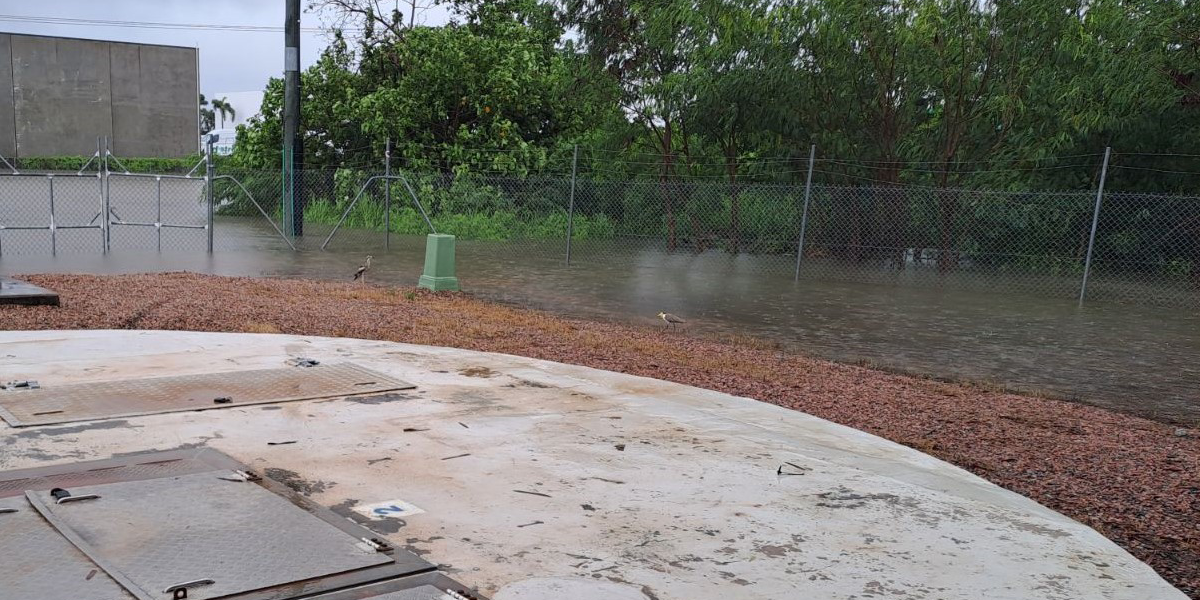
In early February 2025, Townsville and surrounding regions in North Queensland experienced severe flooding due to a persistent tropical low-pressure system. This brought record-breaking rainfall, leading to significant impacts on communities, infrastructure and the environment.
As the intensity and frequency of extreme weather increases, the response from Townsville’s water team offers valuable insight for the wider sector – from crisis coordination to infrastructure resilience.
Soon after the initial floods, a second rain event passed through the region, compounding the region’s vulnerability and triggering further emergency alerts.
Tasked with helping lead response and recovery efforts at Townsville City Council since the first flooding event in early February, Water Services Network Service Delivery Team Manager Matt Paulger said the recurrent events have stretched resources and morale, showcasing why proactive preparation, communication and continuous improvement is so crucial.
"The first event officially kicked off on Friday 31 January. We started getting forecasts for severe rainfall and thunderstorm events. From Saturday, the rain really set in - there was just over 280 millimetres of rain in the local Townsville area that day,” he said.
"It was intense. There were about 16 days of heavy, non-stop rain, which amounted to nearly 1.2 m. But the highest area recorded was up in Paluma, just northwest of Townsville. They received 2,916 mm during February. That is an extreme amount of rain. It smashed the record for the greatest February rainfall event.
“The impacts of this were widely reported. There were severe flash flood events causing damage to buildings and vehicles as well as Council infrastructure on the water and wastewater sides.”
While the effects of a second rain event were not as intense, Paulger said the impacts were different because the water and wastewater system hadn’t had time to recover.
“Systems aside, there’s the human impact, too. Morale, mental toll – not just at Council, but across the community. Everyone was already worn out. The public was frustrated,” he said.
“The crews were out there, cleaning up what they could, only to have another overflow the next day. It was exhausting.”
Leading response
Throughout all the response efforts that ensued, Paulger said strong communication was absolutely crucial to ensure effective prioritisation to attend to the influx of requests, which included significant and widespread impacts on water and wastewater services.
"During our wet weather events in North Queensland, the immediate impacts are generally felt on the wastewater network. Inflow and infiltration of the wastewater network leads to breakages in wastewater mains, and overflows around the network,” he said.
“Our network is designed for five times the average dry weather flow, however, the record amount of rainfall we received means that both rainfall and groundwater-driven inflow are extremely high, overwhelming the system with infiltration that exceeds its design capacity.
“Then, in the weeks following wet weather events, as the ground starts to subside, dry out and move, we start to see issues on the water network. Pipes start to move and break.
“That’s essentially what we experienced with these recent events. However, the initial impacts were related to access – the amount of water meant we physically couldn’t reach a lot of our sites.”
There are 200 wastewater pump stations in the Townsville LGA, more than 2,700 km of water pipe and 1,400 km of sewer mains. There are also 50 pump stations and chlorination units, 43 reservoirs, as well as water and wastewater treatment plants, Paulger said.
“In those first few days of the February event, access was cut off to the majority of our network. In the first 24 hours, we had to pull teams in for safety. Crews were getting flooded between blocks. Our main depot almost became an island – all the roads around it were cut off,” he said.
“Once access was easier, a lot of effort went towards cleaning up overflows across the community. We received more than 500 wastewater overflow events. That’s overflows on roads and, in some cases, inside properties. That’s where most of the cleanup effort went."
Recovery backup
With the amount of cleanup and recovery required, Paulger said Council needed extra assistance.
“We’ve got a decent-sized wastewater team and a water team but, given the volume of calls and the need to manage fatigue, the Mutual Alliance Coordination Cell (MACC) was stood up,” he said.
“MACC includes local government and water utilities. Once it was activated, we had a few meetings each day. That communication is really important.
“The frequency changed depending on what was happening, but during the intense period, we had a couple of meetings daily. That gave us a place to raise emerging issues and request support.
“The biggest support came from Urban Utilities, Unitywater and Gold Coast City Council. They supplied a mix of gangers, plumbers and water industry workers to help with recovery.”
Paulger said Townsville was also lucky to have the largest Australian Defence Force (ADF) base, and Defence always make themselves available for priority matters.
"ADF helped with a bridge collapse near Ingham. In the water services context, they helped with aerial access. Some of our team flew in Blackhawks and Chinooks. The Chinook flew a generator, some treatment plant operators and tradespeople,” he said.
"This support helped with morale, as well. This aerial support helped us manage remote location issues, like Paluma township and the Paluma Dam. One of the key things to learn from this event is to automate those remote systems to ensure reliable service delivery.”
Leaning into learning
Paulger said one of the most important things learned from what has become an historic flooding event in North Queensland and beyond is the importance of continual improvement and taking the time to stop and reflect on the lessons to carry forward.
“There wasn’t much time between the first and second flood event, only about a week and a half. But in that gap, we held several ‘lessons learned’ sessions,” he said.
“We also do it during events. We’ve got a register where we capture learnings as they’re flagged, and we were able to jump on and implement a few ‘quick-win’ learnings straight into this next event that occurred just days later, which is a good outcome from a tough situation.
“The main thing was resource support – ensuring immediate backup to help manage fatigue. Another learning was our 24/7 Operations Centre. Normally it’s staffed by one technical officer after hours, but during the recent event, they needed more support.
“Our fatigue management processes are strong, but we wanted to be proactive – not scrambling when someone reaches their limits. For the second event, we already had teams identified and ready to roll.”
In preparing for a potential flood event, Paulger said it's important not to underestimate just how complex extreme weather events can be.
“They are all unique events; they are quite complex. There’s lots of moving parts and lots of stakeholders involved, and they require regular, consistent communication and reporting,” he said.
"We must make sure issues are escalated and supported up and down the line. That applies to any sort of crisis or emergency event. Great communication also leads to making sure everyone is aware of priorities. It’s about making sure everyone’s on the same page.”