Disability inclusion, visible advocacy and universal design in water
 by Cecilia Harris
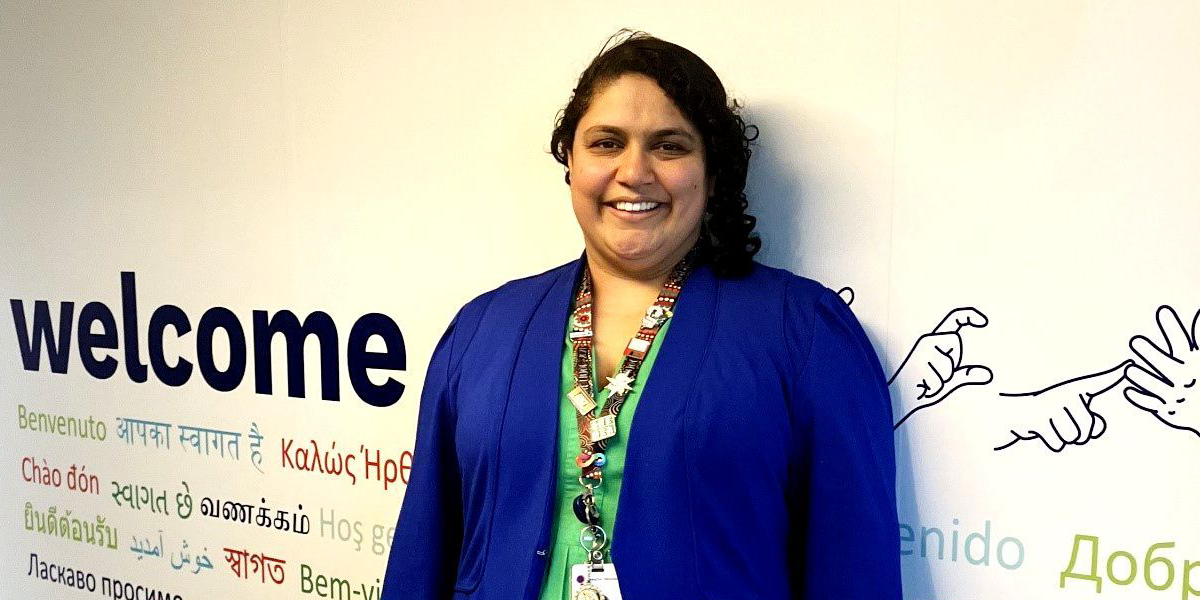
Creating culturally safe workplaces for people with disabilities starts with one simple principle: identify and remove the barriers. For Sylvia Campbell, that’s the key to true inclusion, and the lesson she’s now championing across the water community.
Campbell participated in the inaugural WaterAble Leadership Program in 2023. This experience increased her awareness of the diversity of experience for different people with disabilities and her confidence to advocate for inclusion in the sector.
WaterAble is a network committed to improving disability inclusion across the water community, fostering collaboration and amplifying diverse voices. By supporting members with disabilities to grow their careers and championing inclusive practices, WaterAble is building a stronger, more equitable water community that reflects and values the whole community.
To help achieve this, WaterAble delivers a Leadership Program every year, equipping people with disabilities in the water community with tools and networks to lead confidently.
“The program created space to share experiences across different disabilities. Hearing challenges others face expanded my understanding of their experience, as well as the benefits of universal design,” Campbell said.
“The program also gave me confidence to be a visible role model for inclusion. I have been disabled my whole life, but I didn’t know I was disabled until my late 30s. Diagnoses for ADHD, autism, and hypermobility spectrum disorder came in recent years.
“For my whole career, I masked my needs with quiet, invisible coping tools. Now, I use visible fidgets and stims, partly to normalise them for others who may feel vulnerable, and also to encourage conversation and raise disability awareness in a non-threatening manner.”
One of the most memorable learnings from the leadership program came at the end of the day, Cambell said, as she watched WaterAble Founder Llewellyn Prain guide a colleague to the tram stop.
“One of my favourite moments was watching Llewellyn guide another participant with a vision impairment to the tram stop. Both used guiding canes and navigated with confidence,” she said.
“It completely reframed the saying ‘the blind leading the blind’ for me. They knew exactly what they were doing and where they were going, with great skill and courage. I will never use that phrase again.”
Working in the water community
Campbell studied chemical engineering at university but wasn't sure of what area of work she would end up in. Eventually, the water community felt like the right fit.
“Traditionally, chemical engineers go into industries like oil and gas, mining, food manufacturing, or chemical manufacturing. Those paths didn’t feel right for me; they didn’t align with my values. Environmental engineering and water offered a pathway that did,” she said.
“When I was at university, the Millennium Drought was at the forefront of national consciousness. We were talking about desalination plants, and in my final year, I studied the design of desalination and water recycling plants. That’s where my passion really took root.”
Now working at Greater Western Water in continuous improvement, Campbell said her focus in her work is always: what does better mean to the stakeholder?
"Whether it’s customers, internal stakeholders, or colleagues, I look for big and small ways to make systems and processes work better for them,” she said.
“Continuous improvement can be slow and frustrating. I often compare it to mushrooms, where 90% of the growth happens underground before you see anything above the surface. Everything I do is an investment in improvement. The results of my work might not appear for two, five, or more years, but I know my efforts today will lead to those future outcomes.”
Diversity in inclusion
Skilled with an outstanding ability to recognise problems or challenges that others can’t, it’s no wonder Campbell is now also passionate about improving outcomes for people living with disabilities in the water community and beyond.
“Accessibility needs differ between people with disabilities,” Campbell said, showcasing just how complex and diverse the community of people living with disabilities truly is. While the principle of universal design – designing environments to be accessible for everyone – is a great aim, it’s also important to make safe space for requests.
“For example, materials designed to help me as a visual learner are inaccessible to Llewellyn, who has a vision impairment. It’s not always possible to make something accessible for everyone at once, so universal design must be paired with a safe environment for people to request reasonable adjustments,” she said.
“At Ozwater last year, I co-presented with Llewellyn, who is the Founder of WaterAble. We knew that standard PowerPoint presentations aren’t very accessible for people with vision impairments and we needed to create one for our panel session.
“Working together, I learned how to check accessibility, write alt text, and create a fully accessible PowerPoint. It was the first one Llewellyn had ever been able to access fully. The relief she experienced when she realised it worked, that alone made the presentation worthwhile.”
Practical tips
Dedicated to improving outcomes for people living with disabilities, Campbell said there are a couple of key principles for water organisations to keep in mind when working towards creating more inclusive and accessible workplaces.
“True inclusion is when someone has thought about and removed barriers before the person with a disability has arrived. It’s about universal design – like a venue with ramped access for everyone, rather than sending people around the back through a loading dock. It’s legally compliant, but it’s not welcoming.” she said.
Identifying potential barriers and communicating solutions to guests or employees before they arrive is a great start, Campbell said.
“For me, inclusion starts with removing exclusion flags. Even if everything isn’t perfectly accessible, eliminating obvious barriers like steps at entrances makes a big difference,” she said.
“So many people won’t even apply for a job if they see exclusion flags in the advertisement. We want people to tick the disability box with confidence when they apply for a job and trust that it won’t harm their chances of getting the role, that it will help them thrive at work, not stigmatise them.”
“It’s important to remember that exclusion flags can also be behavioural, too – like insisting on eye contact or encouraging everyone to take the stairs instead of the lift.”
And what does an inclusion flag look like?
"The revolving door at our Footscray office. Approaching on crutches, I noticed a button to slow the door and another to automatically open a separate door – no need to stop and ask for help. I got in just as quickly as I do on a day when I don’t have crutches. Those details signal cultural safety,” Campbell said.
Managing a disability means constantly thinking about logistics, Campbell said, including getting to work, using the bathroom and managing symptoms: “My philosophy is to remove that mental load so people can focus on their jobs”.
“Even having a wellbeing room where people can rest without judgement is an amazing support,” she said.
“A huge barrier is our own internalised ableism. We don’t want to appear like we’re slacking off at work by taking extra breaks. In reality, it’s the opposite. Meeting our physical and mental health needs means we work more productively.”
Are you interested in learning more about how to get involved in the WaterAble Leadership Program? Learn more and register your interest here.